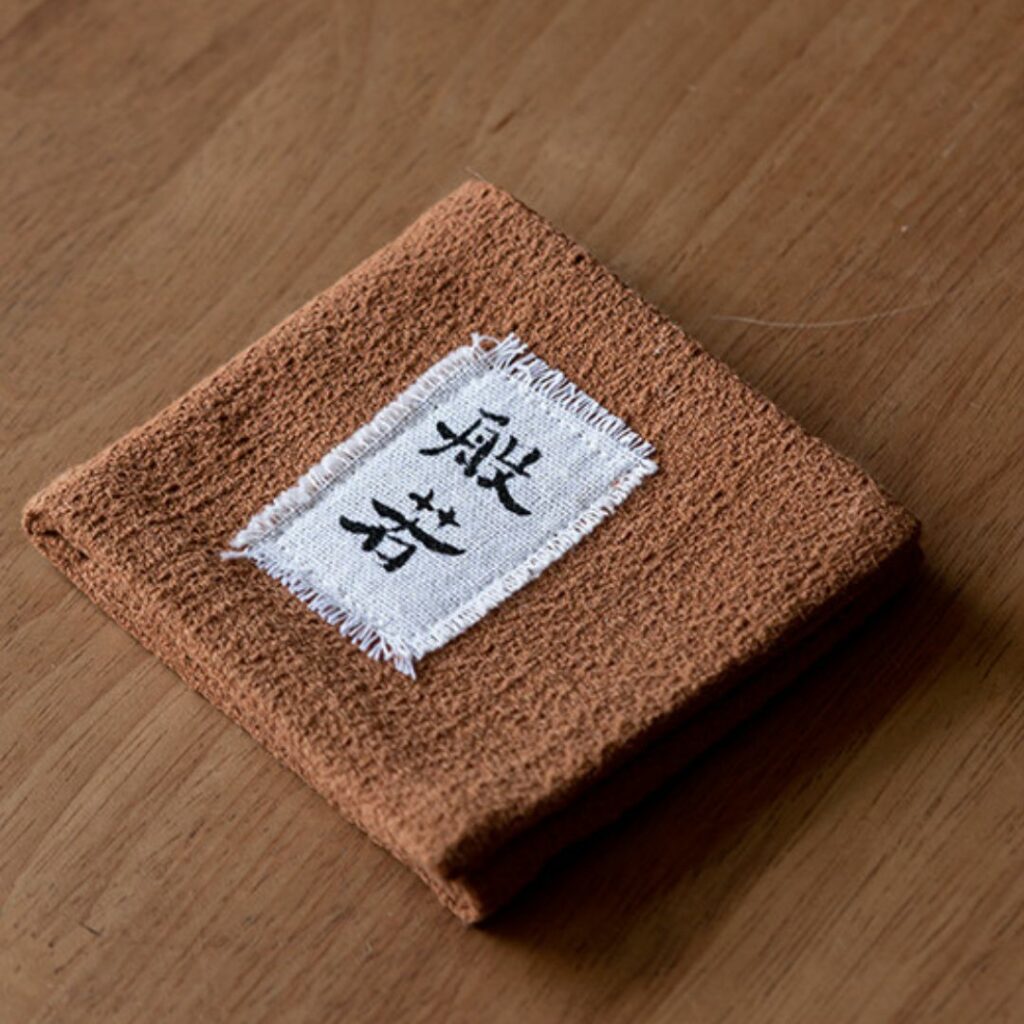
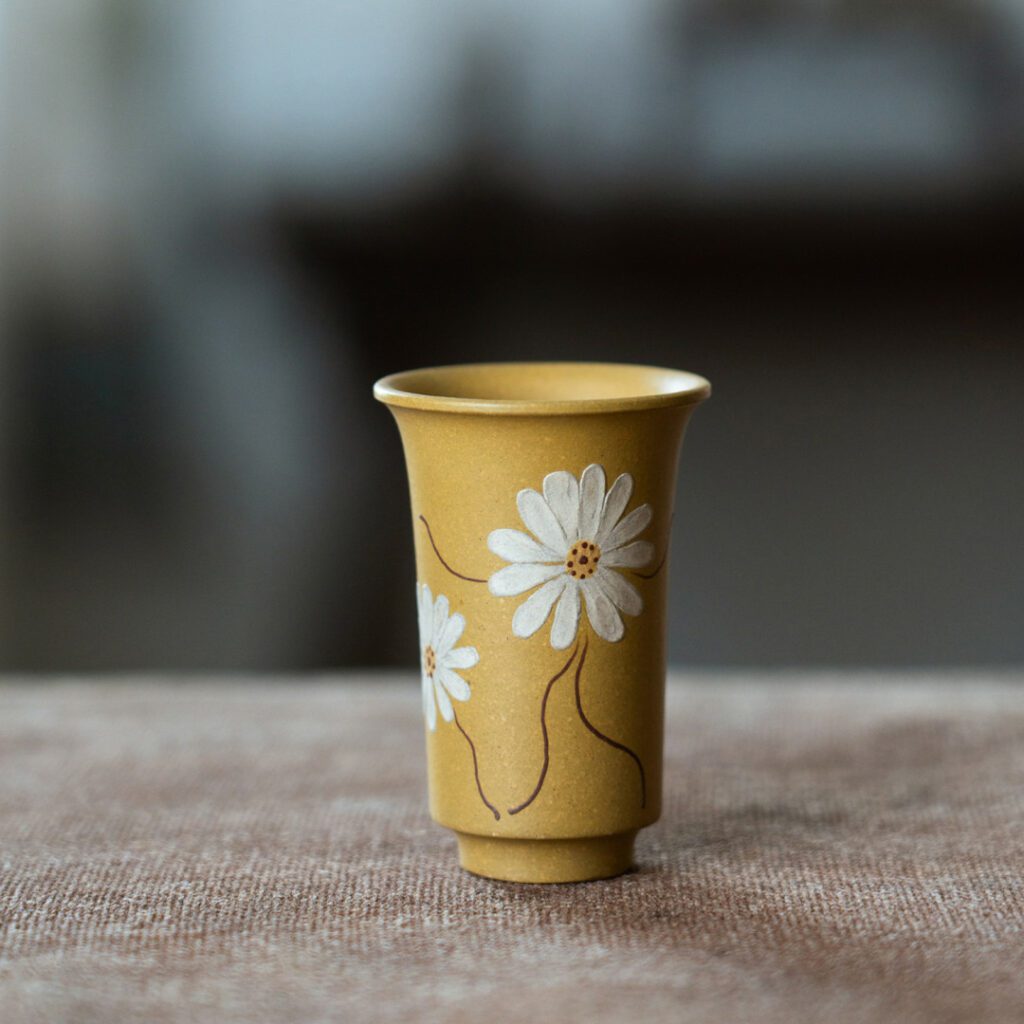
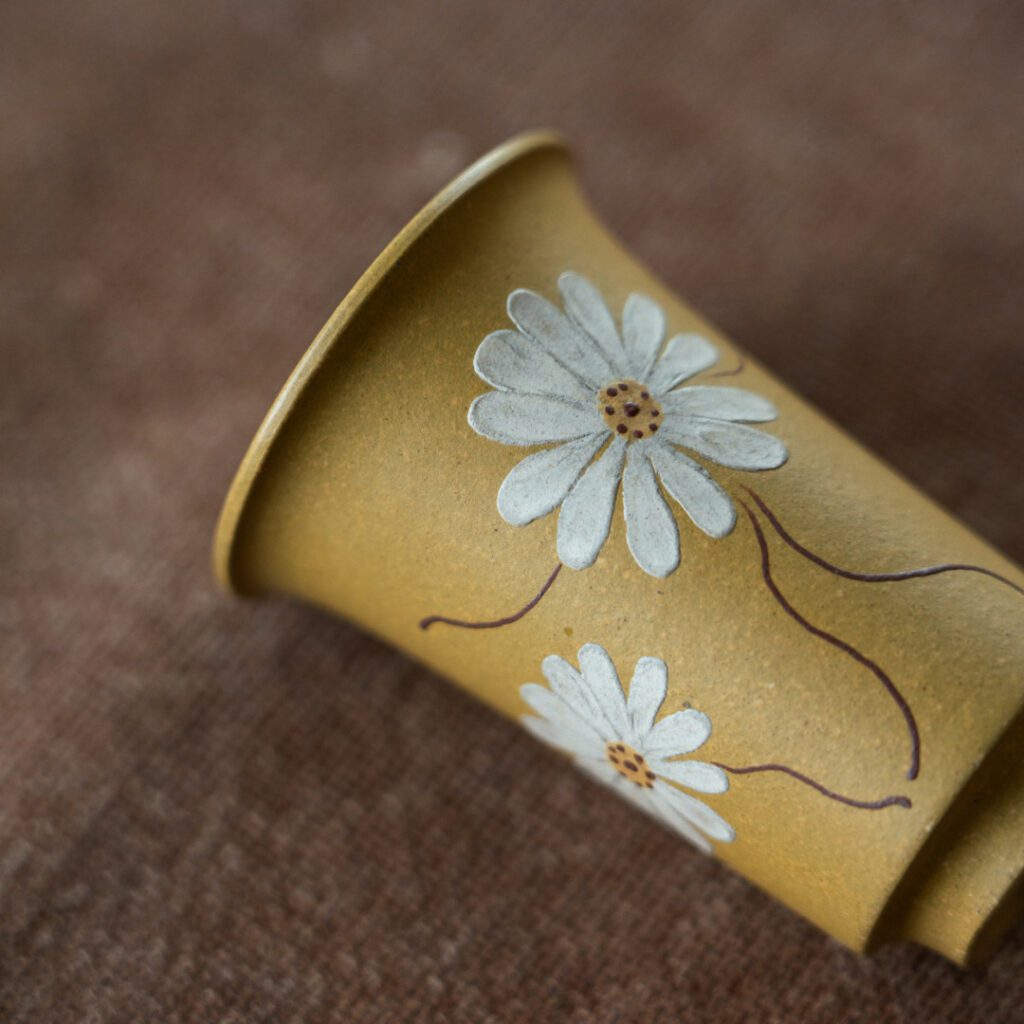
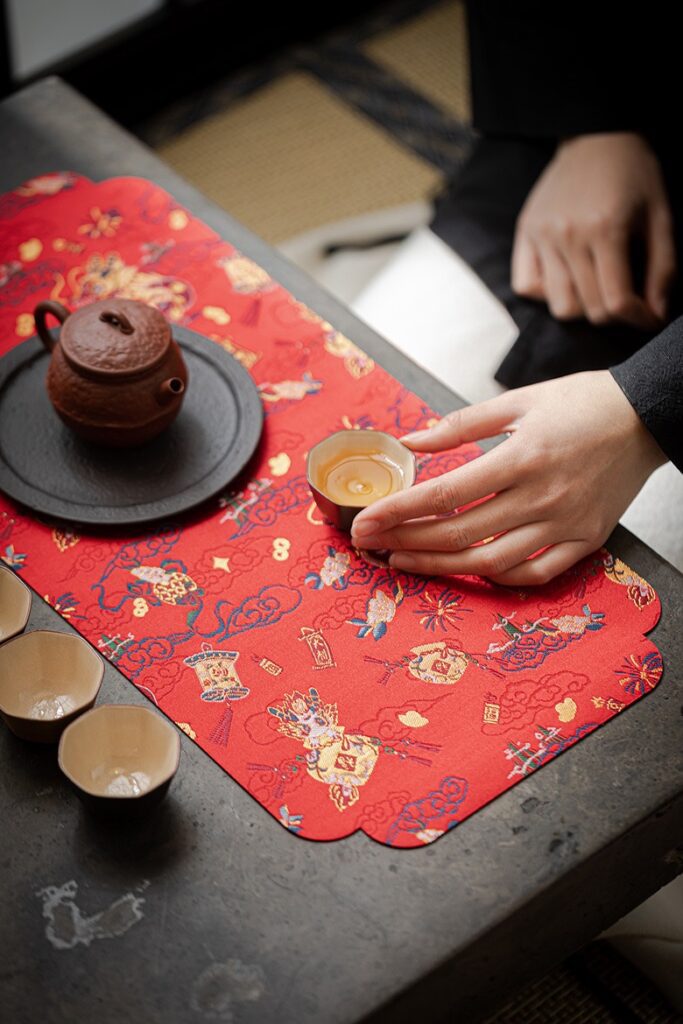
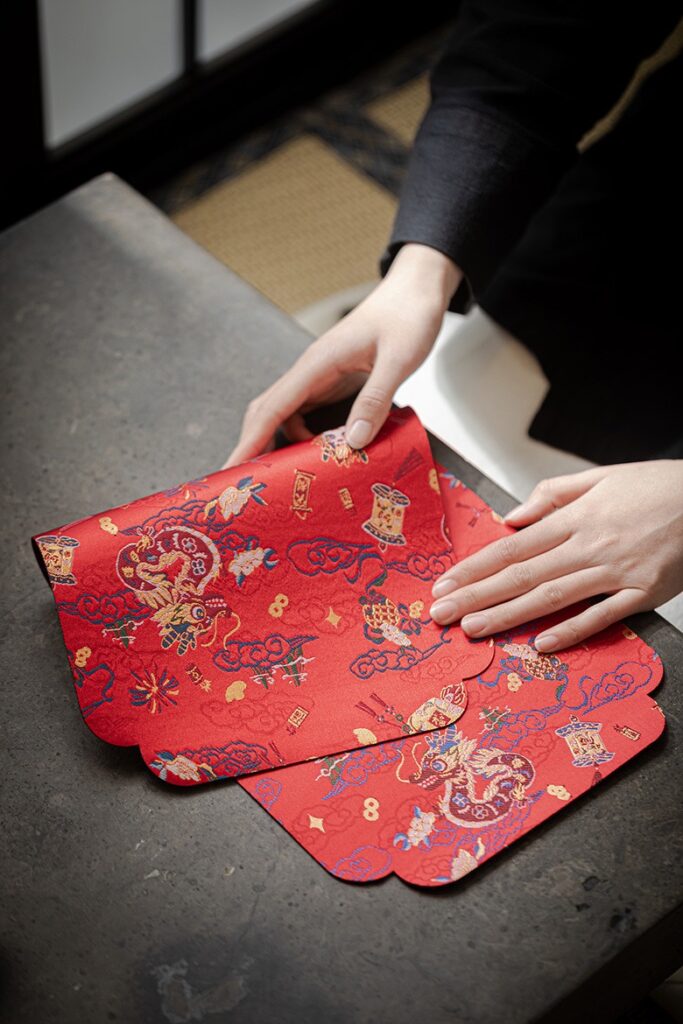
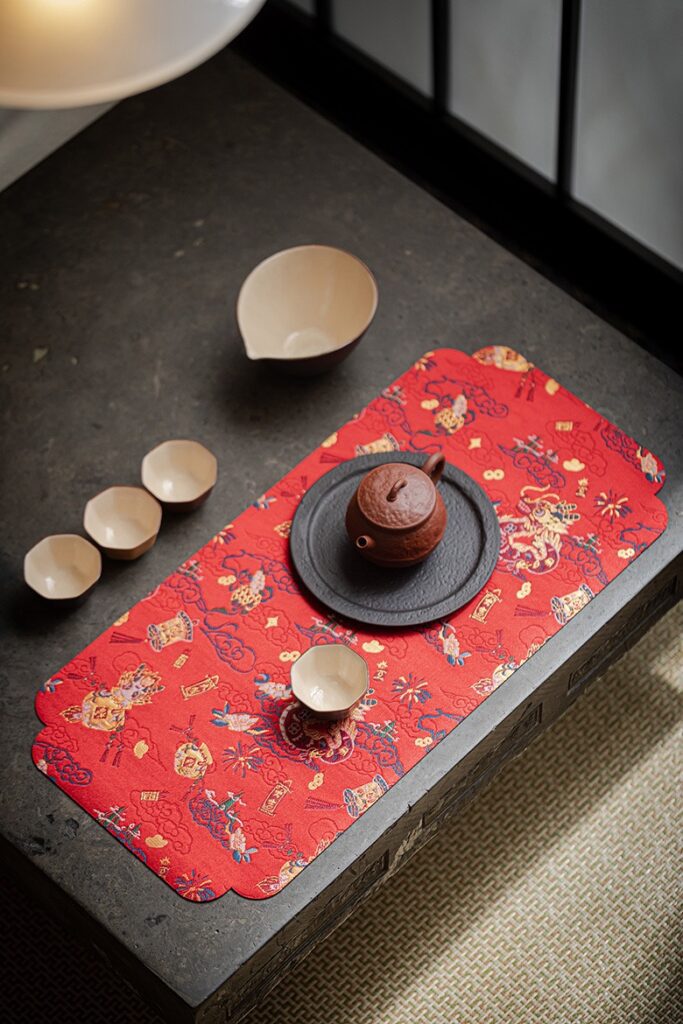
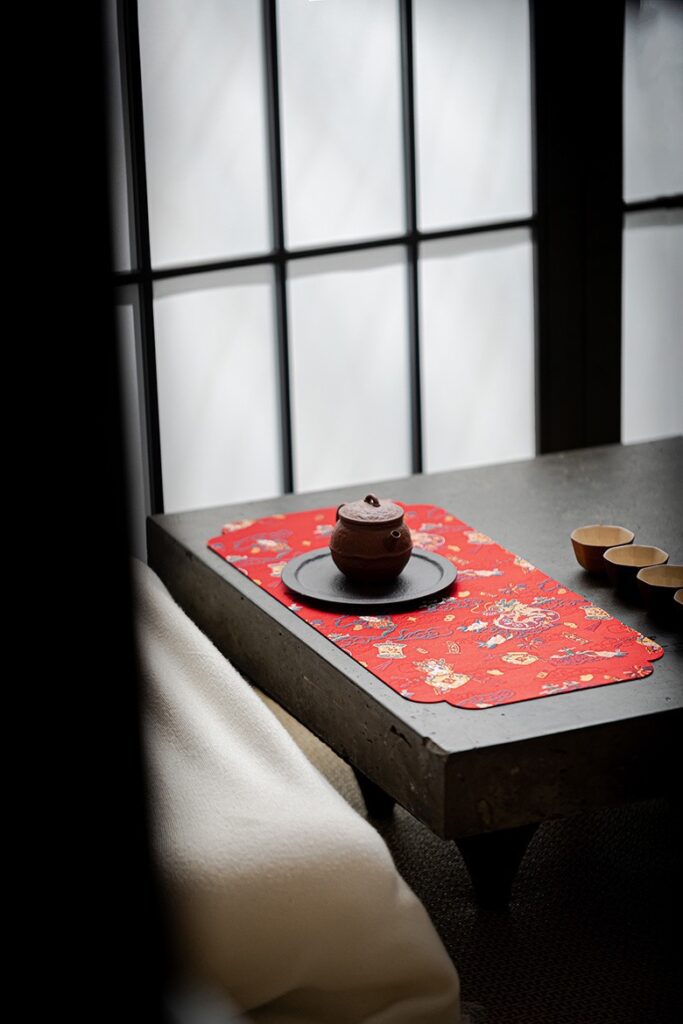
차 애호가 여러분, 안녕하세요! 🐉✨ 2024년 용의 해를 맞이하여 흥미로운 소식을 전해 드립니다. 이싱 찻주전자를 구매하시는 분들께는, 차 마시는 시간을 한층 더 특별하게 만들어 줄 용의 해 한정판 차 매트를 선물로 드립니다. 여러분과 함께 새해를 축하하는 저희만의 방식입니다. 단, 이 혜택은 기간 한정으로 제공되니 꼭 기억해 주세요! 이 신비로운 아이템으로 여러분의 차 시간을 더욱 특별하게 만들어 보세요. 🍵💫
I came across an interesting question recently from someone learning to brew tea in a gaiwan.
Most gongfu guides seemed to suggest using several grams of tea in a small vessel. But whenever this person tried anything close to those amounts, the tea became bitter almost immediately. In the end, they were happily using only one or two grams of leaf.
So were they brewing incorrectly?
Not necessarily.
Tea ratios are useful. They are also one of the easiest parts of gongfu tea to take too seriously.
For a gongfu-style session, somewhere around 4–5 grams of tea for 100ml of water is a useful place to begin for many teas. Some people prefer more, some less. Certain oolongs and pu’er teas can take a heavier hand; delicate teas may be more enjoyable with less leaf.
The important words are place to begin.
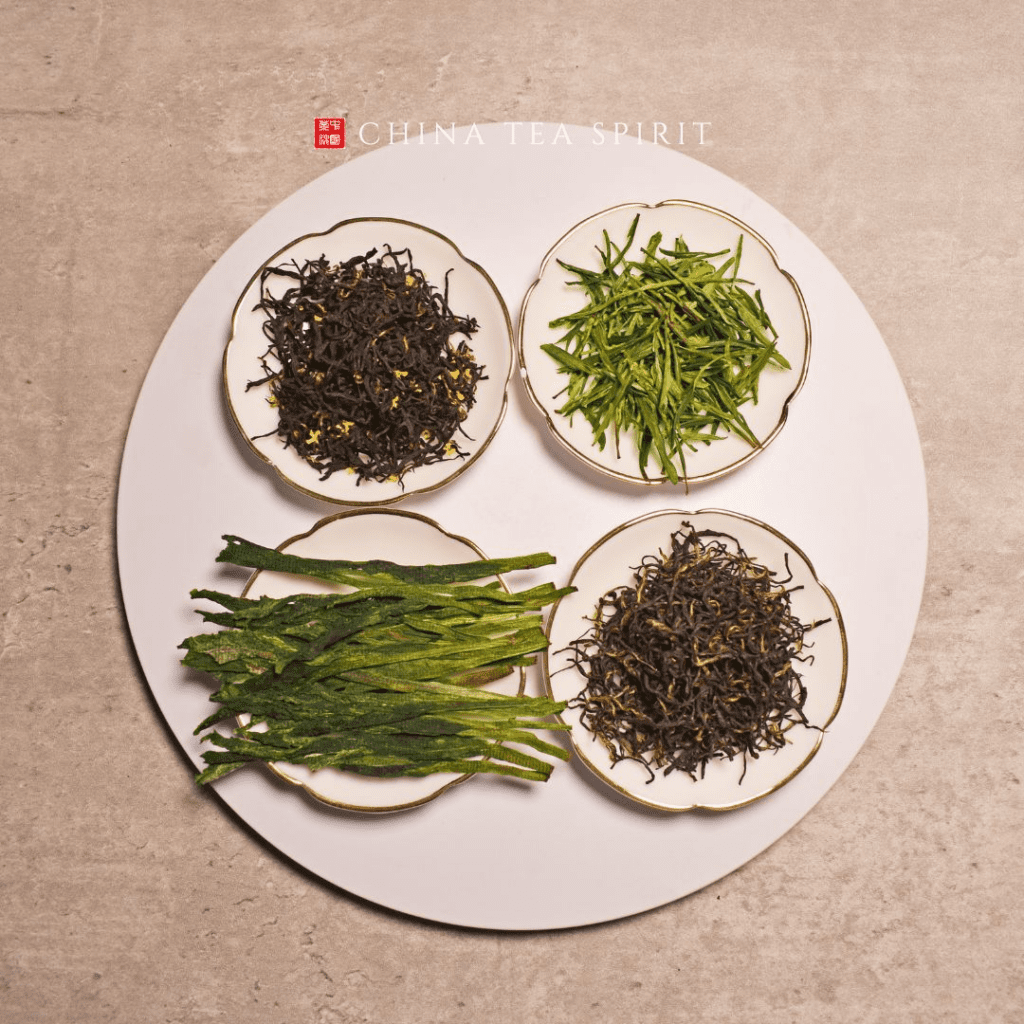
Put 5 grams of tightly rolled Tieguanyin beside 5 grams of a loose, fluffy white tea and they hardly look like the same amount.
The rolled oolong may sit quietly at the bottom of the gaiwan before expanding dramatically once it meets hot water. A large-leaf white tea might already appear to fill half the vessel while dry.
Compressed pu’er introduces another variable. Broken leaves extract differently from intact leaves, while fine leaf fragments can release flavor—and bitterness—much faster.
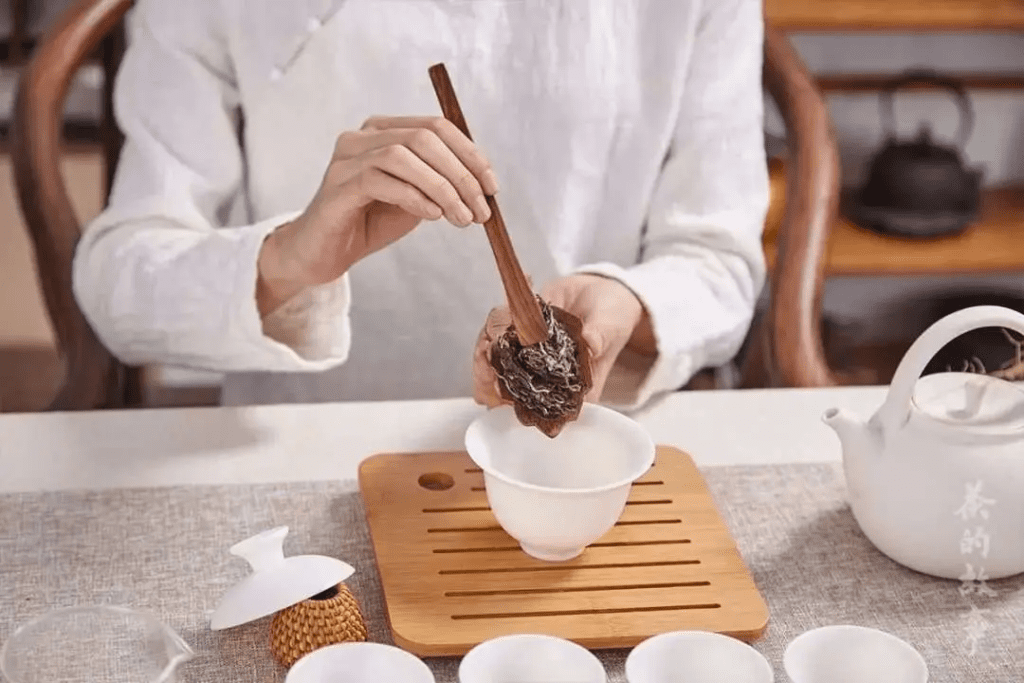
This is why judging tea only by teaspoons, or by how full the gaiwan looks, can be misleading.
A small digital scale is useful when you are learning, not because every session needs to become precise, but because it gives you a reference point. After enough sessions, most people naturally become much better at judging leaf quantity by sight and feel.
This causes more confusion than people expect.
A gaiwan sold as “120ml” does not necessarily mean you are brewing with exactly 120ml of water each time. Capacity may be measured close to the rim, while in normal use the lid sits lower and the actual amount of brewing water is smaller. Once tea leaves are inside, they displace additional water.
Before calculating elaborate ratios, try something simpler. Fill your gaiwan to the level where you would normally brew, then pour that water into a measuring cup.
That is your useful brewing capacity.
For many people, knowing that number is more helpful than knowing the number printed on the product page.
Imagine you put 5 grams into a 100ml gaiwan and the first infusion is unpleasantly bitter.
The natural reaction is to use less tea next time. That may work—but first look at the other variables.
Perhaps the water is too hot for that particular tea. Perhaps a ten-second infusion quietly became thirty seconds while you were arranging the lid and preparing to pour. Perhaps the leaves are broken and extracting unusually fast. Or perhaps you simply prefer lighter tea.
There is no prize for forcing yourself to drink tea at a ratio somebody else enjoys.
Try shortening the infusion first. If the tea still feels overly concentrated, use slightly less leaf. If it tastes thin instead, increase the leaf while keeping the infusion short.
One adjustment at a time teaches you much more than trying to follow somebody else’s brewing recipe exactly.
This is also why smaller gaiwans can be so comfortable for personal gongfu sessions.
A 90–110ml gaiwan gives the leaves enough room to open while keeping each infusion relatively small. A larger gaiwan is not wrong. It simply means that using the same tea-to-water ratio requires more leaf and produces considerably more tea over a long sequence of infusions.
If you regularly reach the fifth or sixth infusion and realize you simply do not want another cup, the problem may not be your tea at all. Your brewing vessel may just be too large for the way you drink.
If you are still choosing a vessel, you can browse our gaiwan collection by size and material. If you are new to handling one, our step-by-step guide to brewing with a gaiwan covers the basic pouring technique.
Some people enjoy dense, aromatic infusions using plenty of leaf and very fast pours. Others prefer a lighter session and want each infusion to be softer.
Both can still reveal the progression of a tea—the way aroma, texture and flavor change from one infusion to the next.
If you are just beginning with a roughly 100ml gaiwan, start around 4–5 grams for many teas and pour relatively quickly. Taste it.
Too strong? Shorten the infusion or reduce the leaf.
Too weak? Add a little more.
Bitterness appearing very quickly? Before blaming the quantity, also look at water temperature, leaf condition and how long the tea actually remained in contact with the water.
Once you find the combination you like, write it down. After a few sessions, you stop asking what the correct gaiwan ratio is. You start learning what this particular tea wants—and, more importantly, how you like to drink it.