Przerwa w wysyłkach świątecznych — wznowienie 8 października. Świętuj Święto Środka Jesieni, korzystając z rabatu 10% po wpisaniu kodu ctsmooncake. OdrzućPrzejdź do treści
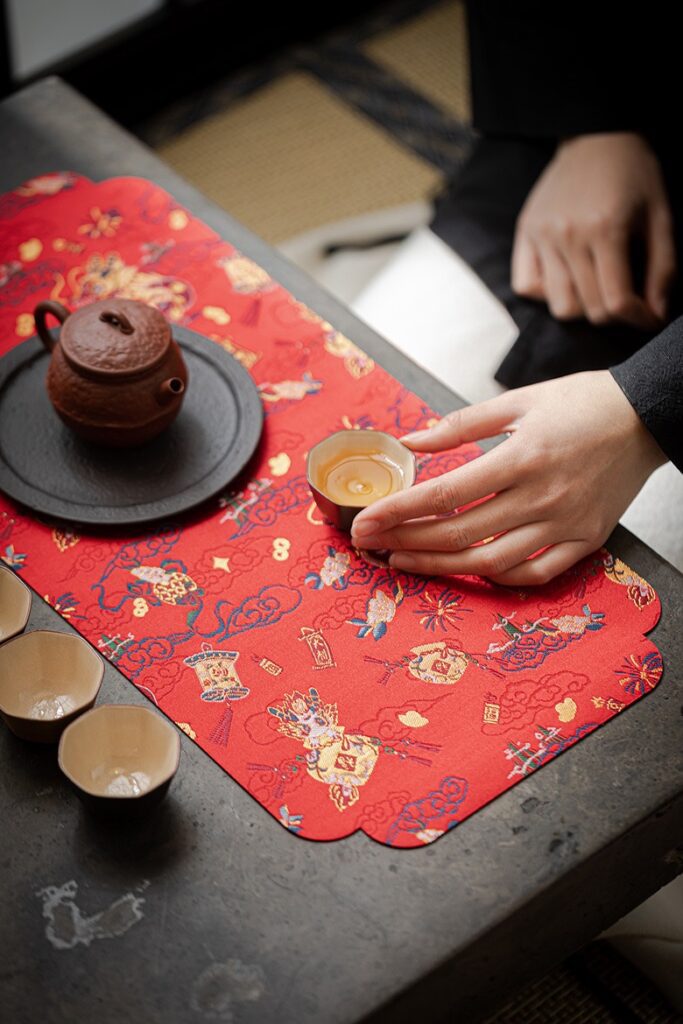
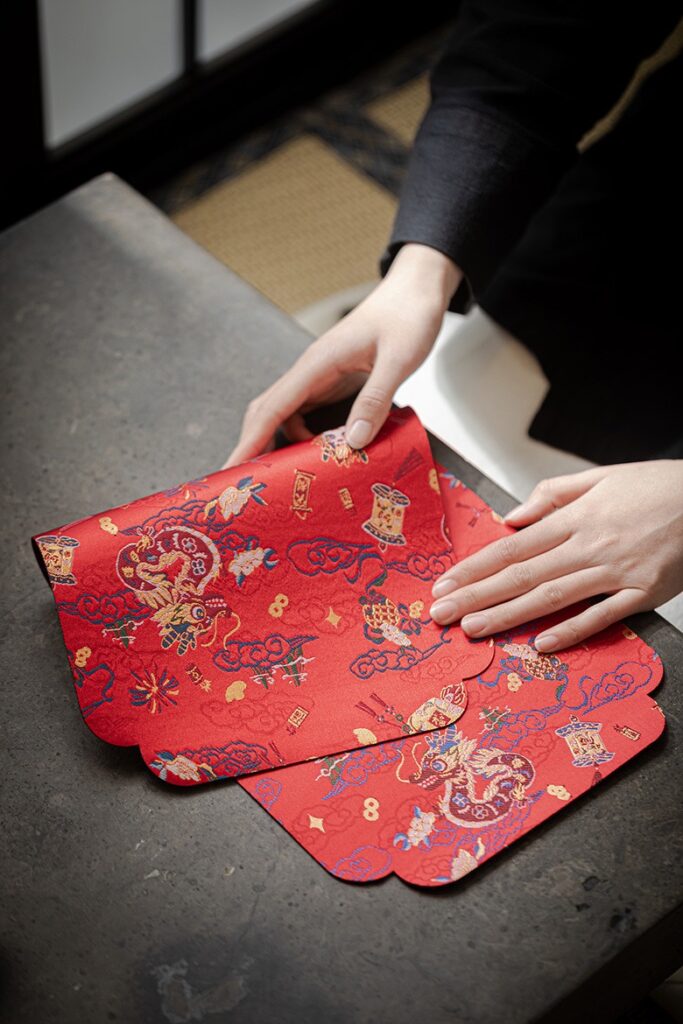
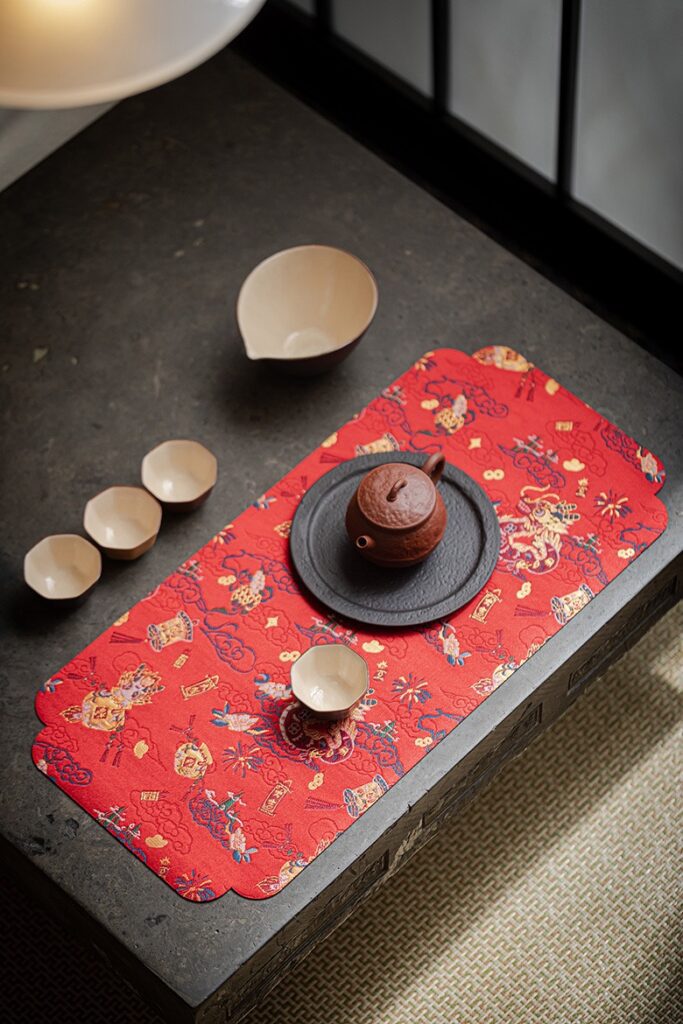
Hej, miłośnicy herbaty! 🐉✨ Mamy ekscytującą wiadomość na początek Roku Smoka 2024 – przy zakupie czajniczka Yixing otrzymacie w prezencie ekskluzywną podkładkę pod czajniczek w stylu Roku Smoka, która doda Waszym rytuałom parzenia herbaty wyjątkowego uroku. To nasz sposób na świętowanie razem z Wami, ale pamiętajcie, że jest to oferta ograniczona czasowo! Nie przegapcie okazji, by dzięki temu mistycznemu dodatku uczynić Wasze sesje herbaciane jeszcze bardziej wyjątkowymi. 🍵💫
Witajcie, miłośnicy herbaty! Chociaż wielu z was zna nas jako firmę oferującą wysokiej jakości chińskie akcesoria do parzenia herbaty, Specjalizujemy się również w herbatach z regionu Huang Shan. Huang Shan to ojczyzna najsłynniejszych chińskich herbat – Huang Shan Mao Feng, Keemun i Tai Ping Hou Kui. Jako mieszkańcy tego zapierającego dech w piersiach miejsca, jesteśmy głęboko związani z tą ziemią i jej bogatym dziedzictwem herbacianym.
Rozumiemy, że znalezienie idealnej herbaty może być osobistą podróżą, dlatego oferujemy nasz zestaw próbek. Dzięki niemu możesz poznać różnorodne smaki herbat Huang Shan i odkryć tę, która najbardziej przypadnie Ci do gustu.
Każda z tych herbat pochodzi bezpośrednio od plantatorów herbaty i jest przez nich produkowana, co gwarantuje jej jakość i autentyczny smak.
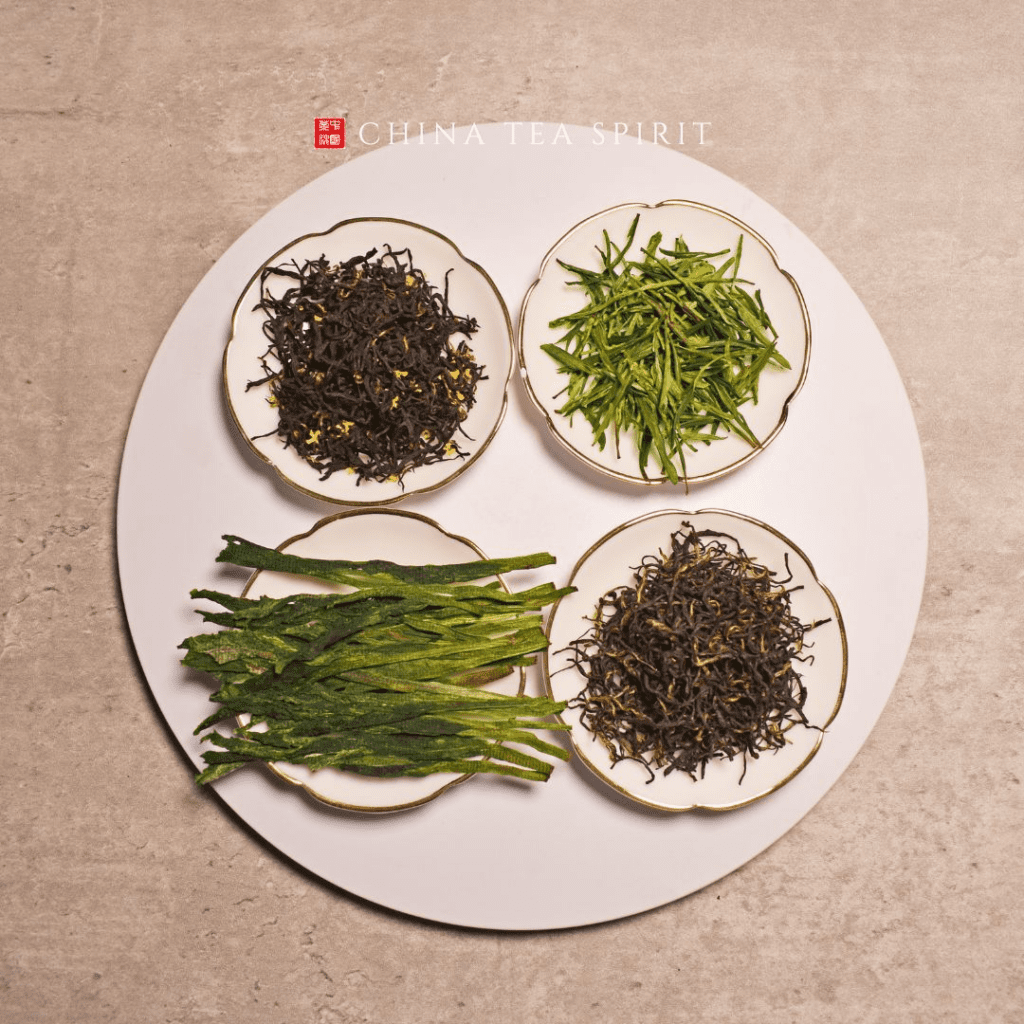
Zestaw próbek zawierający: Huang Shan Mao Feng – 10 g Tai Ping Hou Kui – 10 g Keemun Mao Feng – 10 g Osmanthus Keemun – 10 g
Z niecierpliwością czekamy na Wasze opinie na temat naszych herbat. Dołączcie do nas w tej podróży i pozwólcie nam być Waszym przewodnikiem podczas odkrywania czarującego świata herbat z Huang Shan.
Należy pamiętać, że herbata i akcesoria do parzenia herbaty zostaną wysłane w oddzielnych paczkach zgodnie z wymogami celnymi. Zazwyczaj herbata dociera nieco później niż akcesoria do parzenia herbaty.
Drodzy klienci,
Jeśli podczas realizacji zamówienia wystąpiły jakiekolwiek problemy, prosimy o kontakt pod adresem [email protected]. A my Ci w tym pomożemy.
Poniżej przedstawiamy listę typowych błędów związanych z płatnościami oraz sposoby ich rozwiązania, które mogą Państwu pomóc.
#1: Firma China Tea Spirit nie realizuje wysyłek do tej lokalizacji. Prosimy o podanie innego adresu.
Jest to znany błąd serwisu PayPal. Występuje on losowo. Jeśli pojawił się u Ciebie ten komunikat o błędzie, skontaktuj się z nami pod adresem [email protected]. Zajmiemy się tym za Ciebie.
An unglazed clay teapot does not arrive with a tea assignment.
There is nothing hidden in a dark purple clay that says “ripe pu’er only,” or in a round body that automatically makes it a rock-oolong pot. Yet when someone buys their first Yixing or other unglazed clay teapot, one of the first questions is often:
What tea should I dedicate this to?
I think that question usually comes a little too early.
Before deciding what a pot should brew, it is much more useful to find out what it actually does.
Photo by Seven Colors on Unsplash.
The pot’s job is not to follow a pairing chart
Clay can change a tea.
Research comparing tea brewed in different vessel materials has found measurable differences in the resulting infusions. With oolong in particular, clay vessels can change parts of the tea’s chemical and sensory profile compared with other brewing materials.
The problem starts when this gets turned into a rigid chart:
Zi Ni for pu’er. Zhu Ni for oolong. Duan Ni for lighter tea.
Those pairings can be useful starting points, but a real teapot is more complicated than its clay name.
Its wall thickness changes heat retention. Its size changes how quickly you pour. Its shape changes how the leaves expand. Firing affects the clay body. Even two pots described with the same clay can behave differently.
And then there is the tea itself.
A heavily roasted Wuyi oolong and a fragrant Dancong are both oolong, but you may not want a pot to treat them in exactly the same way.
So the more useful question becomes:
What does this particular pot improve?
Use porcelain as the control
This is one of the reasons a simple porcelain gaiwan remains useful even after you start collecting clay teapots.
It gives you a reference.
Photo by Arseniy Kapran on Unsplash.
Take a tea you know well and brew it once in porcelain and once in the clay pot. Keep the amount of leaf, water temperature and brewing time reasonably similar.
You are not trying to conduct a laboratory experiment. You are simply making the differences easier to notice.
Does the clay soften bitterness?
Does the body become rounder?
Does the aroma become quieter?
Does an aggressive roast suddenly feel more integrated?
Or did the pot remove exactly the high floral note you loved about the tea?
That last result matters just as much as the others.
Tea drinkers who compare the same tea in porcelain and clay often describe this kind of trade-off: porcelain may give more aroma and clarity, while clay can make the liquor feel smoother or rounder.
Neither vessel is automatically “better.”
They can emphasize different parts of the same tea.
Try the pot before you dedicate it
With a new pot, I would happily try a few broad families of tea before settling on one.
A roasted oolong might show whether the pot rounds out roast and astringency. A sheng pu’er can reveal what it does to bitterness, texture and fragrance. A black tea can make changes in sweetness and aroma particularly easy to notice.
You may discover that the answer is obvious after three sessions.
Or you may find that the pot is good with several things.
That is fine too.
The popular idea that one accidental brew permanently “contaminates” an unglazed teapot is much more dramatic than the reality. Tea oils and aromatic compounds can interact with porous clay over repeated use, but a teapot does not acquire an irreversible personality after one afternoon.
Dedication makes more sense once you already know what you want to preserve.
If every time you put roasted oolong into a particular pot the tea becomes richer and more comfortable, while your fragrant sheng consistently loses something you enjoy, the pot has more or less chosen its own job.
No chart was required.
And what about “seasoning” the pot?
This word creates unnecessary anxiety.
A clay teapot does not need to be marinated into becoming a good teapot.
For a properly made vessel from a source you trust, the important part is simply using it, keeping it clean and allowing it to dry properly between sessions. The character that develops from repeated tea making should happen gradually through normal use.
It is also worth separating seasoning z material safety.
If you do not know what a secondhand or inexpensive unglazed pot is made from, soaking it in tea does not answer that question. Home tricks involving vinegar, boiling water or changes in color are not substitutes for knowing the material and provenance of the vessel; proper migration testing for ceramic materials uses controlled laboratory methods.
That is a different question from tea pairing, and an important one.
But once you have a clay pot you trust, choosing its tea can be much simpler than people make it sound.
Brew something you already understand.
Compare it with porcelain.
Then brew something different.
Pay attention to what the pot removes as much as what it adds.
If one tea suddenly seems more complete in that pot, you have your answer.
And if the answer changes six months later, that is allowed too.
A teapot is a brewing tool before it becomes a rule.