Pausa en los envíos por las fiestas — se reanudarán el 8 de octubre. Celebra el Festival del Medio Otoño con un descuento de 10% utilizando el código ctsmooncake. DescartarIr al contenido
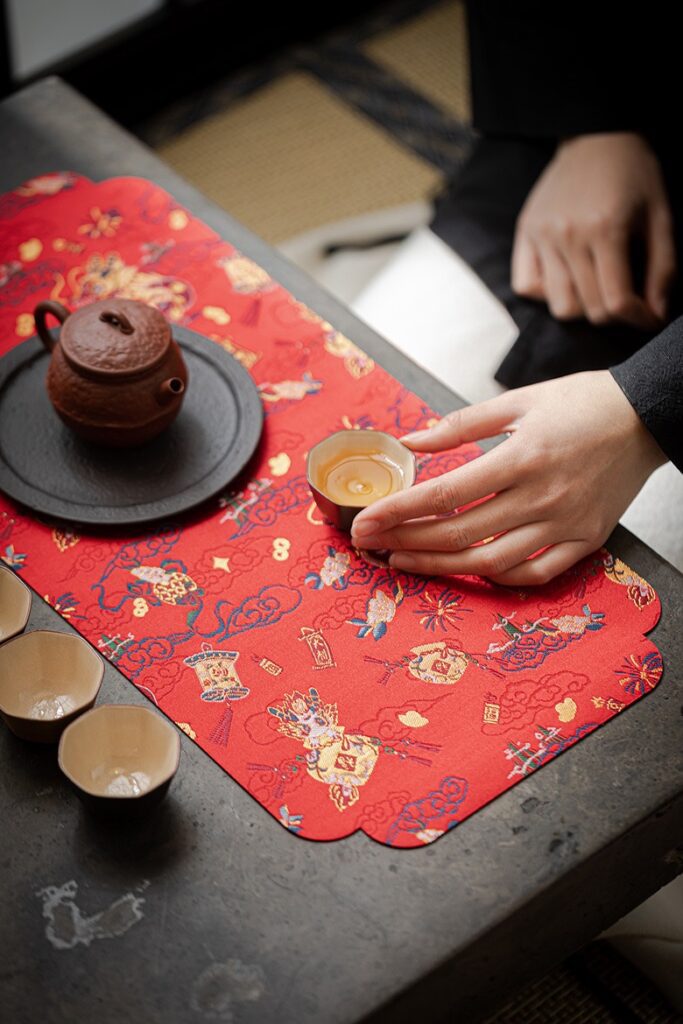
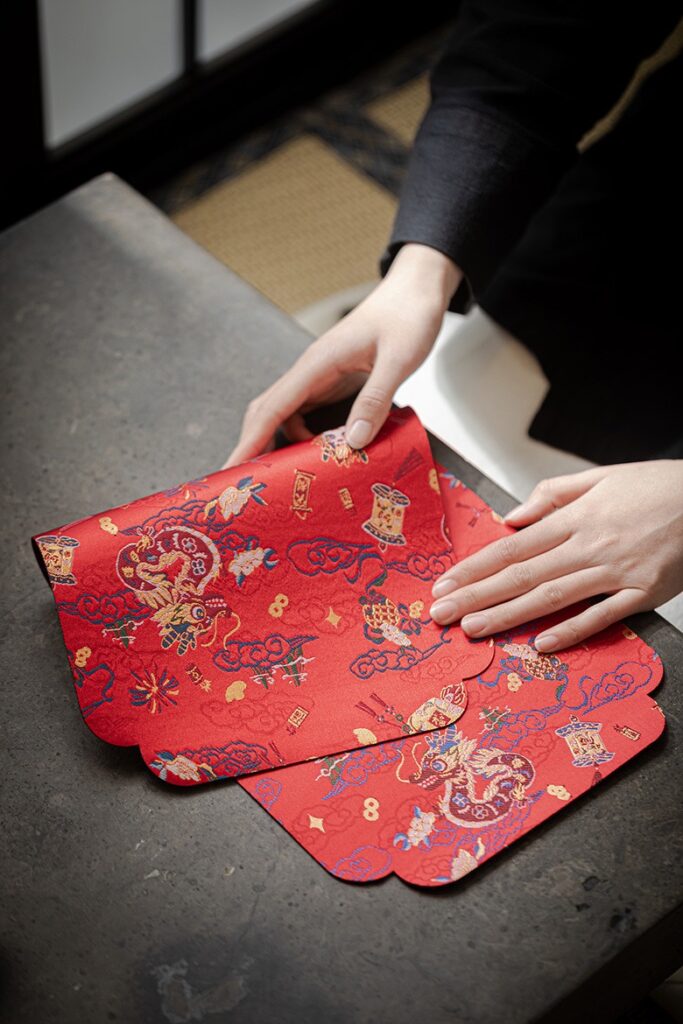
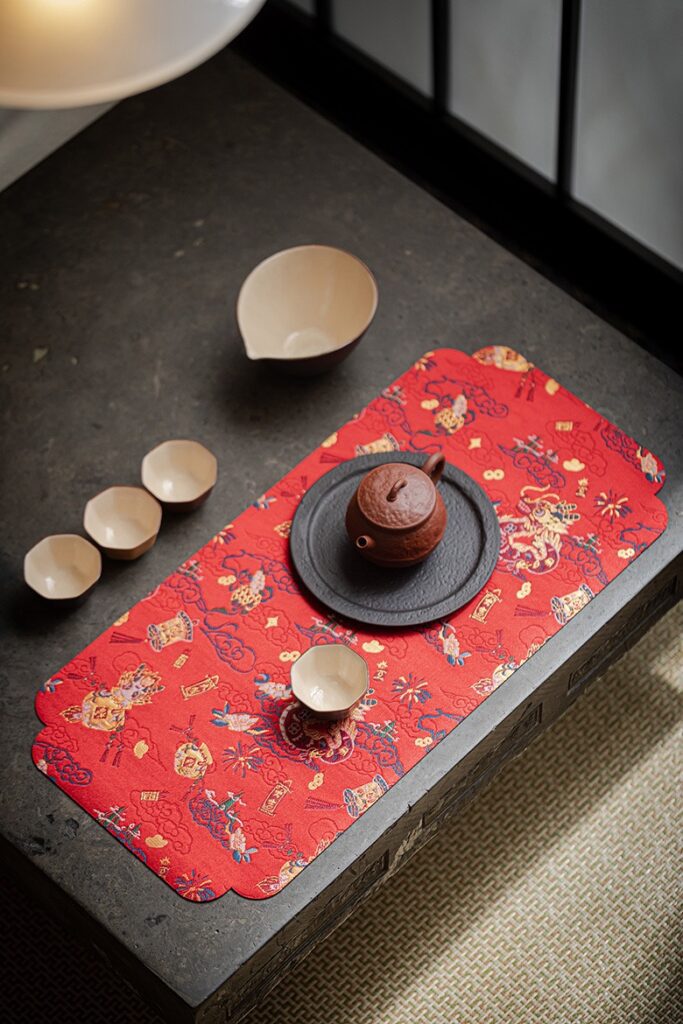
¡Hola, amantes del té! 🐉✨ Tenemos una noticia emocionante ahora que entramos en el Año del Dragón de 2024: con la compra de una tetera de Yixing, te regalamos un tapete para té exclusivo con el diseño del Año del Dragón para que tus rituales de té tengan un toque especial. Es nuestra forma de celebrarlo con vosotros, pero recordad: ¡es una oferta por tiempo limitado! No dejéis pasar la oportunidad de hacer que vuestras sesiones de té sean aún más especiales con este místico complemento. 🍵💫
¡Hola, amantes del té! Aunque muchos de vosotros nos conocéis como una empresa especializada en artículos de té chino de alta gama, también nos especializamos en tés de la región de Huang Shan. Huang Shan es la cuna de los tés chinos más famosos: el Huang Shan Mao Feng, el Keemun y el Tai Ping Hou Kui. Como nativos de este lugar impresionante, tenemos un profundo vínculo con la tierra y su rico patrimonio del té.
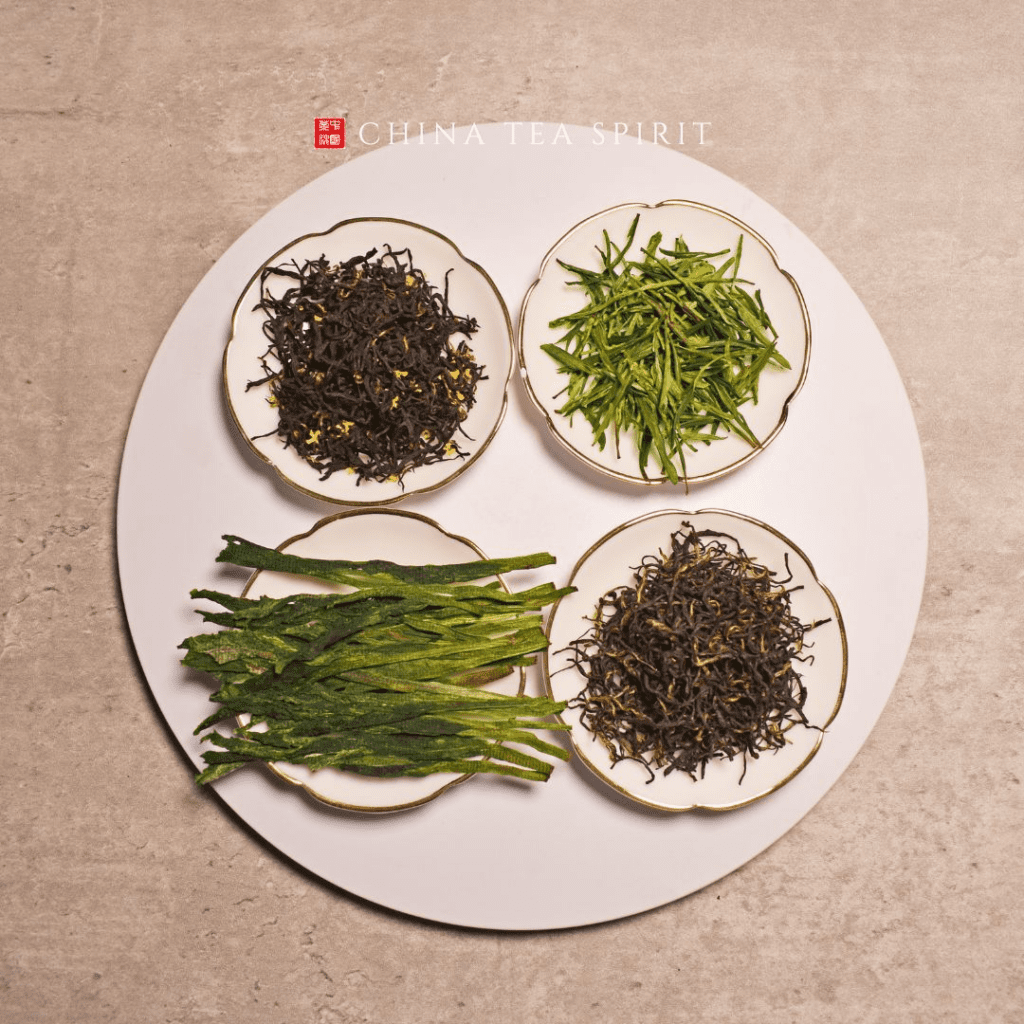
Somos conscientes de que encontrar el té perfecto puede ser toda una experiencia personal, y por eso te ofrecemos nuestro paquete de muestras. Te permite explorar la variedad de sabores de los tés de Huang Shan y descubrir aquel que más se adapte a tu paladar.
Todos los tés proceden directamente de los productores de té, lo que garantiza su calidad y su sabor auténtico.
Paquete de muestras que incluye: Huang Shan Mao Feng – 10 g Tai Ping Hou Kui – 10 g Keemun Mao Feng – 10 g Osmanthus Keemun – 10 g
Estamos deseando conocer vuestras opiniones sobre nuestros tés. Acompañadnos en este viaje y dejad que seamos vuestra guía mientras exploráis el encantador mundo de los tés de Huang Shan.
Ten en cuenta que el té y los utensilios para el té se enviarán en paquetes separados, de acuerdo con los requisitos aduaneros. Normalmente, el té llegará un poco más tarde que los utensilios para el té.
Estimados clientes,
Si has tenido algún problema durante el proceso de pago, ponte en contacto con nosotros en [email protected]. Y te echaremos una mano.
A continuación, enumeramos los errores de pago más habituales y sus soluciones para tu información.
#1: China Tea Spirit no realiza envíos a esta ubicación. Por favor, utiliza otra dirección.
Se trata de un error conocido de PayPal. Se produce de forma aleatoria. Si has visto este mensaje de error, ponte en contacto con nosotros en [email protected]. Nos encargaremos de solucionarlo por ti.
If you first met Pixiu through a bracelet, a Feng Shui shop or a small ornament beside a cash register, you were probably given a very simple explanation:
Pixiu attracts wealth.
That is certainly how the creature is understood today. But it is not where the story begins.
Long before Pixiu became a familiar symbol of money and prosperity, Chinese art already had a family of fierce, winged guardian beasts. They stood at tombs, appeared in elite decorative objects and carried a much broader idea: protection.
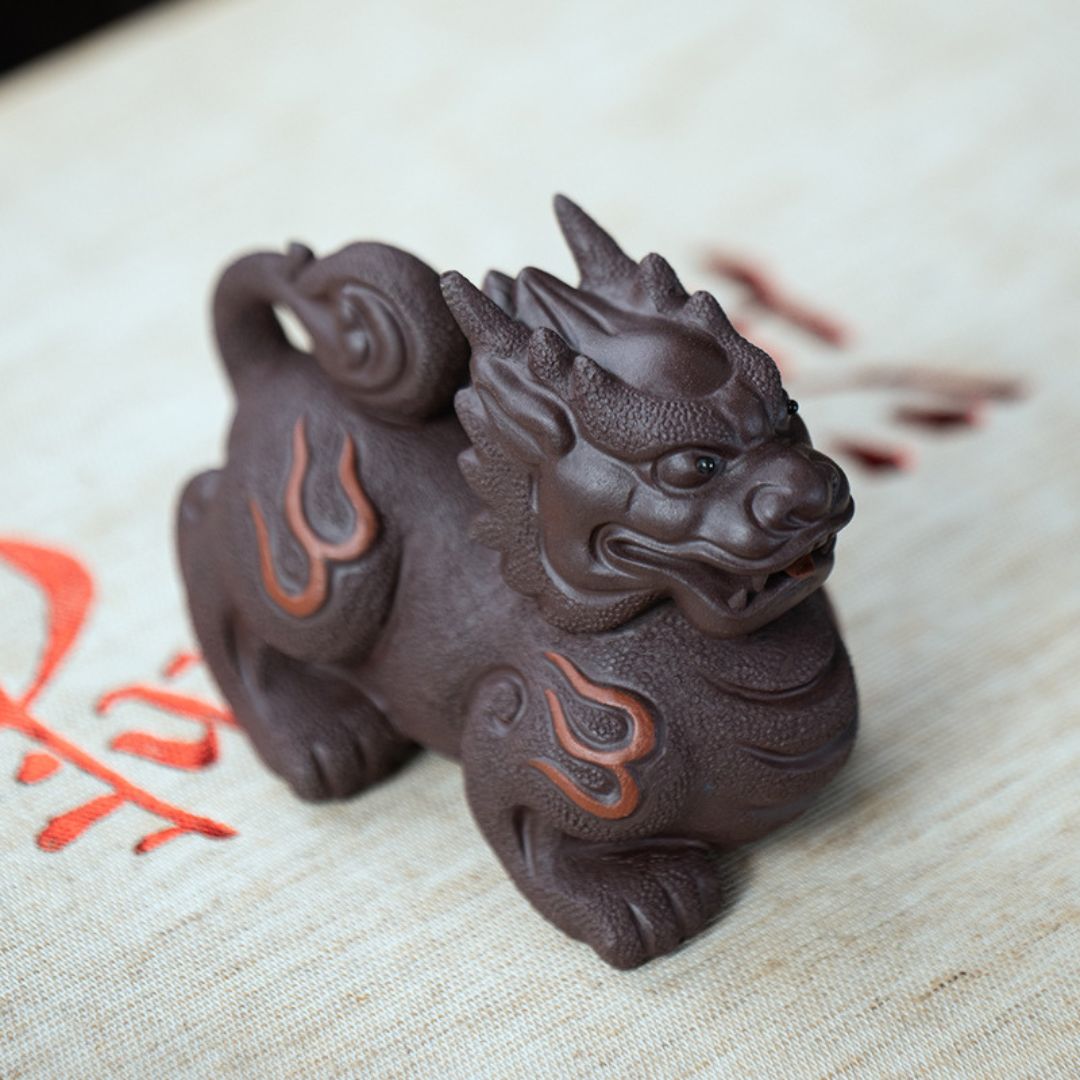
A contemporary Pixiu tea pet in Zisha clay.
So what exactly is Pixiu, and how did an ancient guardian beast become one of the most recognizable wealth symbols in Chinese culture?
What does Pixiu look like?
There is no single design that every Pixiu has to follow.
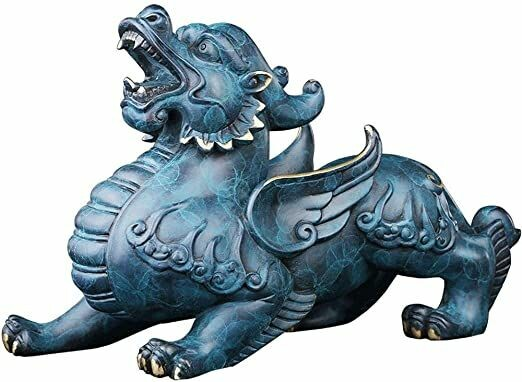
Across Chinese art, the creature belongs to a broad family of hybrid beasts. It may have a lion-like body, a powerful open mouth, horns, wings, hooves or clawed feet, and features that feel partly dragon-like.
That sounds imprecise, but it reflects the history of the image better than a modern character sheet would.
One modern interpretation of Pixiu’s hybrid, lion-like form.
Historical examples vary. One horn or two may appear. Wings can be prominent or barely suggested. Some figures look close to lions; others feel much more fantastical.
The important thing is the overall character: Pixiu is not a gentle animal. It is a strong, alert, guardian-like beast.
Before Pixiu guarded wealth, beasts like it guarded people and tombs
This is the part that tends to disappear from modern introductions.
El National Museum of Natural Science in Taiwan describes Pixiu as a tomb guardian beast. Its Chinese-language research on related bixie figures explains that lion-faced, winged mythical animals—including forms called Bixie, Tianlu and Pixiu—belonged to a larger family of protective creatures used around tombs and elite ritual settings.
Western Han bronze Bixie guardian beast, National Museum of History, Taiwan. Image used under CC BY attribution.
El National Museum of History identifies this Western Han bronze Bixie as part of the same tradition surrounding names such as Pixiu and Tianlu. The creature is described as a fierce auspicious beast with protective meaning.
That older role is important.
Pixiu was not originally interesting because it promised to make someone rich. It was interesting because it was powerful enough to stand between people and danger.
Pixiu, Bixie and Tianlu: why the names get confusing
If you try to research Pixiu through museum collections, the naming quickly becomes messy.
You will run into Pixiu, Bixie y Tianlu, sometimes treated as distinct creatures and sometimes grouped together.
El National Palace Museum notes that Bixie and Pixiu have at times been regarded as the same mythical beast. Historical traditions also tried to distinguish related figures through details such as the number of horns, but those rules were not followed consistently enough to work as a universal identification system today.
So if two old winged beasts look almost identical but one museum calls one Bixie and another source calls a similar form Pixiu, that does not necessarily mean somebody made a mistake.
It may simply reflect how fluid Chinese mythical-animal imagery has always been.
So how did Pixiu become a wealth symbol?
This is where the older guardian identity begins to overlap with later ideas of prosperity.
Today Pixiu is strongly associated with attracting and protecting wealth. It appears in jewelry, office ornaments, home decoration and Feng Shui objects, often facing outward as if searching for valuable things to bring back.
The wealth association is now a genuine part of the creature’s cultural identity. But it should not be projected unchanged all the way back onto every ancient winged beast.
The older material record emphasizes auspiciousness, power and guardianship. The very specific modern image of Pixiu as a creature whose main job is collecting money developed later.
The Palace Museum still presents Pixiu as an auspicious guardian image associated with protection and good fortune, while modern decorative culture has pushed the prosperity side much further.
What about the famous “no exit” story?
This is probably the best-known Pixiu legend today.
According to later folklore, Pixiu loves gold, silver and treasure but has no way to expel what it eats. Wealth can enter, but it cannot leave.
It is a wonderfully memorable explanation for the modern idea of wealth accumulation.
It is also better treated as later folklore, not as the documented ancient origin of Pixiu.
Older museum objects and descriptions of winged guardian beasts do not depend on that story. Their symbolism centers much more clearly on protection, auspicious power and the ability to ward off harmful forces.
That does not make the later legend meaningless. Folk traditions keep evolving. It simply means we should not make a newer story carry the entire weight of a much older creature.
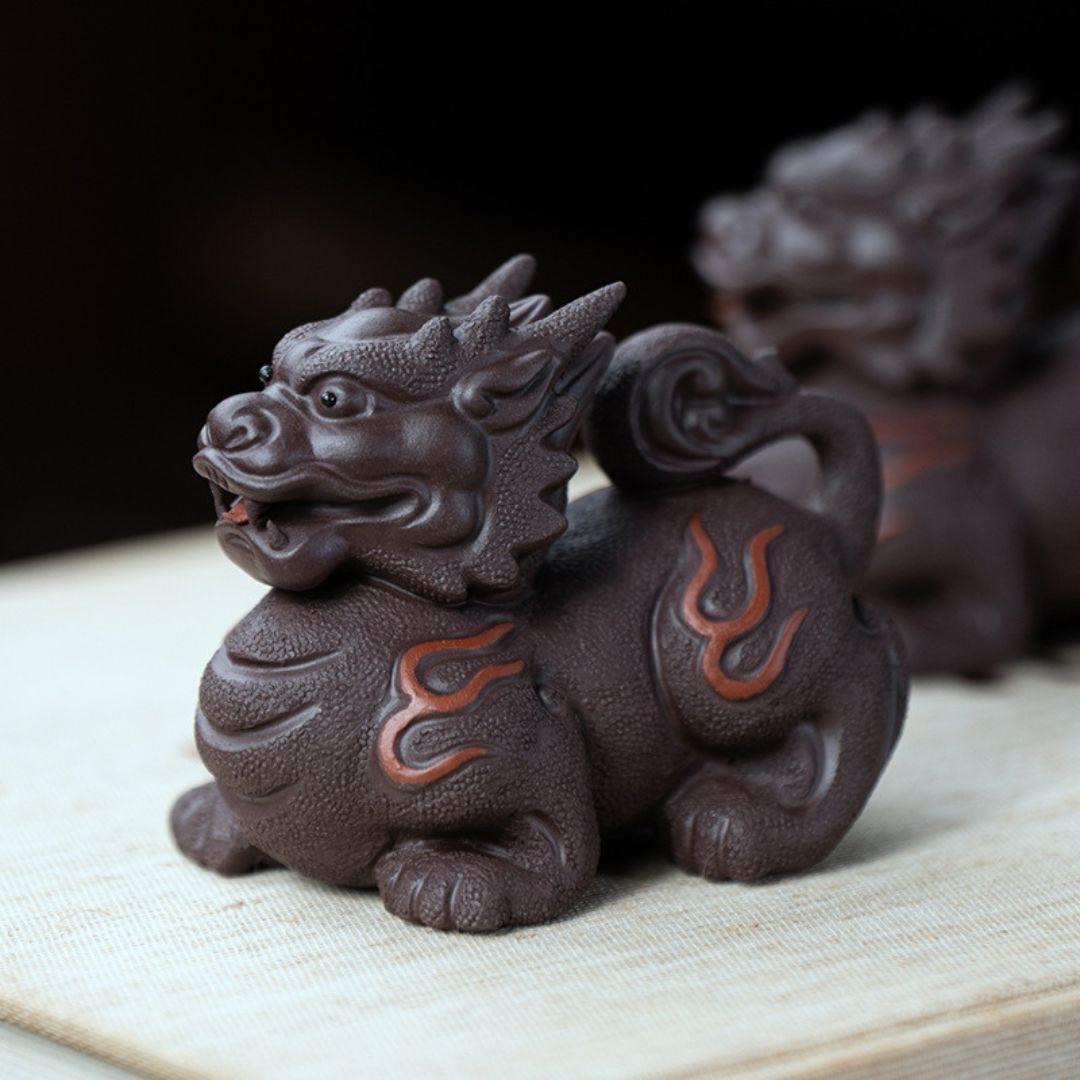
A contemporary ceramic Pixiu keeps the fierce guardian character even when the form becomes decorative.
Pixiu is not Qilin, Suanni or a guardian lion
Chinese mythical animals borrow visual features from one another so freely that confusion is almost unavoidable.
Pixiu can look lion-like. So can Suanni. Qilin may also combine horns, scales and features from several animals. Guardian lions add another layer of overlap.
There is no perfect checklist, but context helps.
Pixiu is usually the more forceful guardian type and, in modern use, the one most strongly associated with wealth. Suanni has a different history built around lion imagery and later smoke-and-incense associations. Qilin belongs to another auspicious tradition entirely.
The differences are cultural, not zoological.
Why Pixiu works so naturally as a tea pet
A creature designed to look alert and protective adapts surprisingly well to a tea table.
In large stone or bronze form, a winged guardian beast can feel imposing.
Scale it down into clay and something changes.
The same wide mouth, strong paws and watchful expression can become compact, tactile and even a little playful. Pouring tea over an unglazed clay Pixiu gradually changes the surface, so the object develops along with the tea practice around it.
A modern Zini-clay Pixiu tea pet turns the guardian beast into a much more personal object.
You can enjoy the wealth symbolism if it means something to you. But the creature does not need a supernatural promise to be interesting.
Its older identity—as a fierce, auspicious guardian—is already enough.
Pixiu is older than the story most people know
Modern Pixiu is easy to summarize:
A mythical beast that attracts wealth and keeps it from leaving.
That sentence explains why Pixiu appears on so many bracelets, ornaments and tea pets today.
But it misses the creature standing behind it.
Before Pixiu guarded money, winged beasts guarded tombs.
Before people worried about which direction a small statue should face, much larger creatures stood watch over spaces associated with power, death and protection.
And before the popular story about treasure going in and never coming out, Pixiu already belonged to an old Chinese visual language of fierce auspicious guardians.