Pausa en los envíos por las fiestas — se reanudarán el 8 de octubre. Celebra el Festival del Medio Otoño con un descuento de 10% utilizando el código ctsmooncake. DescartarIr al contenido
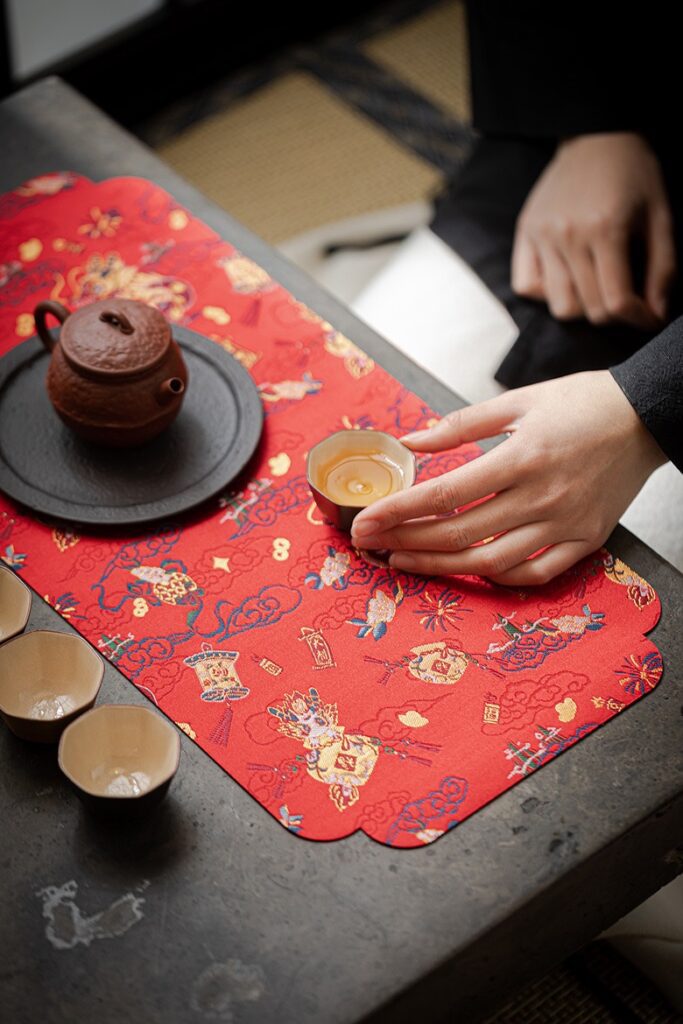
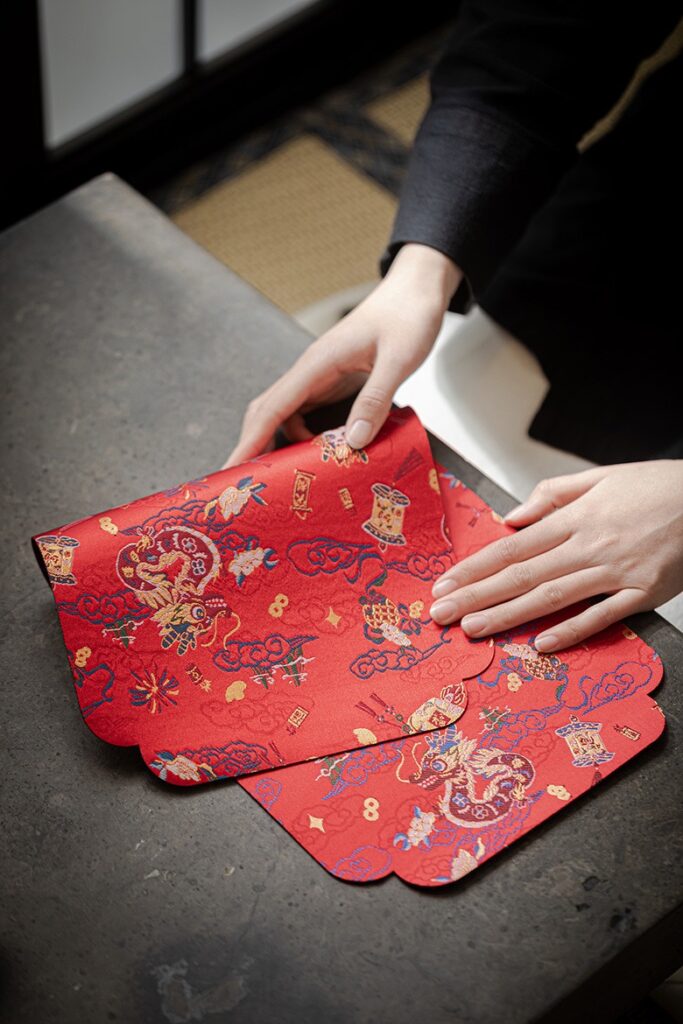
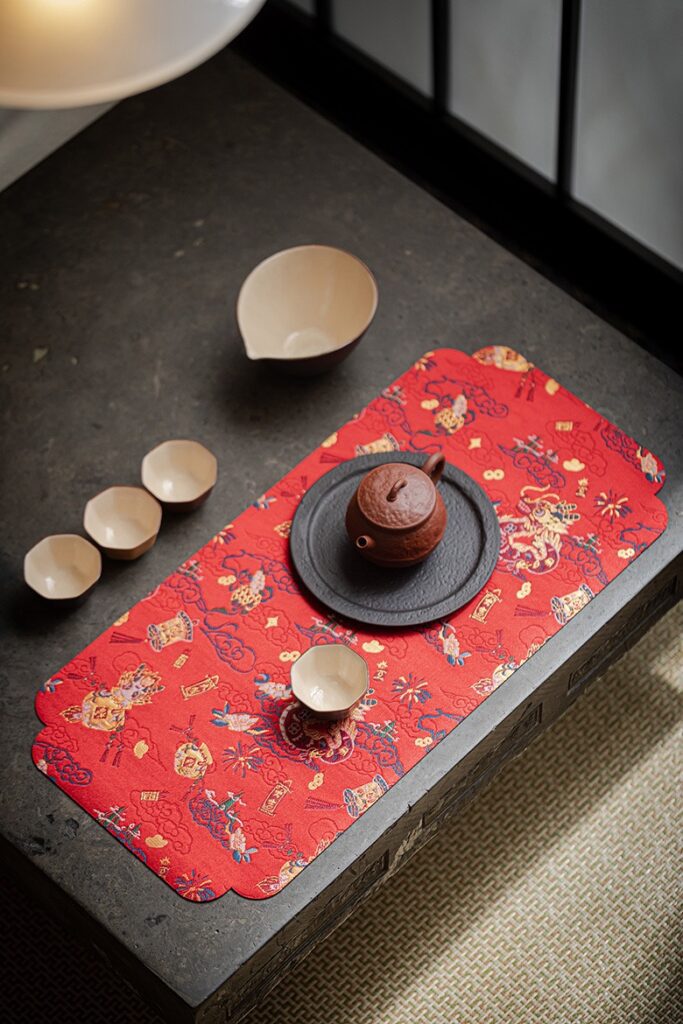
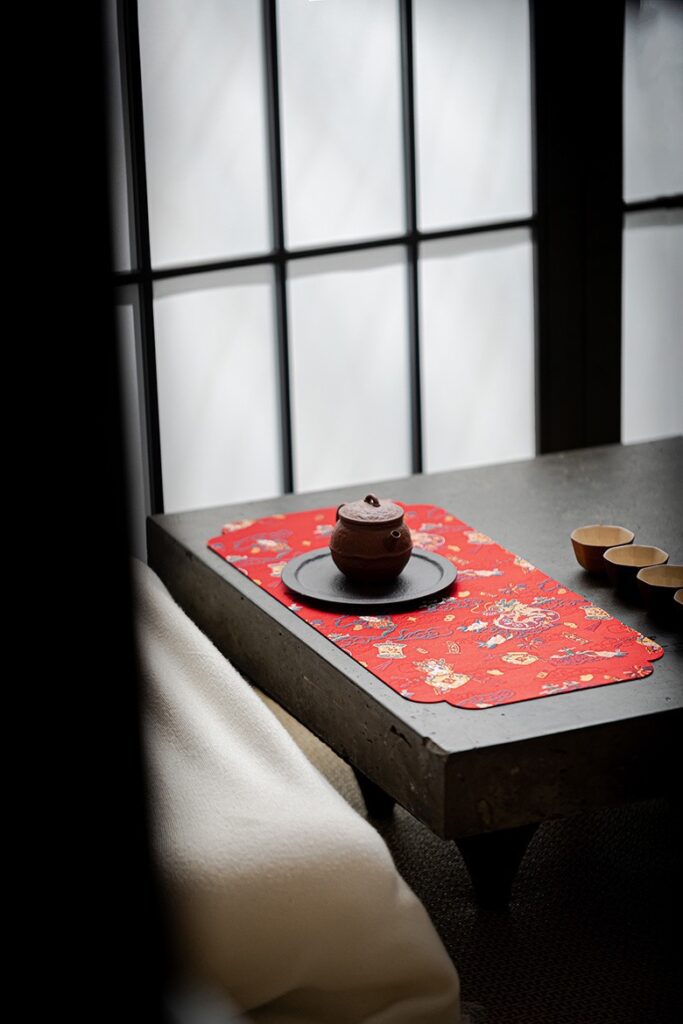
¡Hola, amantes del té! 🐉✨ Tenemos una noticia emocionante ahora que entramos en el Año del Dragón de 2024: con la compra de una tetera de Yixing, te regalamos un tapete para té exclusivo con el diseño del Año del Dragón para que tus rituales de té tengan un toque especial. Es nuestra forma de celebrarlo con vosotros, pero recordad: ¡es una oferta por tiempo limitado! No dejéis pasar la oportunidad de hacer que vuestras sesiones de té sean aún más especiales con este místico complemento. 🍵💫
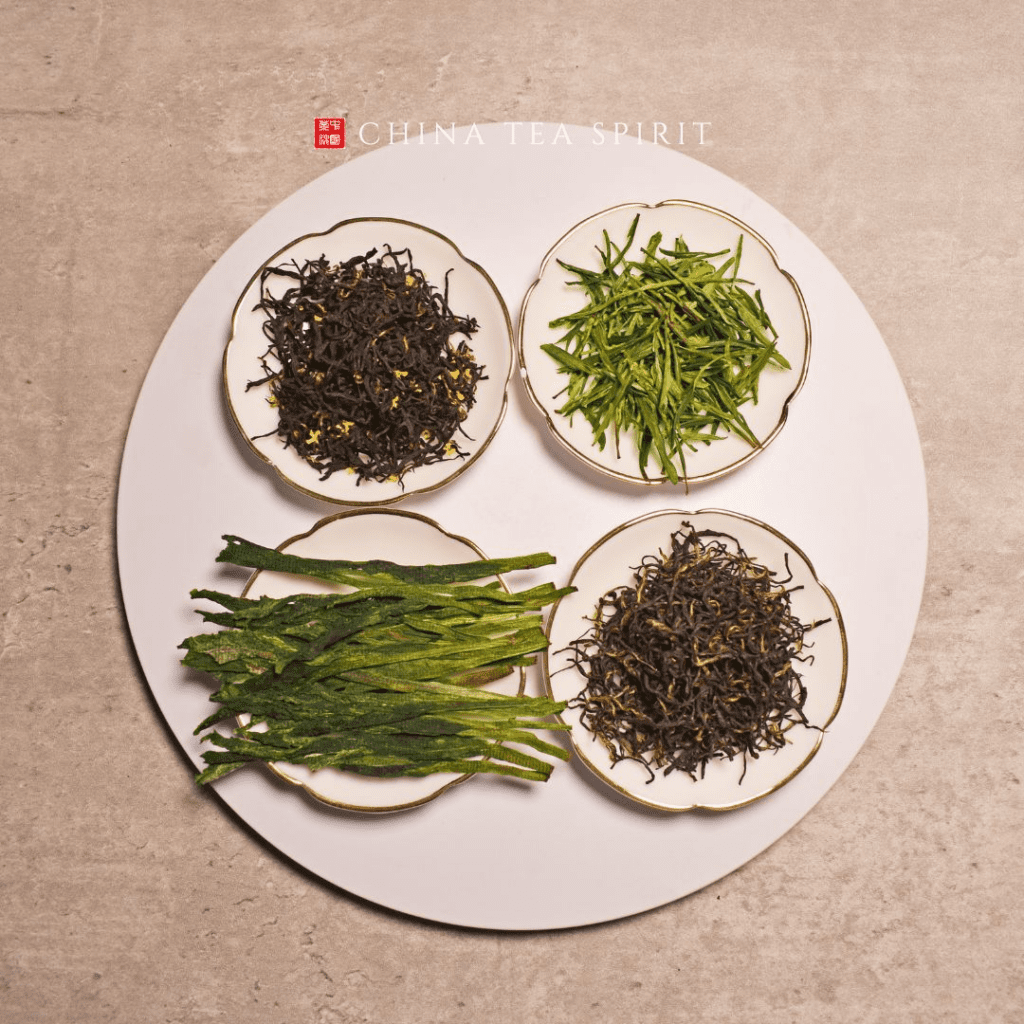
¡Hola, amantes del té! Aunque muchos de vosotros nos conocéis como una empresa especializada en artículos de té chino de alta gama, también nos especializamos en tés de la región de Huang Shan. Huang Shan es la cuna de los tés chinos más famosos: el Huang Shan Mao Feng, el Keemun y el Tai Ping Hou Kui. Como nativos de este lugar impresionante, tenemos un profundo vínculo con la tierra y su rico patrimonio del té.
Somos conscientes de que encontrar el té perfecto puede ser toda una experiencia personal, y por eso te ofrecemos nuestro paquete de muestras. Te permite explorar la variedad de sabores de los tés de Huang Shan y descubrir aquel que más se adapte a tu paladar.
Todos los tés proceden directamente de los productores de té, lo que garantiza su calidad y su sabor auténtico.
Paquete de muestras que incluye: Huang Shan Mao Feng – 10 g Tai Ping Hou Kui – 10 g Keemun Mao Feng – 10 g Osmanthus Keemun – 10 g
Estamos deseando conocer vuestras opiniones sobre nuestros tés. Acompañadnos en este viaje y dejad que seamos vuestra guía mientras exploráis el encantador mundo de los tés de Huang Shan.
Ten en cuenta que el té y los utensilios para el té se enviarán en paquetes separados, de acuerdo con los requisitos aduaneros. Normalmente, el té llegará un poco más tarde que los utensilios para el té.
Estimados clientes,
Si has tenido algún problema durante el proceso de pago, ponte en contacto con nosotros en [email protected]. Y te echaremos una mano.
A continuación, enumeramos los errores de pago más habituales y sus soluciones para tu información.
#1: China Tea Spirit no realiza envíos a esta ubicación. Por favor, utiliza otra dirección.
Se trata de un error conocido de PayPal. Se produce de forma aleatoria. Si has visto este mensaje de error, ponte en contacto con nosotros en [email protected]. Nos encargaremos de solucionarlo por ti.
Why a 40ml teapot, a miniature gaiwan, and a few tiny cups might be more useful than they look.
Forty milliliters.
That’s barely enough tea to make a dent in an ordinary coffee mug. Yet someone has gone to the trouble of making an entire teapot that holds exactly that much.
A proper spout. A fitted lid. A tiny handle. All the proportions of a full-sized teapot, reduced to something that fits comfortably in the palm of your hand.
It’s hard not to find these miniature pieces adorable.
But are they actually practical?
If you’re accustomed to making a large pot of tea and drinking it throughout the afternoon, probably not in the way you’d expect.
If you enjoy gongfu tea, however, a 40ml teapot can make a surprising amount of sense.
And the appeal goes well beyond miniature Yixing teapots. Tiny porcelain gaiwans, hand-painted ceramic cups, and compact tea sets all offer different ways to enjoy tea on a smaller scale.
A little tea can go a surprisingly long way
The first thing to understand is that a 40ml teapot doesn’t mean you’re only drinking 40ml of tea.
It means you’re brewing approximately that amount at a time, often somewhat less once the leaves are inside.
The same leaves can be infused repeatedly.
Suppose you use a small amount of oolong in a miniature teapot and enjoy eight infusions. Even if each infusion produces only around 30ml of tea, that’s approximately 240ml over the entire session.
You’ve had a perfectly reasonable amount of tea, just divided into smaller, freshly brewed portions.
This is particularly appealing when drinking alone.
A larger gongfu teapot may produce more tea than you want from each infusion. By the time you’re ready for the next round, the previous one may have cooled, or you may simply have had enough.
A smaller vessel makes each round easier to finish.
There’s also the question of how much leaf you want to use.
Perhaps you’ve bought a particularly expensive Wuyi rock oolong and want to explore it carefully. Or you have only a few grams left of a pu-erh you love.
You don’t necessarily want to use five or seven grams every time you sit down for tea.
With an appropriately small vessel, you may be able to enjoy a concentrated gongfu session with only a couple of grams.
For someone who regularly buys small tea samples, that can be genuinely useful.
You can experience several infusions without committing a large portion of the sample—or having to drink an enormous quantity of tea.
But 40ml doesn’t always mean 40ml of tea
This is something worth checking before purchasing miniature teaware.
When a manufacturer describes a teapot as 40ml, that number may refer to its maximum capacity when filled close to the brim.
It doesn’t necessarily represent the amount of tea liquor you’ll get during an actual brewing session.
Tea leaves take up space.
Some leaves, particularly tightly rolled oolongs, expand considerably as they absorb water.
And you usually need a little room near the top of the vessel to handle the lid and pour comfortably.
A nominally 40ml teapot might produce only 25–35ml of tea per infusion, depending on how you fill it and what you’re brewing. That’s an illustrative range, not a fixed rule.
With miniature teaware, a difference of ten milliliters can be significant.
One useful test is to fill an empty teapot to your normal brewing level, pour that water into a measuring container, and see how much it holds. Repeat with the amount of leaf you typically use to understand its practical yield.
This also helps when choosing a matching cup.
A 30ml tasting cup might be almost perfect for a tiny pot that produces around 30ml of tea.
But a 60ml gaiwan and a 30ml cup may require two servings, or a separate fairness pitcher to hold the complete infusion.
Matching the pieces to the way you actually brew is more important than making everything as small as possible.
Tiny Yixing teapots and miniature gaiwans aren’t quite the same
Consider two pieces of teaware that are similar in capacity.
One is a 50ml unglazed Yixing teapot.
The other is a 60ml porcelain gaiwan.
Both can work beautifully for personal gongfu sessions, but they offer rather different experiences.
The Yixing teapot brings the character of clay into the equation. Its material, wall thickness, shape and firing can influence brewing conditions and how you perceive the tea.
And because a Yixing teapot has a separate spout and handle, pouring can feel remarkably controlled even at a very small scale—provided the pot is well made.
Take a miniature Zini Rong Tian Yixing teapot, for example. The 40ml and 50ml versions retain the recognizable Rong Tian form despite their tiny proportions.
That’s part of the fascination of miniature Yixing craftsmanship.
The artist isn’t simply making a clay ornament. The lid still needs to fit, the spout needs to pour, and the handle needs to be usable.
Making everything smaller doesn’t eliminate these challenges.
In some respects, it makes them harder.
A miniature porcelain gaiwan offers a different advantage.
Because porcelain has a glazed surface, it provides a relatively neutral and versatile brewing vessel. You can move between different teas without giving much thought to whether their aromas will linger in an unglazed clay surface.
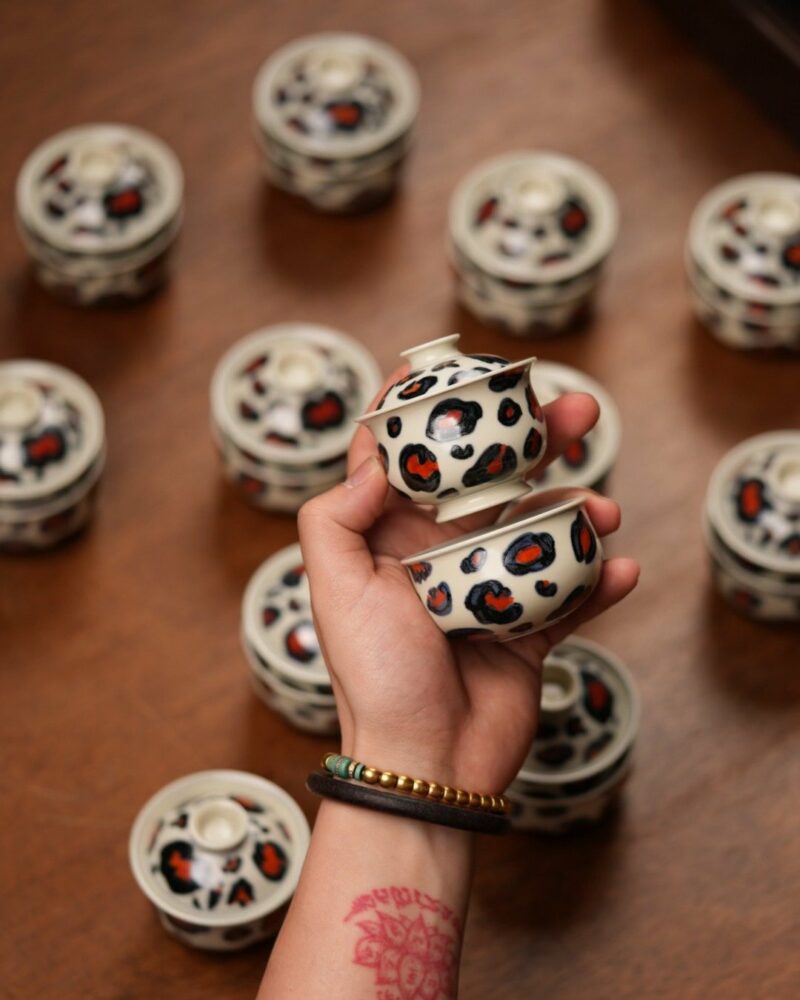
A small 60ml hand-painted Qinghua gaiwan is a good example of how a very compact brewing vessel can also be a canvas for ceramic artistry.
The decoration isn’t diminished by the small size. In fact, the intimacy of the piece invites closer attention to the brushwork and details.
If you enjoy trying many different teas, a tiny porcelain gaiwan may be a more flexible choice than a dedicated clay pot.
If you already know a particular tea you love brewing in Yixing, a miniature clay teapot can become a wonderfully personal tool.
Neither is automatically better.
They’re simply different ways of approaching the same small amount of tea.
Small cups are part of the experience, too
The miniature tea world doesn’t stop at the brewing vessel.
A beautiful little cup changes the rhythm of drinking tea.
Instead of taking several large mouthfuls, you might finish a serving in two or three small sips.
You notice the warmth of the cup.
The aroma rising from the tea.
The texture as it moves across your tongue.
And perhaps how the aftertaste develops after the cup is empty.
Of course, a tiny cup doesn’t automatically make tea taste better.
But it does encourage a different pace.
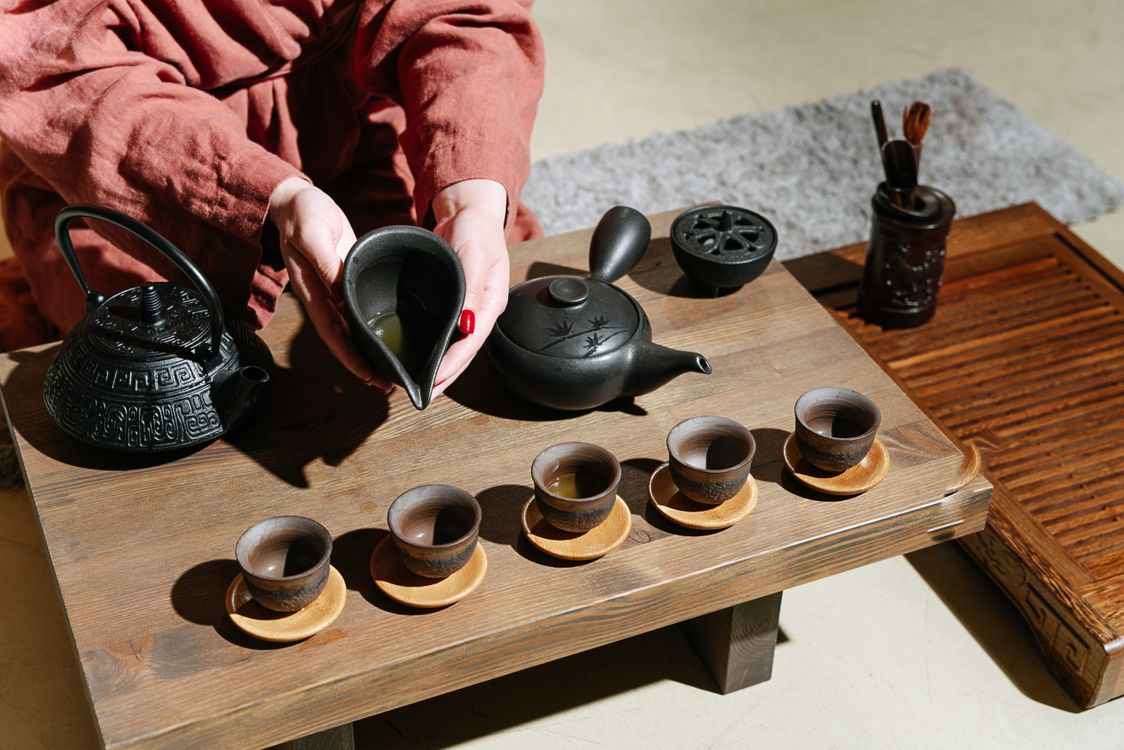
In traditional gongfu tea, small tasting cups have long been part of the experience. They make it easy to serve fresh infusions, share tea among several people, and appreciate how successive rounds change.
A simple 30ml thin white porcelain cup is particularly useful when you’re interested in the tea itself. The pale interior makes it easier to appreciate the liquor’s color and clarity.
Other small cups offer something quite different.
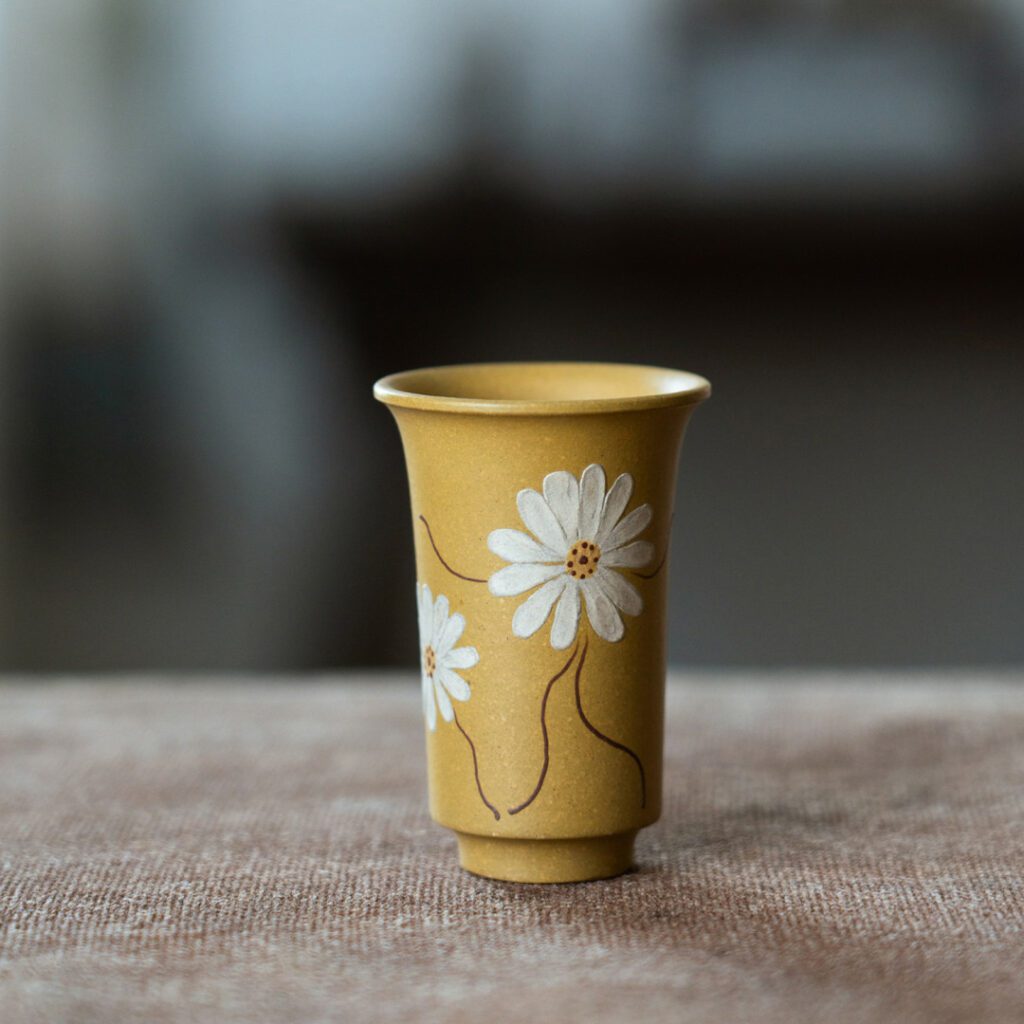
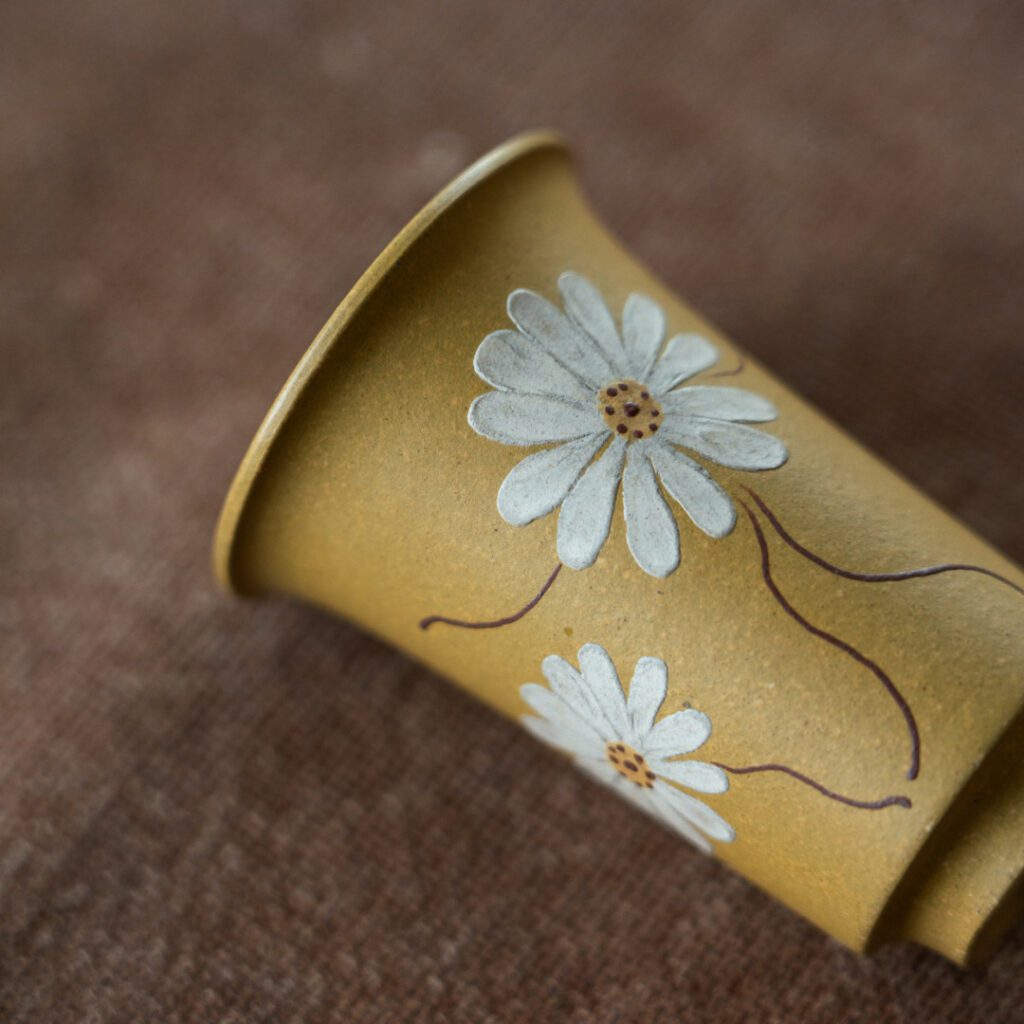
A hand-painted Jingdezhen cup might invite you to admire the decoration between infusions. A textured clay cup feels different in the fingers. A translucent porcelain cup can make a tiny serving of tea look especially delicate.
There is room for both function and beauty here.
After all, appreciating teaware is part of the pleasure of gongfu tea.
There is such a thing as too small
Not every miniature vessel will suit every tea drinker.
A 30ml teapot can be delightful for tasting small samples, but it may become inconvenient if you want a relaxed, uninterrupted tea session.
If you’re brewing for several people, you’ll need to make more frequent infusions or divide very small quantities among the cups.
Even when drinking alone, the smallest vessels require a little more attention.
There’s less room for the leaves.
Small changes in the amount of tea or water can have a noticeable effect on the brewing ratio.
And a tiny handle or lid knob may be more difficult to manage with hot water.
Some tightly rolled teas can expand enough to make a very small teapot feel crowded.
You also need to consider the quality of the pour. A miniature spout that dribbles or an awkwardly balanced handle can make an otherwise lovely teapot frustrating to use.
These details matter much more than whether the pot looks cute in photographs.
For some people, 30–40ml is a specialized size used for tasting or very short sessions.
Around 50–65ml can be a useful middle ground for someone who genuinely enjoys tiny teaware.
And 80–100ml may be more comfortable if you prefer longer sessions, larger cups, or a little extra room for expanding leaves.
These aren’t strict rules. Someone accustomed to 150ml gongfu brewing may find a 60ml gaiwan absurdly small, while another tea drinker reaches for it every morning.
That’s fine.
The best capacity is the one that matches how you enjoy tea.
There’s something special about miniature craftsmanship
Beyond practical brewing, there’s an entirely different reason people love tiny teaware.
The objects themselves are fascinating.
A perfectly proportioned little Shi Piao teapot can have all the character of its larger counterpart.
A 50ml gaiwan can carry intricate hand-painted decoration across a surface hardly larger than an egg.
A tiny cup can reveal delicate trimming, fine porcelain walls or subtle glaze variations that you might overlook on a larger piece.
There’s an interesting tension in miniature craftsmanship.
The object feels playful because of its size, but the work required to make it properly is serious.
And a successful miniature piece should still be functional.
The teapot should pour.
The gaiwan should be possible to hold and use.
The cup should feel comfortable against the lips.
Simply making something very small isn’t enough.
That’s what separates a miniature tea tool from a decorative novelty.
And there’s no reason a piece can’t be both beautiful enough to collect and practical enough to use every day.
The pleasure of brewing just enough
A tiny teapot isn’t going to replace everyone’s favorite brewing vessel.
Nor should it.
There are days when you want a generous mug of tea beside your computer, or a larger gaiwan to share with friends.
But there are also moments when you want something smaller.
Perhaps you have twenty minutes to yourself.
Perhaps you want to compare two different oolongs without finishing an entire afternoon’s worth of tea.
Perhaps you’ve saved the final few grams of a particularly good tea and want to make the most of them.
Or perhaps you simply enjoy the feeling of pouring tea from a beautifully made little teapot into a cup that fits between your fingertips.
Those are all perfectly good reasons to own miniature teaware.
And once you’ve found a size that suits you, something curious happens.
The tiny teapot that initially looked ridiculous begins to feel completely normal.
It’s the larger teapots that start looking unnecessarily big.
Not because smaller is always better, but because sometimes a little tea is exactly enough.