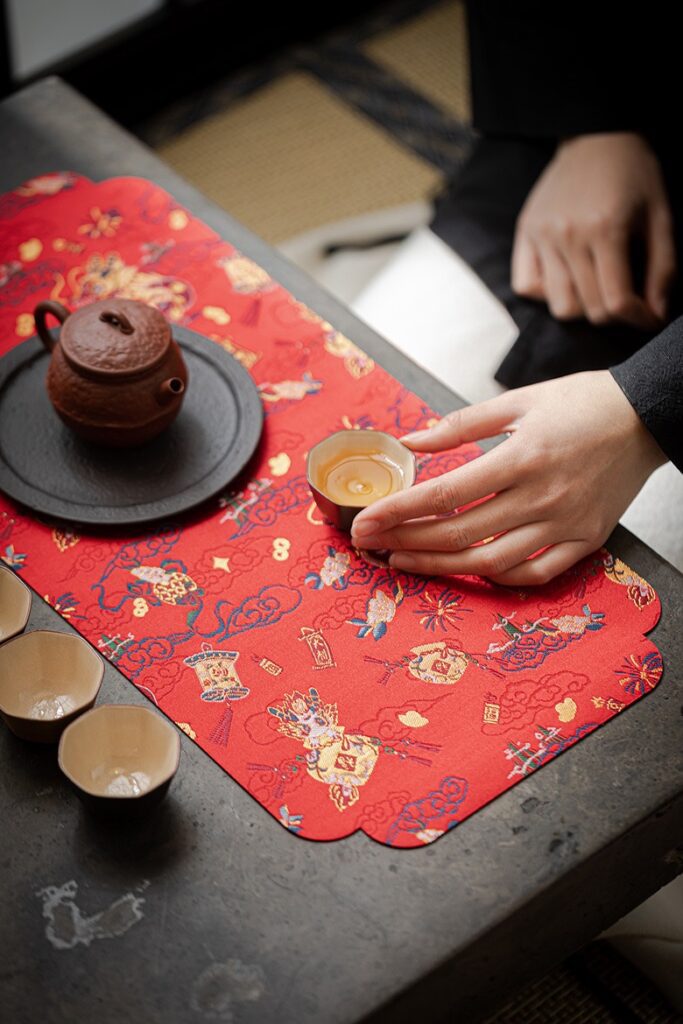
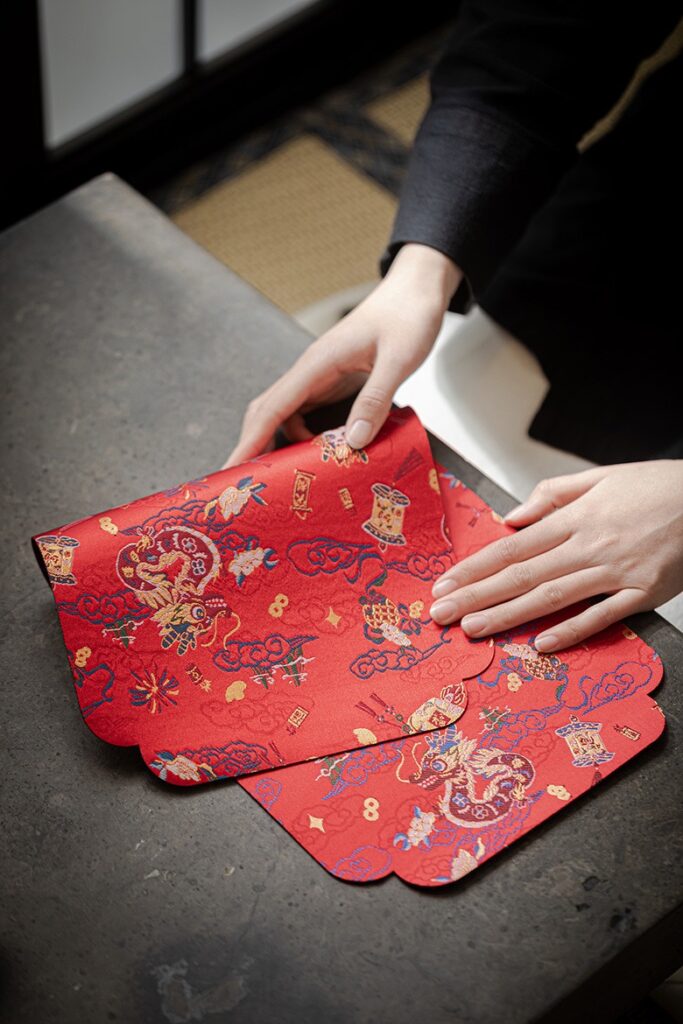
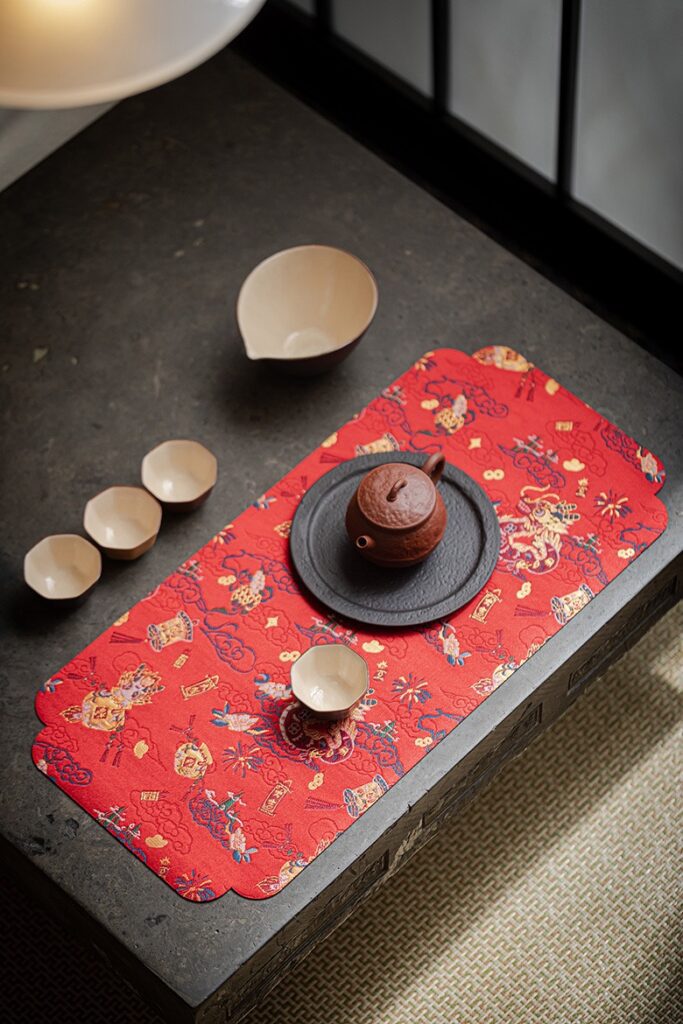
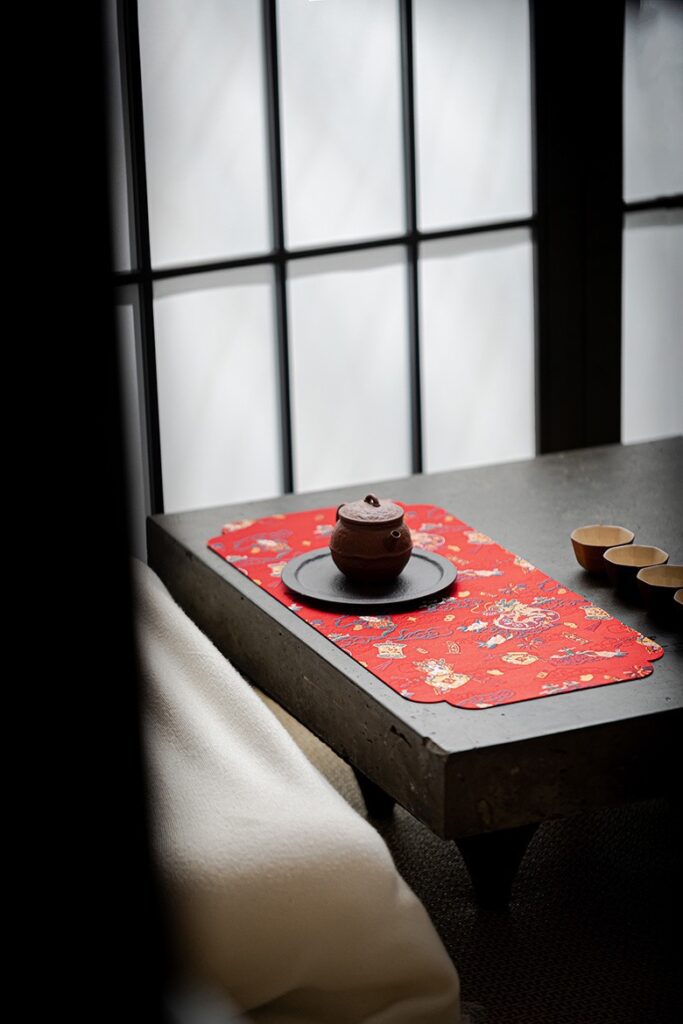
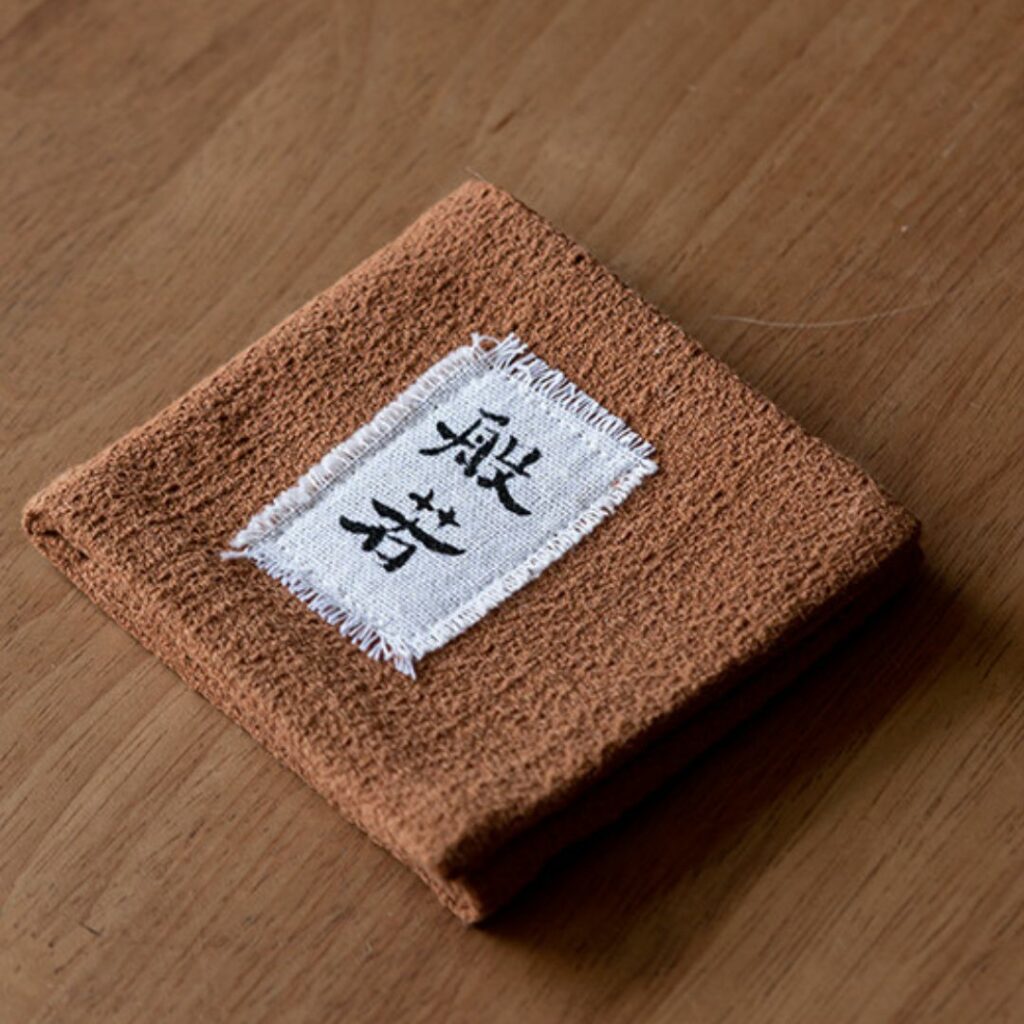
¡Hola, amantes del té! 🐉✨ Tenemos una noticia emocionante ahora que entramos en el Año del Dragón de 2024: con la compra de una tetera de Yixing, te regalamos un tapete para té exclusivo con el diseño del Año del Dragón para que tus rituales de té tengan un toque especial. Es nuestra forma de celebrarlo con vosotros, pero recordad: ¡es una oferta por tiempo limitado! No dejéis pasar la oportunidad de hacer que vuestras sesiones de té sean aún más especiales con este místico complemento. 🍵💫
¡Hola, amantes del té! Aunque muchos de vosotros nos conocéis como una empresa especializada en artículos de té chino de alta gama, también nos especializamos en tés de la región de Huang Shan. Huang Shan es la cuna de los tés chinos más famosos: el Huang Shan Mao Feng, el Keemun y el Tai Ping Hou Kui. Como nativos de este lugar impresionante, tenemos un profundo vínculo con la tierra y su rico patrimonio del té.
Somos conscientes de que encontrar el té perfecto puede ser toda una experiencia personal, y por eso te ofrecemos nuestro paquete de muestras. Te permite explorar la variedad de sabores de los tés de Huang Shan y descubrir aquel que más se adapte a tu paladar.
Todos los tés proceden directamente de los productores de té, lo que garantiza su calidad y su sabor auténtico.
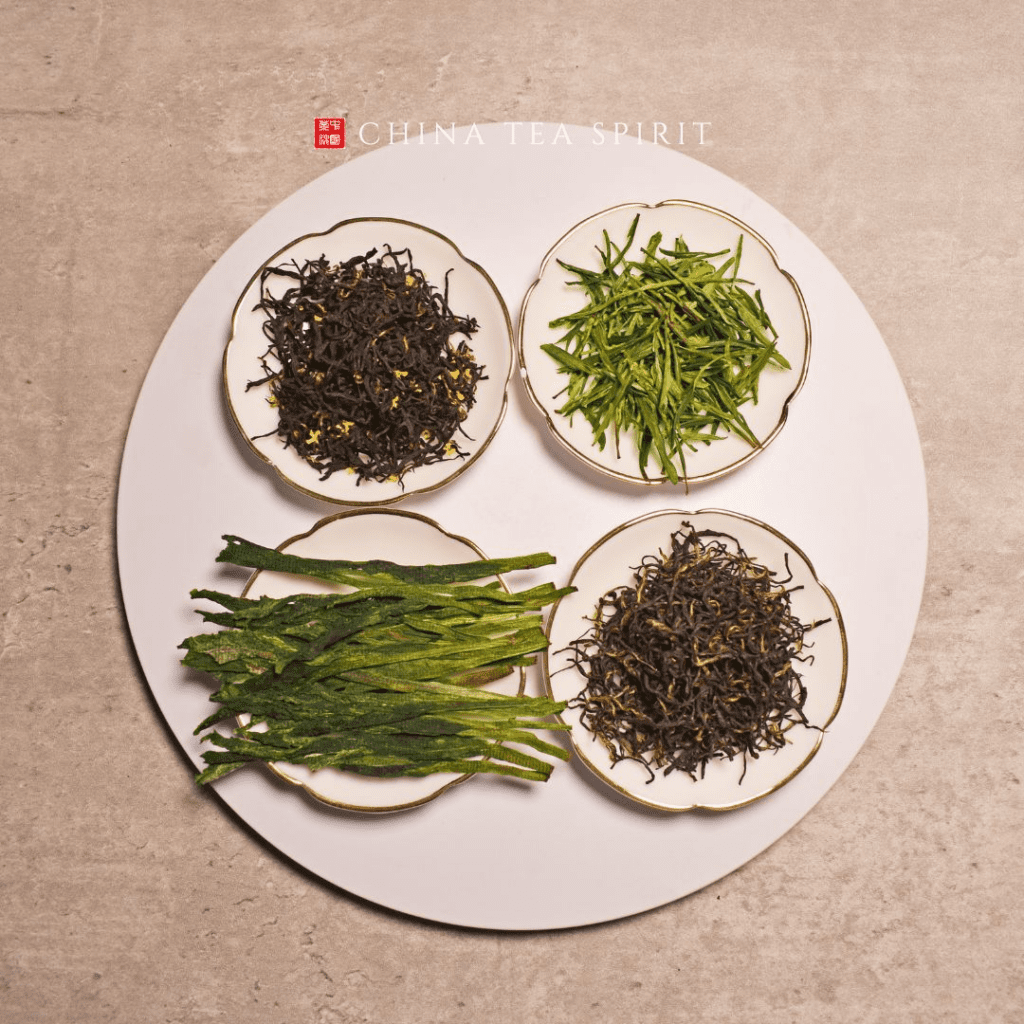
Paquete de muestras que incluye: Huang Shan Mao Feng – 10 g Tai Ping Hou Kui – 10 g Keemun Mao Feng – 10 g Osmanthus Keemun – 10 g
Estamos deseando conocer vuestras opiniones sobre nuestros tés. Acompañadnos en este viaje y dejad que seamos vuestra guía mientras exploráis el encantador mundo de los tés de Huang Shan.
Ten en cuenta que el té y los utensilios para el té se enviarán en paquetes separados, de acuerdo con los requisitos aduaneros. Normalmente, el té llegará un poco más tarde que los utensilios para el té.
Estimados clientes,
Si has tenido algún problema durante el proceso de pago, ponte en contacto con nosotros en cary.wang@cnteaspirit.com. Y te echaremos una mano.
A continuación, enumeramos los errores de pago más habituales y sus soluciones para tu información.
#1: China Tea Spirit no realiza envíos a esta ubicación. Por favor, utiliza otra dirección.
Se trata de un error conocido de PayPal. Se produce de forma aleatoria. Si has visto este mensaje de error, ponte en contacto con nosotros en cary.wang@cnteaspirit.com. Nos encargaremos de solucionarlo por ti.
Your tea finally arrives after three weeks in transit.
You open the box, find the cake you have been waiting for, put the kettle on—and then someone tells you to wait another two weeks before drinking it.
This advice appears surprisingly often around pu’er and other teas ordered internationally: let the tea “rest” after shipping before you judge it.
Some tea drinkers swear by it. Others open the package before the delivery driver has made it back to the van.
So does tea really need to recover from a journey?
The most accurate answer is: sometimes it seems to help, especially with pu’er—but the reasons are less certain than the advice often makes them sound.
A recurring story among pu’er drinkers goes something like this:
A cake arrives. They brew it immediately. The tea feels muted, hollow, rough or simply less interesting than expected.
They put it away.
A couple of weeks later they return to it, and suddenly the aroma feels stronger, the texture fuller and the tea generally more alive.
Not everyone experiences this. Some people happily drink newly arrived tea on day one and never notice a problem.
That difference is important.
“Rest your tea for exactly seven days” sounds like a brewing rule. It probably makes more sense to think of it as something worth testing.
What actually happened to the tea during shipping?
International shipping is not tea storage.
A parcel may spend days moving between warehouses, trucks and aircraft, experiencing changes in temperature and humidity before arriving in an environment completely different from where it started.
Tea is also hygroscopic: it exchanges moisture with its surroundings and can pick up odors if poorly protected.
For pu’er in particular, storage environment matters a great deal over time.
Research published in 2026 found that raw pu’er stored in different environments developed measurably different aroma and taste compounds. Another study looking at controlled water activity found that moisture conditions changed both microbial activity and the formation of flavor-related compounds during storage.
That tells us something useful:
Pu’er is not chemically frozen once it leaves the factory. Its environment continues to matter.
But there is an important gap.
These studies examine storage and aging over meaningful periods. They do not prove that three days in an airplane puts a tea into “shock,” nor that fourteen days on your shelf reverses it.
The short-term resting idea still comes mostly from repeated drinking experience rather than controlled research.
Resting and aging are not the same thing
This distinction gets blurred surprisingly often.
Aging a raw pu’er is a long process in which its chemistry, aroma, taste and sometimes microbial community gradually change under storage conditions.
Resting a recently shipped tea is much less ambitious.
You are simply allowing it to sit in a stable environment before deciding what you think of it.
You are not turning a young tea into an aged one in two weeks.
And if the tea was disappointing because the material was poor to begin with, resting is unlikely to perform a miracle.
Pu’er is where I would pay the most attention
If a compressed raw or ripe pu’er has just spent several weeks travelling internationally, I would hesitate before forming a strong opinion from the very first session.
That does no mean I would refuse to drink it.
Quite the opposite.
If there is enough tea, brewing it immediately can be useful.
Pay attention to the aroma, body, sweetness, bitterness and how open or muted the tea feels. Then put the rest away properly and brew it again a week or two later under roughly the same conditions.
Now you have something much more useful than a rule from the internet:
you have your own comparison.
This works particularly well with a full cake or larger sample because you are not sacrificing your only session to curiosity.
This is where universal “rest your tea” advice becomes much less convincing.
Some experienced drinkers report noticeable changes in oolong after long shipping, while others see little reason to wait.
Aged white tea and other teas intended for storage may also settle differently after travelling, but again, there is no good reason to invent a fixed waiting period for every tea category.
Fresh green tea is the clearest example of why the rule cannot simply apply to everything.
Freshness is one of the qualities you are buying.
I would not receive a beautiful spring green tea and automatically hide it in a cupboard for several weeks because “all shipped tea needs rest.”
Different teas are trying to preserve or develop different things.
Treating them all identically defeats the point.
Don’t confuse “resting” with leaving tea exposed
Another mistake is assuming that tea needs to be opened and aired out like a bottle of wine.
Usually, it doesn’t.
Tea readily absorbs surrounding smells, and prolonged exposure to open air can also work against the aroma you are trying to preserve.
If the parcel arrives extremely cold, I would let the sealed package come closer to room temperature before opening it rather than immediately exposing cold tea to warm humid air.
After that, store the tea in a way appropriate to the tea itself—not simply uncovered on a shelf in the name of “resting.”
For pu’er, your longer-term storage conditions matter far more than performing some special post-delivery ritual.
The experiment is more useful than the rule
There is a reason this question keeps coming back in tea communities.
People genuinely notice changes.
What becomes unreliable is the attempt to convert those experiences into universal formulas:
rest it for seven days.
Rest it for twice the shipping time.
Rest every tea.
Never rest roasted tea.
All of these are much more precise than the evidence deserves.
A better approach is wonderfully simple.
Drink the tea.
If it seems disappointing, do not immediately conclude that you bought bad tea.
Put it away under sensible conditions and return to it later.
If it improves, you have learned something about that tea, that journey and your storage environment.
If it tastes exactly the same, you have learned something too.
And if it tastes fantastic five minutes after the parcel arrives, there is no prize for staring at it for two weeks before making another cup.
Good tea is meant to be drunk.
Sometimes it just deserves a second introduction after the journey is over.