Pausa en los envíos por las fiestas — se reanudarán el 8 de octubre. Celebra el Festival del Medio Otoño con un descuento de 10% utilizando el código ctsmooncake. DescartarIr al contenido
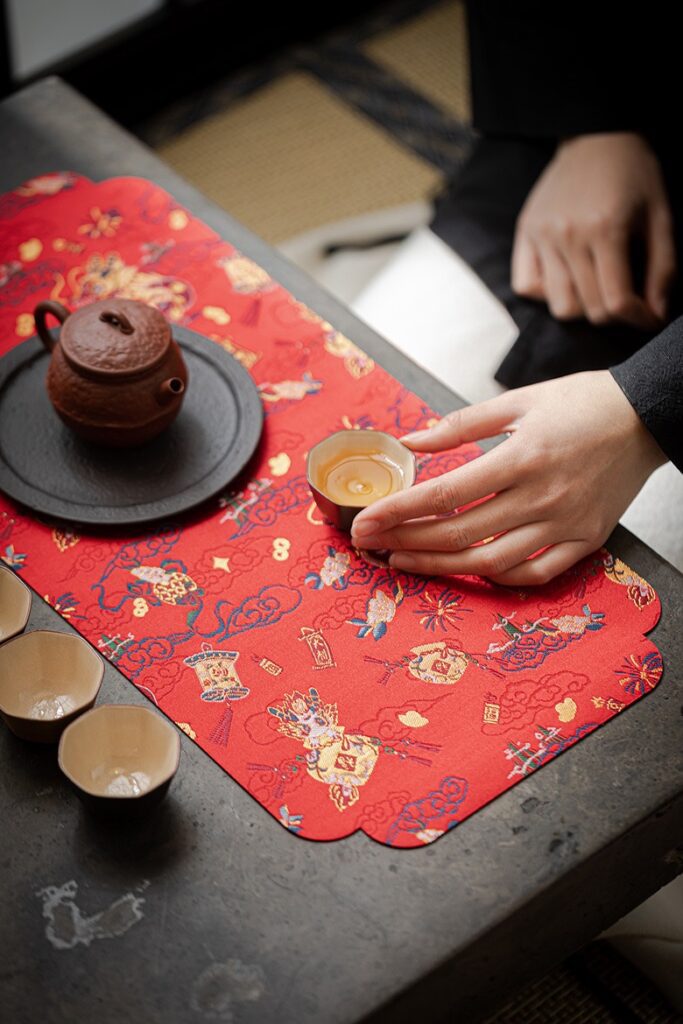
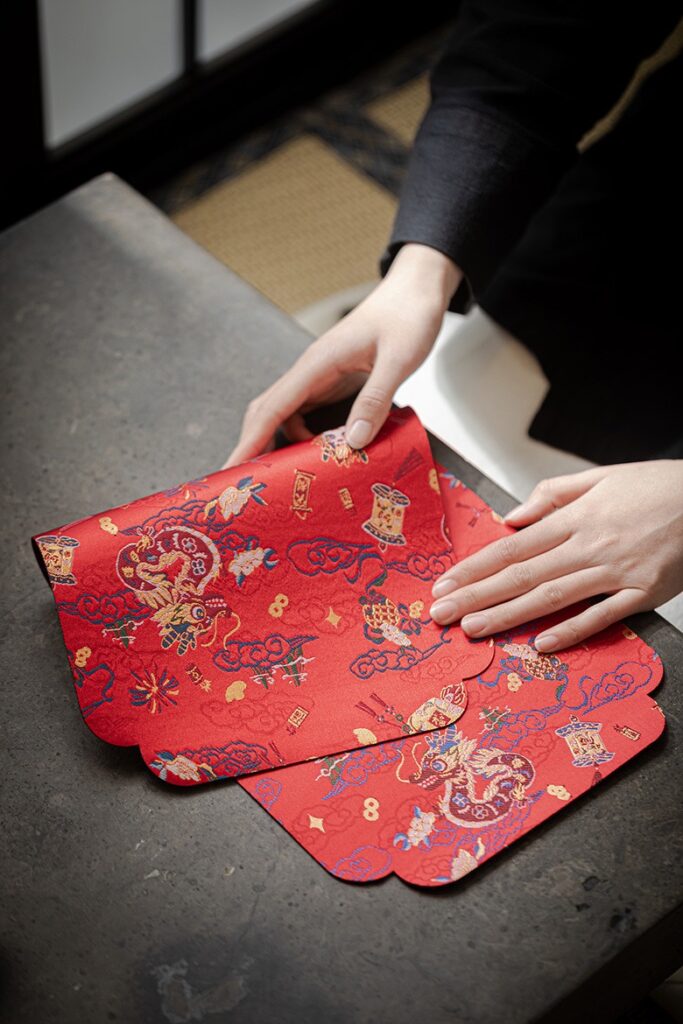
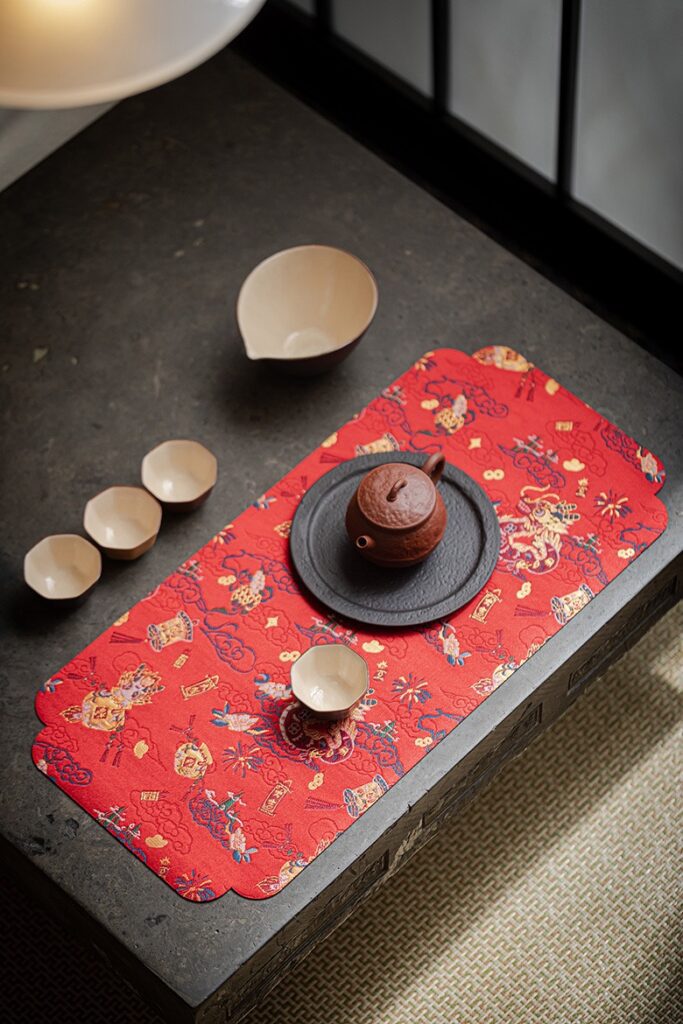
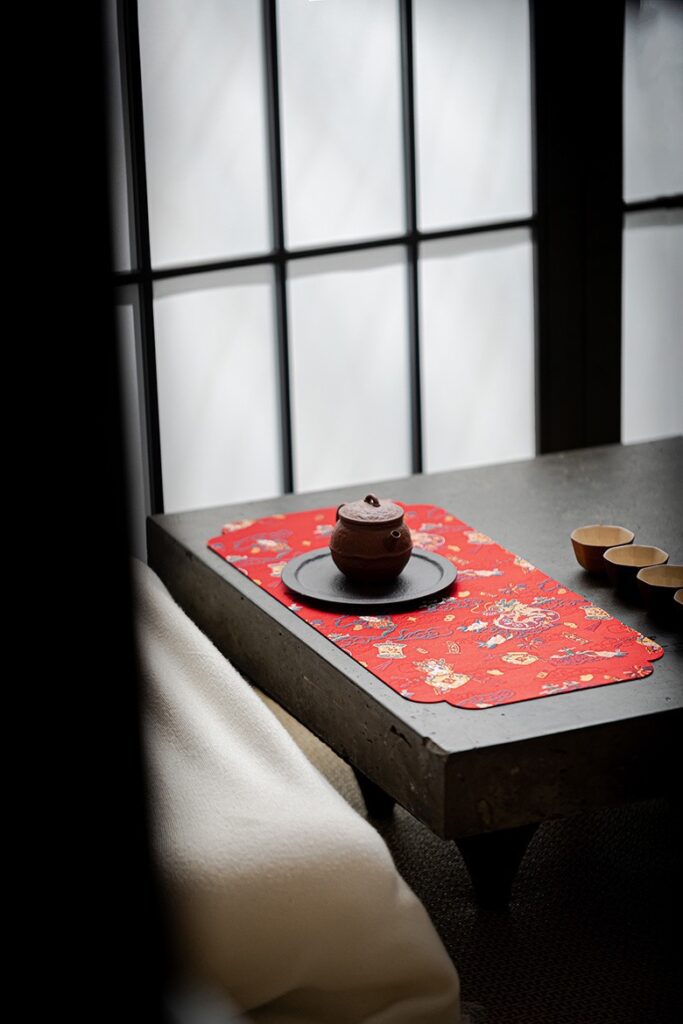
¡Hola, amantes del té! 🐉✨ Tenemos una noticia emocionante ahora que entramos en el Año del Dragón de 2024: con la compra de una tetera de Yixing, te regalamos un tapete para té exclusivo con el diseño del Año del Dragón para que tus rituales de té tengan un toque especial. Es nuestra forma de celebrarlo con vosotros, pero recordad: ¡es una oferta por tiempo limitado! No dejéis pasar la oportunidad de hacer que vuestras sesiones de té sean aún más especiales con este místico complemento. 🍵💫
¡Hola, amantes del té! Aunque muchos de vosotros nos conocéis como una empresa especializada en artículos de té chino de alta gama, también nos especializamos en tés de la región de Huang Shan. Huang Shan es la cuna de los tés chinos más famosos: el Huang Shan Mao Feng, el Keemun y el Tai Ping Hou Kui. Como nativos de este lugar impresionante, tenemos un profundo vínculo con la tierra y su rico patrimonio del té.
Somos conscientes de que encontrar el té perfecto puede ser toda una experiencia personal, y por eso te ofrecemos nuestro paquete de muestras. Te permite explorar la variedad de sabores de los tés de Huang Shan y descubrir aquel que más se adapte a tu paladar.
Todos los tés proceden directamente de los productores de té, lo que garantiza su calidad y su sabor auténtico.
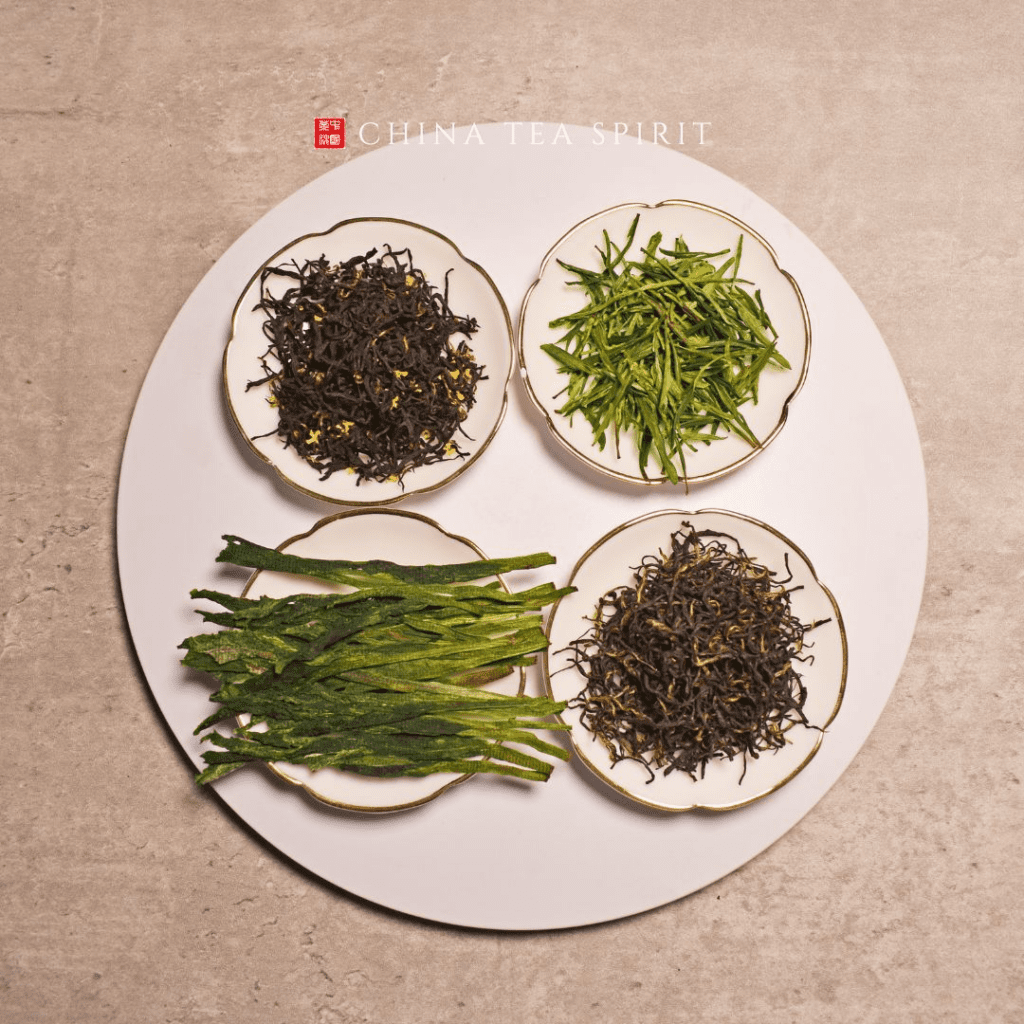
Paquete de muestras que incluye: Huang Shan Mao Feng – 10 g Tai Ping Hou Kui – 10 g Keemun Mao Feng – 10 g Osmanthus Keemun – 10 g
Estamos deseando conocer vuestras opiniones sobre nuestros tés. Acompañadnos en este viaje y dejad que seamos vuestra guía mientras exploráis el encantador mundo de los tés de Huang Shan.
Ten en cuenta que el té y los utensilios para el té se enviarán en paquetes separados, de acuerdo con los requisitos aduaneros. Normalmente, el té llegará un poco más tarde que los utensilios para el té.
Estimados clientes,
Si has tenido algún problema durante el proceso de pago, ponte en contacto con nosotros en [email protected]. Y te echaremos una mano.
A continuación, enumeramos los errores de pago más habituales y sus soluciones para tu información.
#1: China Tea Spirit no realiza envíos a esta ubicación. Por favor, utiliza otra dirección.
Se trata de un error conocido de PayPal. Se produce de forma aleatoria. Si has visto este mensaje de error, ponte en contacto con nosotros en [email protected]. Nos encargaremos de solucionarlo por ti.
The name covers a surprisingly wide range of aromas. Understanding the difference between yellowing and roasting makes that range much easier to enjoy.
A description of yellow tea can promise something gentle and sweet. Another can conjure up toasted grain or the crisp edge of cooked rice. Both can belong to the same tea category. Before deciding that one description must be wrong, it helps to ask what happened to the leaves between picking and packing.
“Yellow tea” gives us a starting point. It leaves a great deal of the story untold.
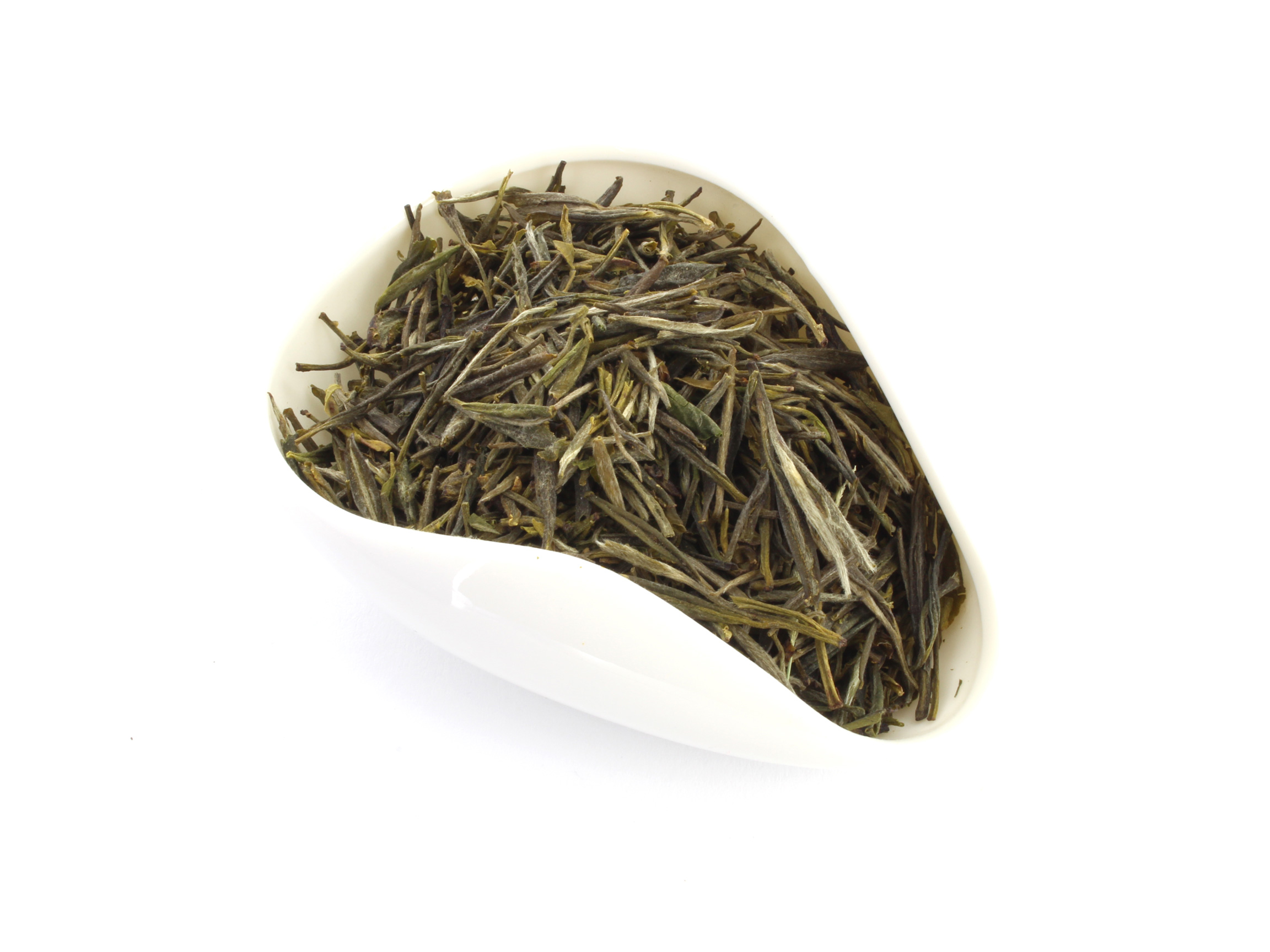
Chinese yellow tea identified by the photographer as “Huang Ya.” Its precise origin is unspecified. Photograph: KirillK / Wikimedia Commons, CC0.
A warm, deliberate pause
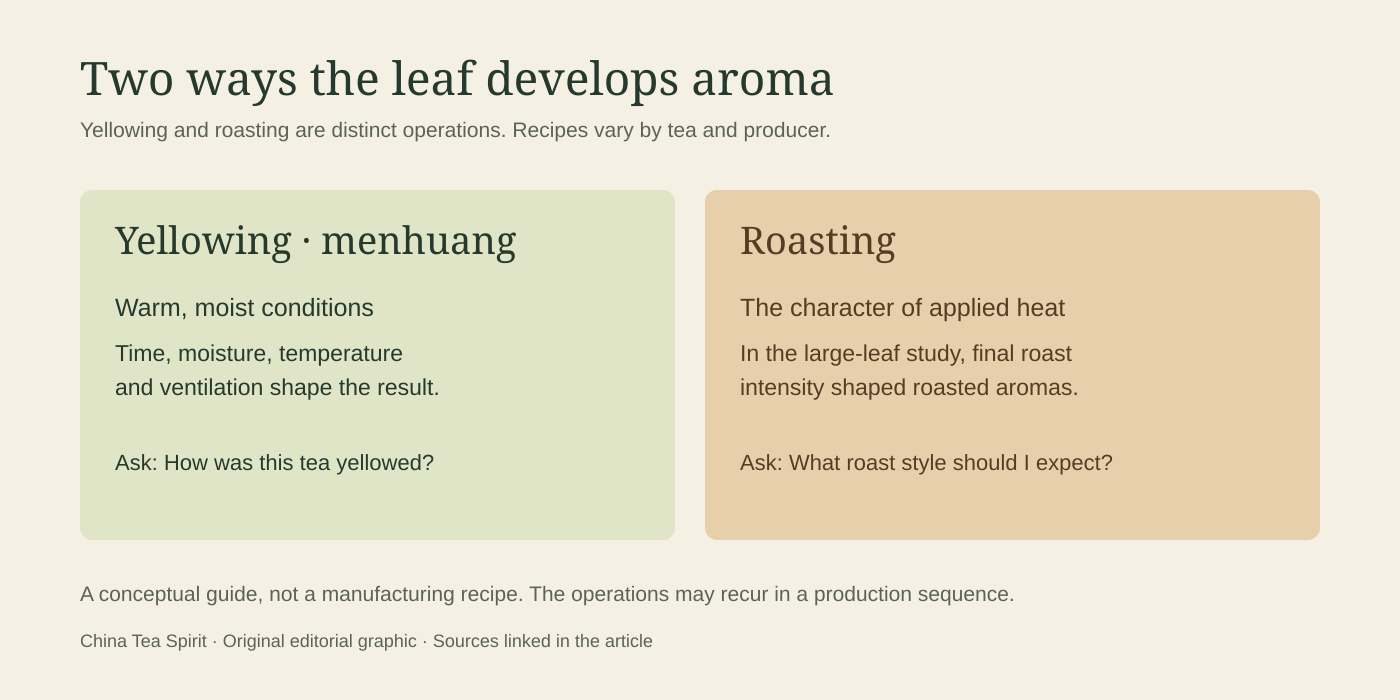
The defining operation is yellowing, or menhuang (闷黄): a controlled period of warm, moist conditions during manufacture. Temperature, moisture, time and ventilation all matter. Change those conditions and the result changes too. The word names a process with choices inside it, rather than a single recipe shared by every producer.
A broad scientific review describes refreshing, sweet aromas in bud and small-leaf yellow teas, alongside a crispy-rice character associated with roasting in large-leaf examples. That range is worth keeping in mind before treating “delicate” as a universal requirement. The review appeared online in April 2023 and in a 2024 journal issue. Read the review.
For a drinker, the useful question is what kind of character the maker was trying to develop. A fragrant, restrained tea and a deeply roasted one invite different expectations. Judging both against the same imagined cup can make an intentional style seem like a disappointment.
What happened to the grassy aroma?
A study published in February 2026 followed Mengding bud yellow tea through production. Researchers combined sensory assessment with chemical analysis, identifying yellowing as an important point in the shift from grassy aromas toward sweet and umami-associated qualities. They also investigated aroma compounds and the transformations contributing to that development. Read the Mengding study.
There is something compelling about that shift: part of the craft takes place during a hold, when the leaves may appear to be doing very little. Time under controlled conditions is productive work.
This was research on a particular tea and manufacturing sequence. It does not establish that every yellow tea should smell identical, or that a tea described as sweet must have a sugary taste. An aroma description tells us what a smell recalls; it is not a measurement of sweetness in the cup.
Two operations, two useful questions. This explanatory graphic is a conceptual guide, not a production recipe or a reproduction of either study’s figures.
The grain-like side of the family
For a different view, consider large-leaf yellow tea, or huangdacha. In a 2025 industrial-scale study, researchers followed tea made in Lu’an, Anhui, using shoots with a bud and more than three leaves. The manufacturing sequence included repeated yellowing and roasting, with different final roast levels examined.
The final roasting stage mattered greatly. Pyrazines associated with roasted notes formed chiefly during that stage and increased with roasting intensity; some floral compounds declined over manufacture. The sensory assessment included malty, roasted, caramel-like and cooked-corn descriptions. Read the large-leaf study.
This gives “toasted grain” a firmer explanation than simply calling it the taste of yellowing. Yellowing and roasting both helped shape these samples, and their contributions need to be understood separately.
It also changes how we look at the leaves. A larger plucking standard need not be judged as an unsuccessful attempt at a bud tea. Here, it was the starting material for a different product. The interesting question is how well the finished tea expresses its intended character.
Put the descriptions beside the cups
A small comparison can make these distinctions more tangible. Choose two named yellow teas with clearly different descriptions, ideally one emphasizing sweet fragrance and another emphasizing roast. Keep the packaging nearby and begin with each producer’s brewing guidance. Treat the exercise as a conversation with the descriptions rather than an exam with one correct answer.
First, write down what you notice before rereading the tasting notes. Does the fragrance suggest flowers, vegetables, grain, or something else entirely? Then separate that impression from the experience of drinking: how does the liquid feel, and what remains after swallowing?
If “roasted” is the first word that comes to mind, look for a second one. Is it closer to bread crust, toasted rice, or a sharper charred edge? These are prompts for your own observations, not a checklist that every sample should satisfy.
A useful seller should be able to give more than a colour category: the tea’s name, origin, leaf material and, where known, its processing or roast style. Those details make it easier to choose the next cup without demanding that every yellow tea deliver the same pleasure.
The label opens the door. The maker’s decisions explain what is waiting inside.