Suspension des expéditions pendant les fêtes — reprise le 8 octobre. Fêtez la Fête de la mi-automne avec une réduction de 10% en utilisant le code ctsmooncake. IgnorerAller directement au contenu
Bonjour à tous les amateurs de thé ! 🐉✨ Une nouvelle passionnante en ce début d’Année du Dragon 2024 : pour tout achat d’une théière Yixing, nous vous offrons un set de thé exclusif aux motifs de l’Année du Dragon, pour apporter une touche d’originalité à vos rituels du thé. C'est notre façon de célébrer cet événement avec vous, mais n'oubliez pas : cette offre est valable pour une durée limitée ! Ne manquez pas l'occasion de rendre vos moments de dégustation encore plus spéciaux grâce à cet accessoire mystique. 🍵💫
Bonjour à tous les amateurs de thé ! Si beaucoup d’entre vous nous connaissent comme une entreprise spécialisée dans les accessoires haut de gamme pour le thé chinois, nous sommes également spécialisés dans les thés de la région de Huang Shan. Huang Shan abrite les thés chinois les plus célèbres : le Huang Shan Mao Feng, le Keemun et le Tai Ping Hou Kui. Originaires de cet endroit à couper le souffle, nous entretenons un lien profond avec cette terre et son riche patrimoine du thé.
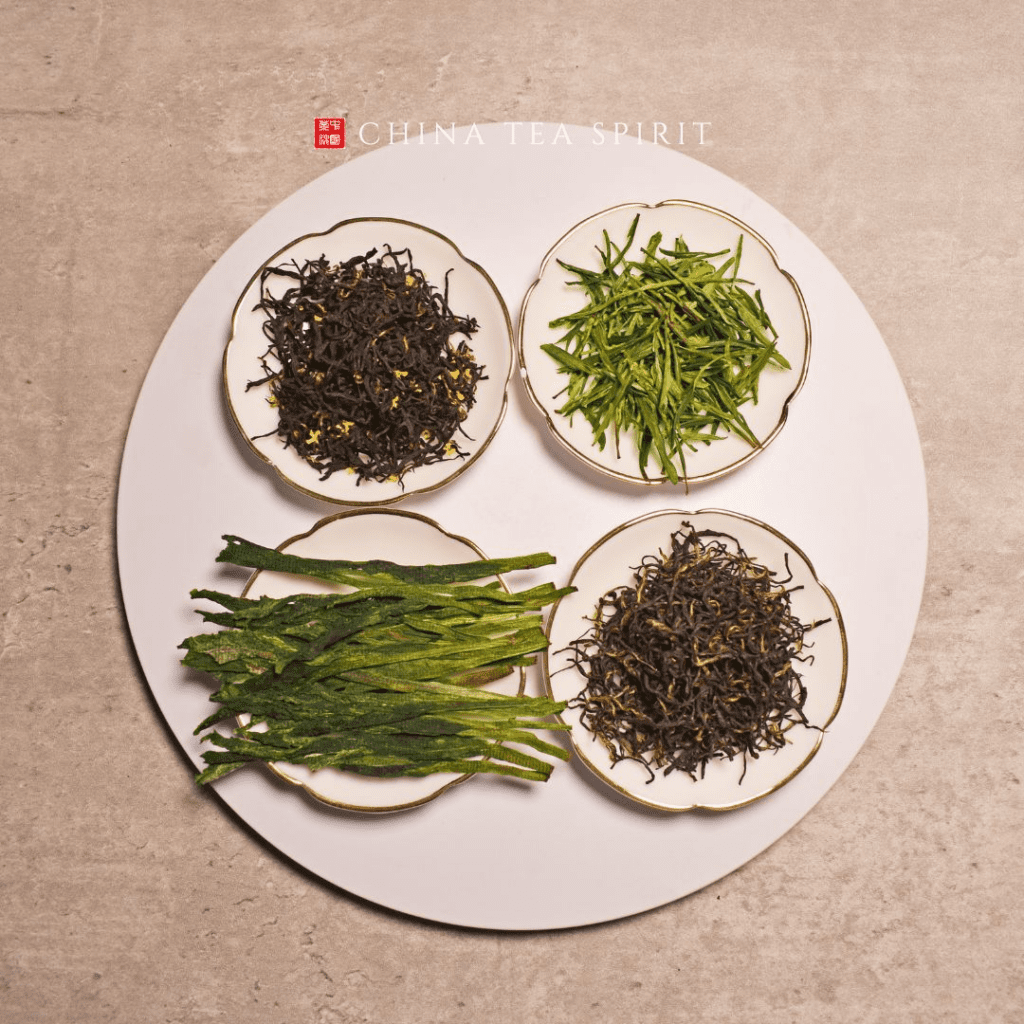
Nous savons que trouver le thé idéal peut être un parcours personnel, c'est pourquoi nous vous proposons notre coffret d'échantillons. Il vous permet d'explorer la diversité des saveurs des thés de Huang Shan et de découvrir celui qui séduira vos papilles.
Chacun de ces thés est acheté et produit directement auprès des producteurs de thé, ce qui garantit sa qualité et son goût authentique.
Coffret d'échantillons comprenant : Huang Shan Mao Feng – 10 g Tai Ping Hou Kui – 10 g Keemun Mao Feng – 10 g Osmanthus Keemun – 10 g
Nous avons hâte de connaître vos impressions sur nos thés. Rejoignez-nous dans cette aventure et laissez-nous vous guider à la découverte de l'univers enchanteur des thés de Huang Shan.
Veuillez noter que le thé et les accessoires de thé seront expédiés dans des colis séparés, conformément aux exigences douanières. En général, le thé arrive un peu plus tard que les accessoires de thé.
Chers clients,
Si vous avez rencontré des problèmes lors du paiement, veuillez nous contacter à l'adresse suivante : [email protected]. Et nous serons là pour vous aider.
Vous trouverez ci-dessous une liste des erreurs de paiement courantes et leurs solutions, à titre de référence.
#1 : China Tea Spirit ne livre pas à cette adresse. Veuillez indiquer une autre adresse.
Il s'agit d'un bug connu de PayPal. Il survient de manière aléatoire. Si vous avez reçu ce message d'erreur, veuillez nous contacter à l'adresse suivante : [email protected]. Nous allons régler cela pour vous.
Qilin is one of those Chinese mythical creatures that seems familiar until you try to describe it.
Is it a deer?
A dragon?
A lion?
Sometimes it looks like all three.
That is part of the reason Qilin is so interesting. It is not defined by one fixed body plan. Across Chinese art, the creature changes constantly—but its meaning stays remarkably consistent.
Qilin is an auspicious beast. Its appearance is associated with good omens, virtuous rule and extraordinary people.
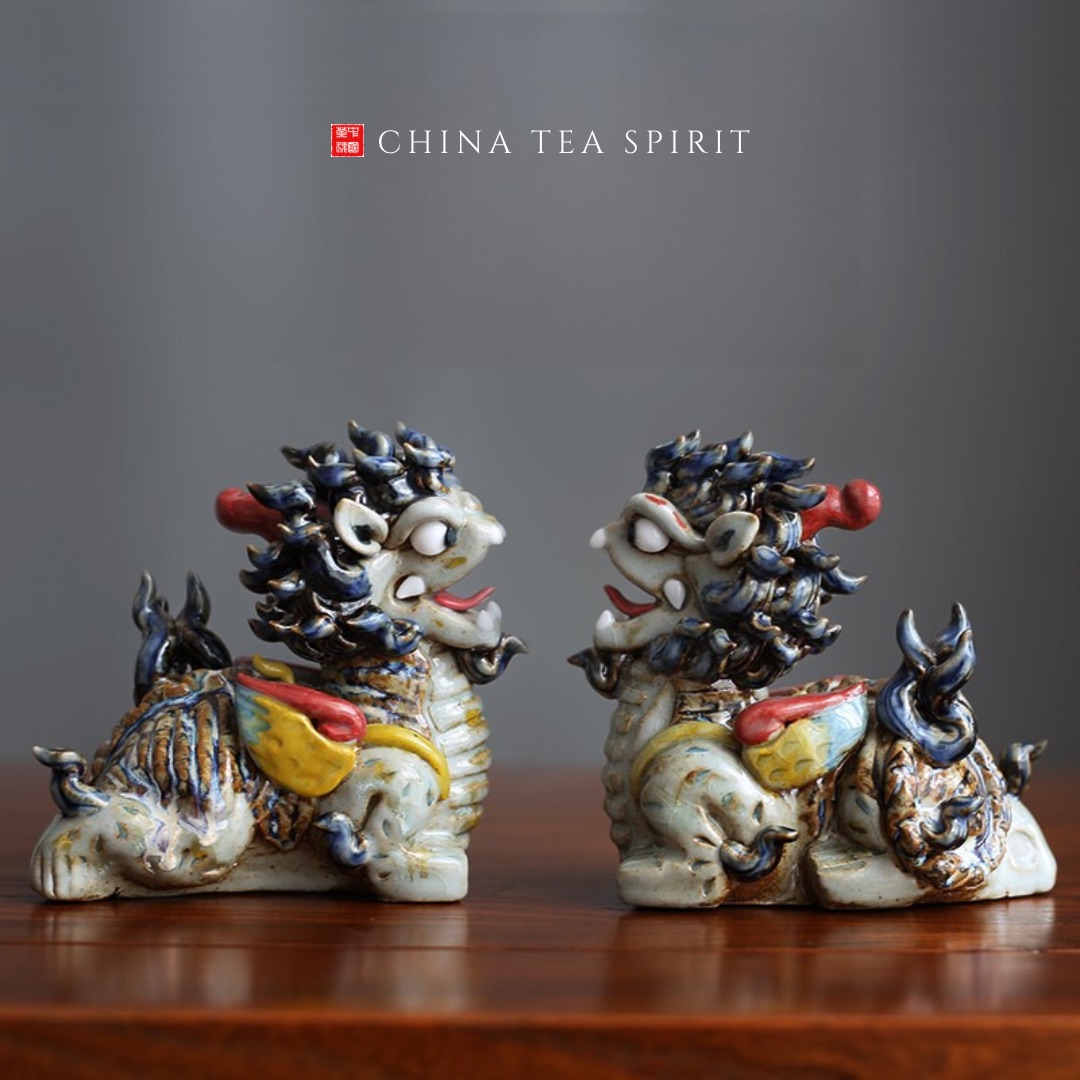
A contemporary ceramic interpretation of Qilin.
And unlike creatures whose modern identity has become dominated by one idea—Pixiu with wealth, for example—Qilin still carries a broader feeling.
It is the kind of creature you want to appear when the world is going well.
What does Qilin look like?
This is where things get complicated.
Le Musée métropolitain d'art describes one Qing-dynasty Qilin as combining the head, horns and scales of a dragon, the tail of a fantastical lion, and the body and hooves of a deer.
A 19th-century embroidered Qilin. The Metropolitan Museum of Art, Public Domain.
That sounds like a useful recipe—until you look at another Qilin.
Some have one horn. Some have more. Some look deer-like. Others become much more dragon-like. Some are covered in scales. Some seem to carry flames around their bodies.
Even museum curators sometimes hesitate. A Qing-dynasty vase at The Met shows a creature that looks like Qilin at first, but its feline feet make the identification uncertain.
So there is no perfect modern checklist.
Qilin is better understood as a long-running visual tradition than as a fantasy species with strict anatomy.
Qilin is not simply the “Chinese unicorn”
You will often see Qilin introduced in English as the “Chinese unicorn.”
It is a convenient shortcut, but it can also be misleading.
Some Qilin do have a single horn. But the creature’s identity does not depend on having one horn, and historically it carries a very different set of associations from the European unicorn.
Qilin is a composite Chinese auspicious beast with its own mythology, artistic history and symbolic role.
Calling it a unicorn may help someone form a first mental picture.
It should not be the final definition.
What does Qilin symbolize?
The most important idea is not wealth.
C'est auspiciousness.
Qilin was traditionally associated with the appearance of a virtuous ruler, an exceptional person or a favorable age.
The Met describes Qilin as an auspicious creature said to appear during the reign of a virtuous ruler. This idea became so powerful that the animal could be used politically as well as decoratively.
A late-17th-century Qilin rank badge. The Metropolitan Museum of Art, Public Domain.
Qilin also became an emblem of status. In the Ming dynasty it appeared on badges worn by nobles, and after 1662 it became the insignia of first-rank military officials in the Qing dynasty.
So when Qilin appears in traditional decorative art, it does not simply say “good luck.”
It carries ideas of virtue, distinction, legitimacy and an unusually favorable moment.
Then a giraffe arrived—and everyone saw a Qilin
This may be the best Qilin story because it shows how mythology and real animals can collide.
In 1414, during the reign of the Yongle emperor, a giraffe was presented to the Ming court from Bengal.
A giraffe was an extraordinary sight in China.
And almost immediately, people connected it with Qilin.
A Chinese painting of the giraffe that became associated with Qilin. The Metropolitan Museum of Art, Public Domain.
Le Rencontré explains why the comparison mattered. Qilin was believed to appear under a sagacious ruler, so court officials celebrated the giraffe as an auspicious sign that validated the emperor’s reign.
In other words, this was not merely a case of someone seeing a long-necked animal and choosing the closest mythical creature.
The identification had political meaning.
If a Qilin had appeared, then perhaps Heaven itself was approving the ruler.
The comparison became influential enough that the giraffe affected later Qilin imagery. An 18th-century embroidered example at The Met shows a long-necked, almost giraffe-like Qilin, and the museum directly connects this form to the famous 1414 encounter.
Qilin was never one fixed animal
The giraffe story makes something else clear.
People were willing to recognize Qilin in something they had never seen before.
That only works if the mythical creature was already visually flexible.
This is why trying to identify Qilin through one tiny detail—one horn, one tail shape, one number of claws—usually creates more confusion than it solves.
Context matters.
Is the creature shown as an auspicious apparition? Does it appear with clouds, flames or symbols of rank? Is it being used in a context connected with nobility, virtue or good omens?
Those clues can be more useful than anatomy alone.
Qilin, Pixiu and Suanni are not the same creature
They can still look confusingly similar.
All three belong to a Chinese decorative world in which lions, dragons, deer, horns, claws and scales can be mixed freely.
But their stories point in different directions.
Pixiu has an older identity as a fierce guardian beast and a later, very strong connection with wealth.
Suanni grows out of lion-like imagery and later becomes closely associated with smoke and incense.
Qilin is the auspicious visitor—the creature whose appearance can signal that something unusually good is happening.
That difference in character is often more useful than asking which one has the “correct” horn.
Why Qilin feels so natural in ceramics
A creature with no fixed anatomy gives ceramic artists a lot of freedom.
The body can be stretched or compressed. The face can move toward dragon, deer or lion. Scales can become surface decoration. Flames and clouds can spread into the surrounding composition.
That makes Qilin especially well suited to both sculpture and painted ceramics.
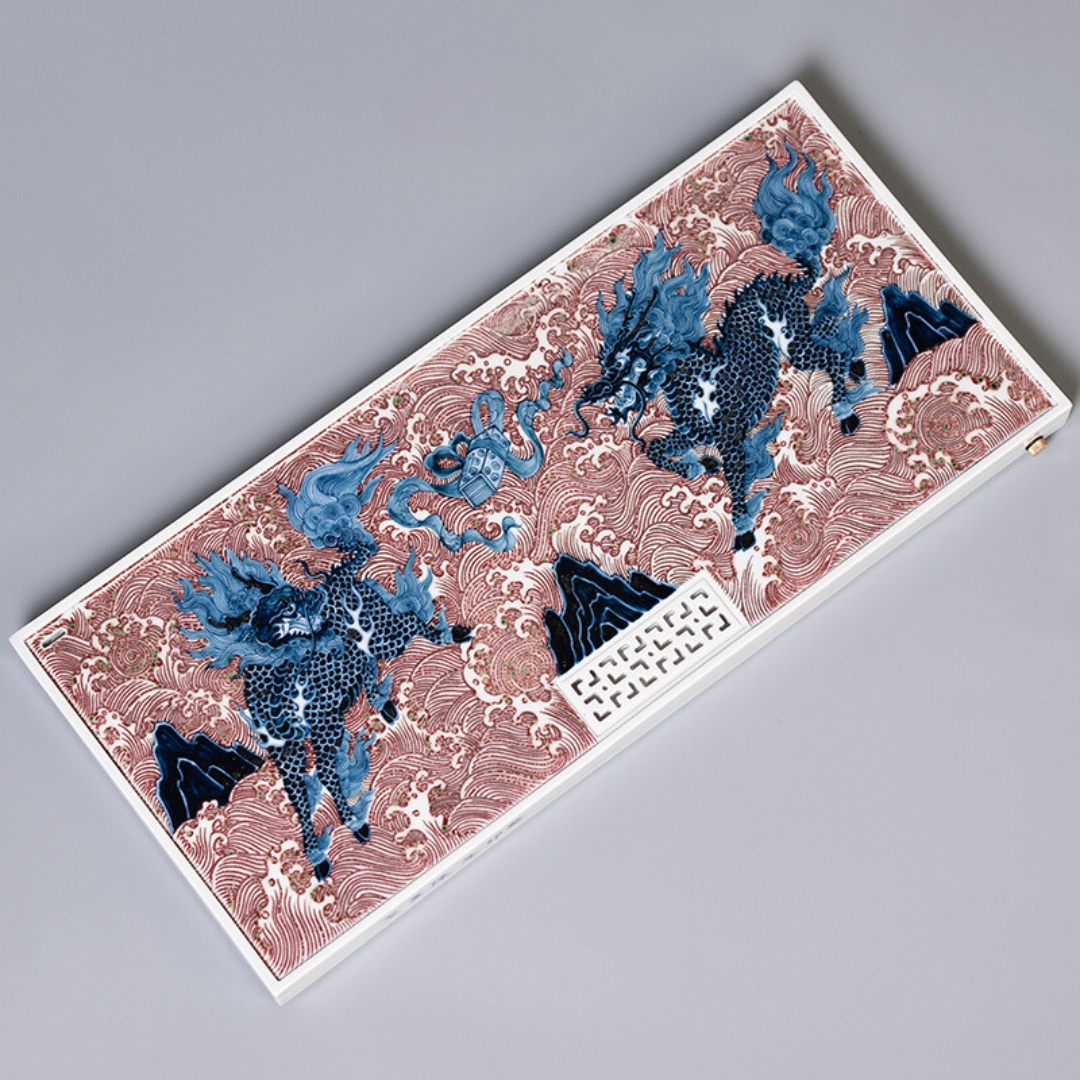
Qilin interpreted in underglaze red on a contemporary ceramic tea tray.
At China Tea Spirit, Qilin appears in more than one form.