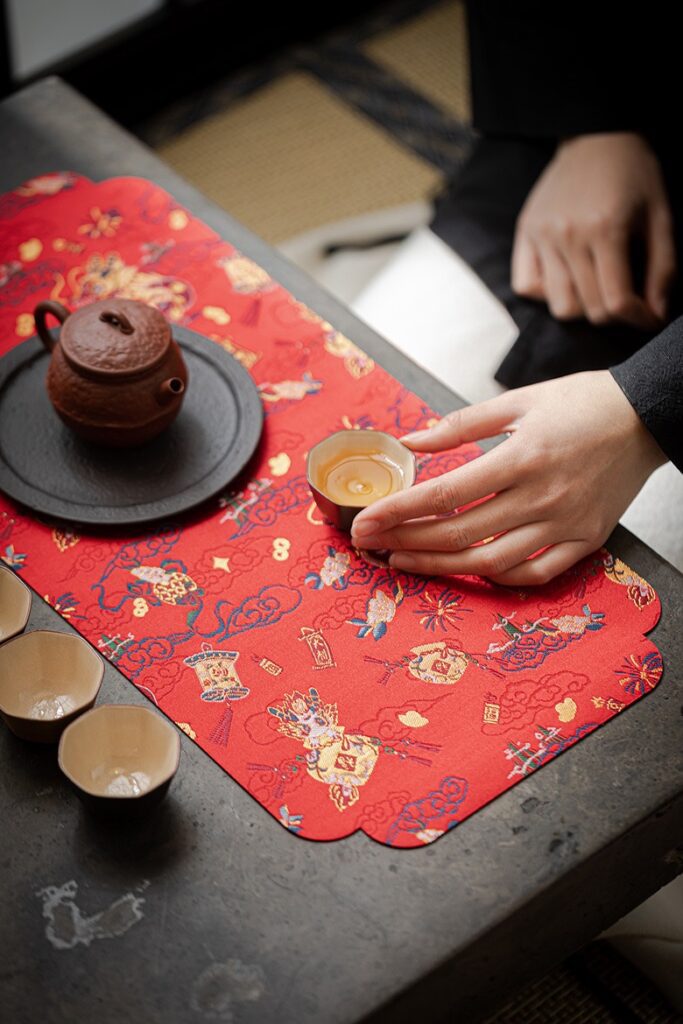
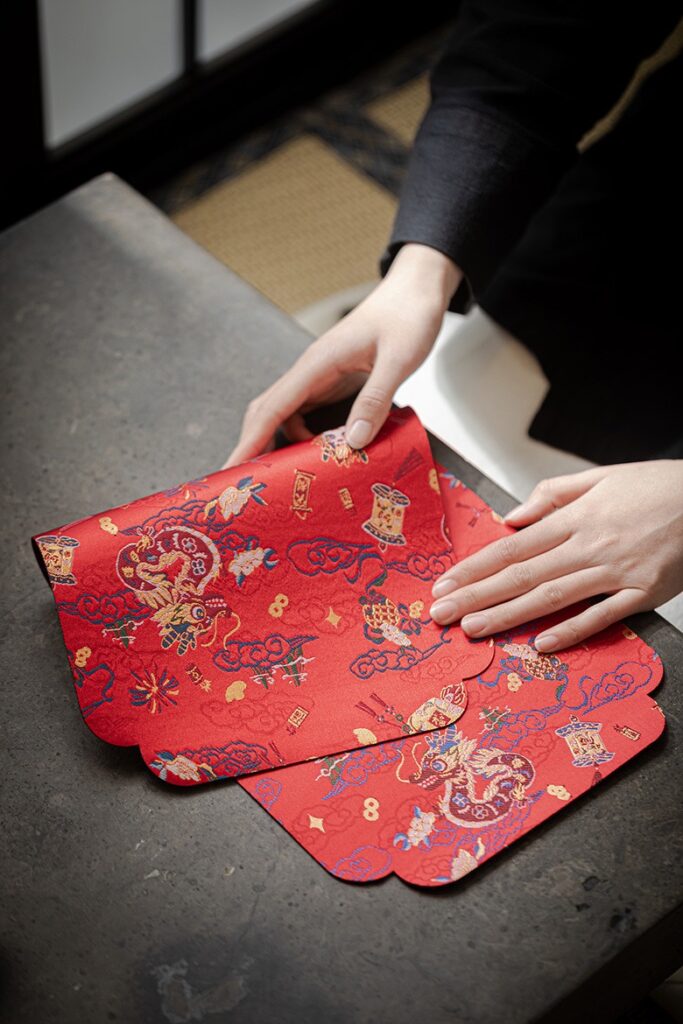
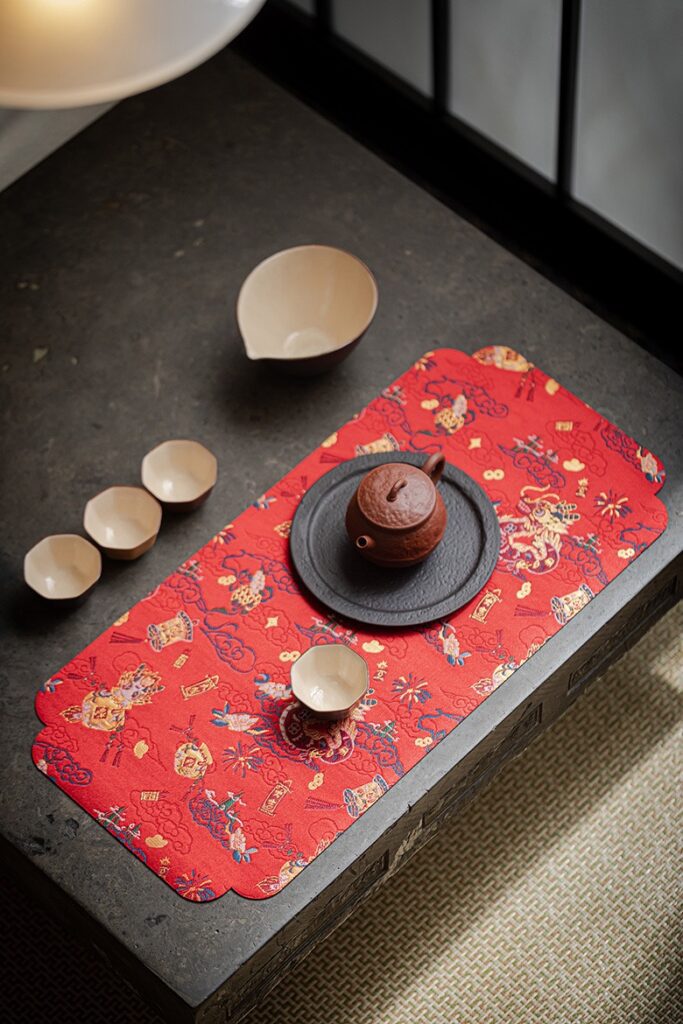
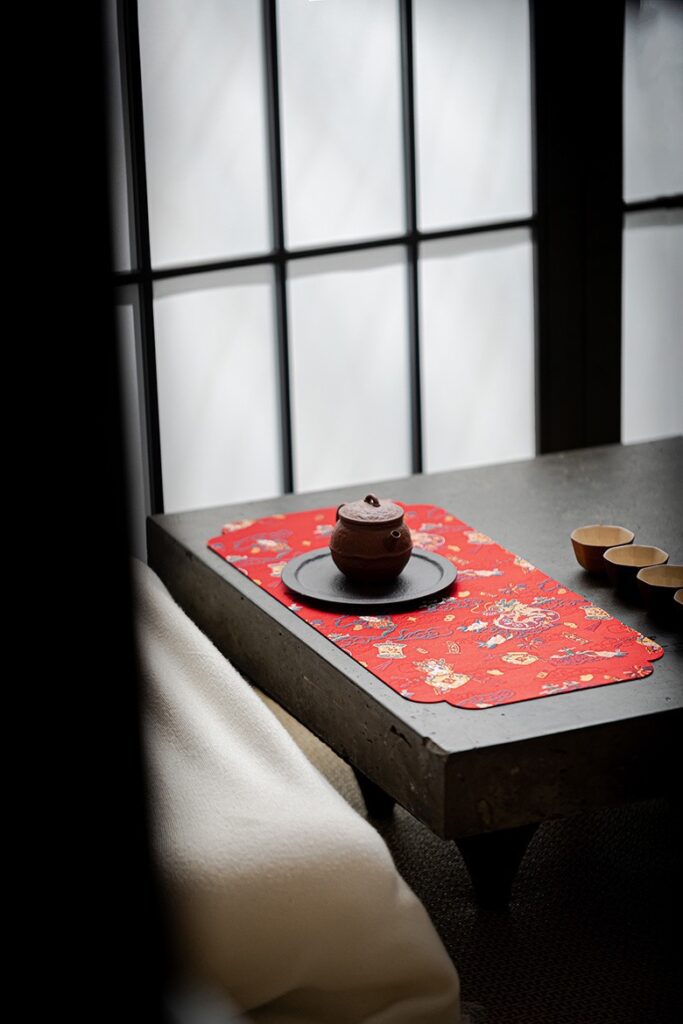
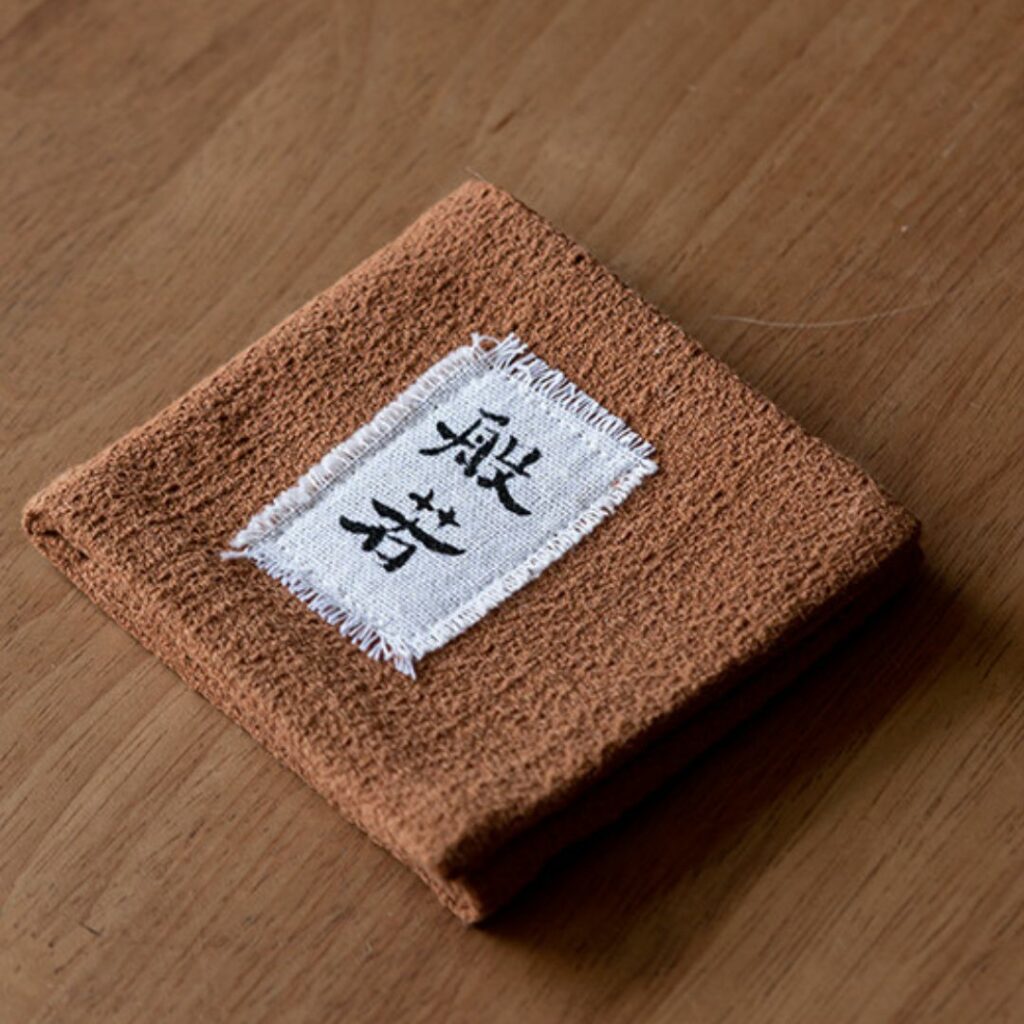
مرحبًا يا عشاق الشاي! 🐉✨ أخبار مثيرة مع دخولنا «عام التنين» 2024 — عند شراء إبريق شاي «ييشينغ»، نهديكم مفرش شاي حصري بتصميم «عام التنين» لإضفاء لمسة إضافية على طقوس الشاي الخاصة بكم. هذه طريقتنا للاحتفال معكم، لكن تذكروا أن هذا العرض متاح لفترة محدودة! لا تفوتوا فرصة جعل جلسات الشاي الخاصة بكم أكثر تميزًا مع هذه الإضافة السحرية. 🍵💫
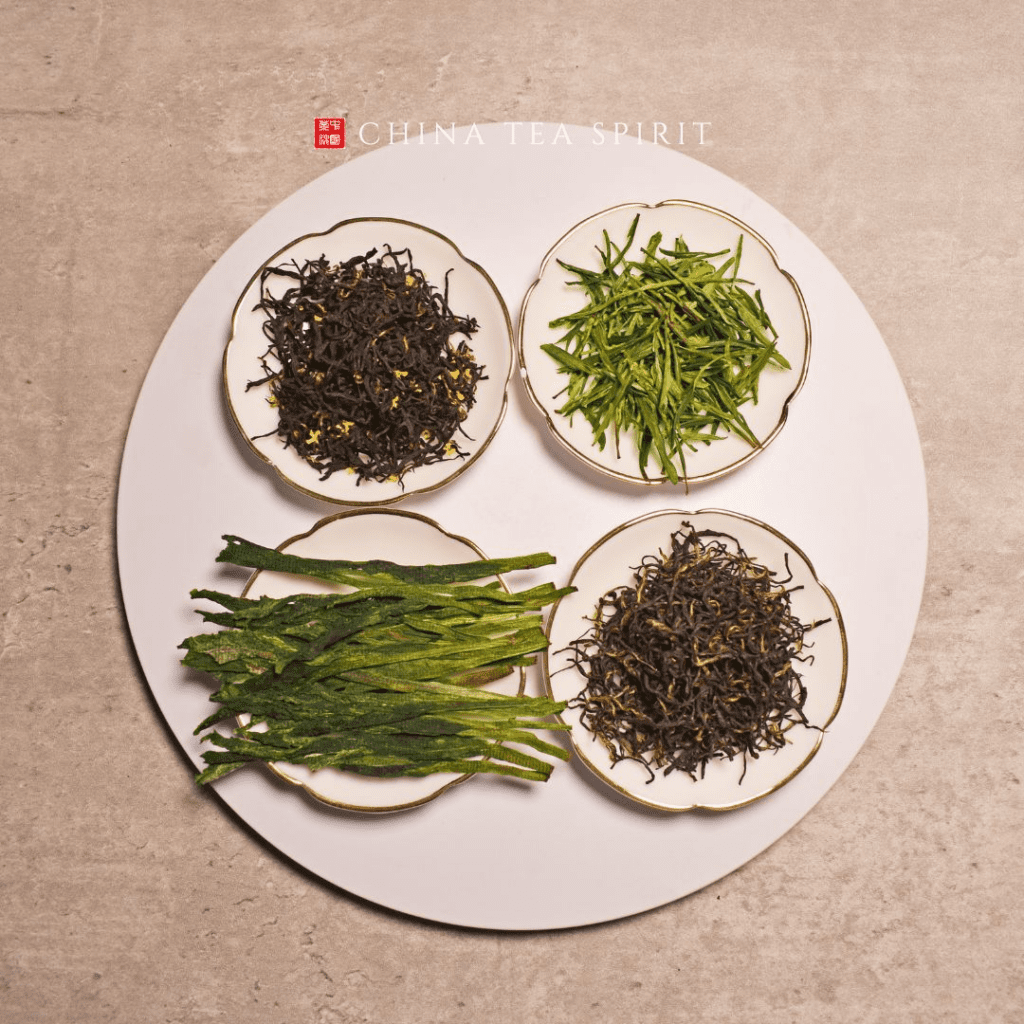
مرحبًا يا عشاق الشاي! على الرغم من أن الكثيرين منكم يعرفوننا كشركة متخصصة في أدوات الشاي الصينية الفاخرة، إلا أننا متخصصون أيضًا في أنواع الشاي من منطقة هوانغ شان. وتُعد هوانغ شان موطنًا لأشهر أنواع الشاي الصيني – هوانغ شان ماو فنغ، وكيمون، وتاي بينغ هو كوي. وبصفتنا من سكان هذا المكان الخلاب، فإننا نتمتع بارتباط عميق بهذه الأرض وتراثها الغني في مجال الشاي.
نحن ندرك أن العثور على الشاي المثالي قد يكون رحلة شخصية، ولهذا السبب نقدم حزمة العينات الخاصة بنا. فهي تتيح لك استكشاف النكهات المتنوعة لشاي هوانغ شان واكتشاف النوع الذي يرضي ذوقك.
يتم الحصول على كل نوع من أنواع الشاي وإنتاجه مباشرةً من مزارعي الشاي، مما يضمن جودته ومذاقه الأصيل.
A dragon-like face does not always belong to a dragon. On a Chinese tea table, the small beast beside the cups might be a Pixiu, a Qilin or a Suanni. A tortoise shell changes the story again. So does a toad holding a coin.
These Chinese mythical and protective figures share an artistic language, but they are not interchangeable. Their stories connect them with different hopes: protection, good omens, prosperity and a life that lasts. This guide introduces six familiar figures that appear across Chinese ceramics, tea pets and decorative objects, with a fuller story for each.
The pictures below are examples, not a rigid identification chart. Artists have changed these creatures across centuries, and contemporary makers continue to give them new expressions. A horn, wing or curled mane is a useful clue; it is rarely the whole answer.
Pixiu: the guardian behind the wealth symbol
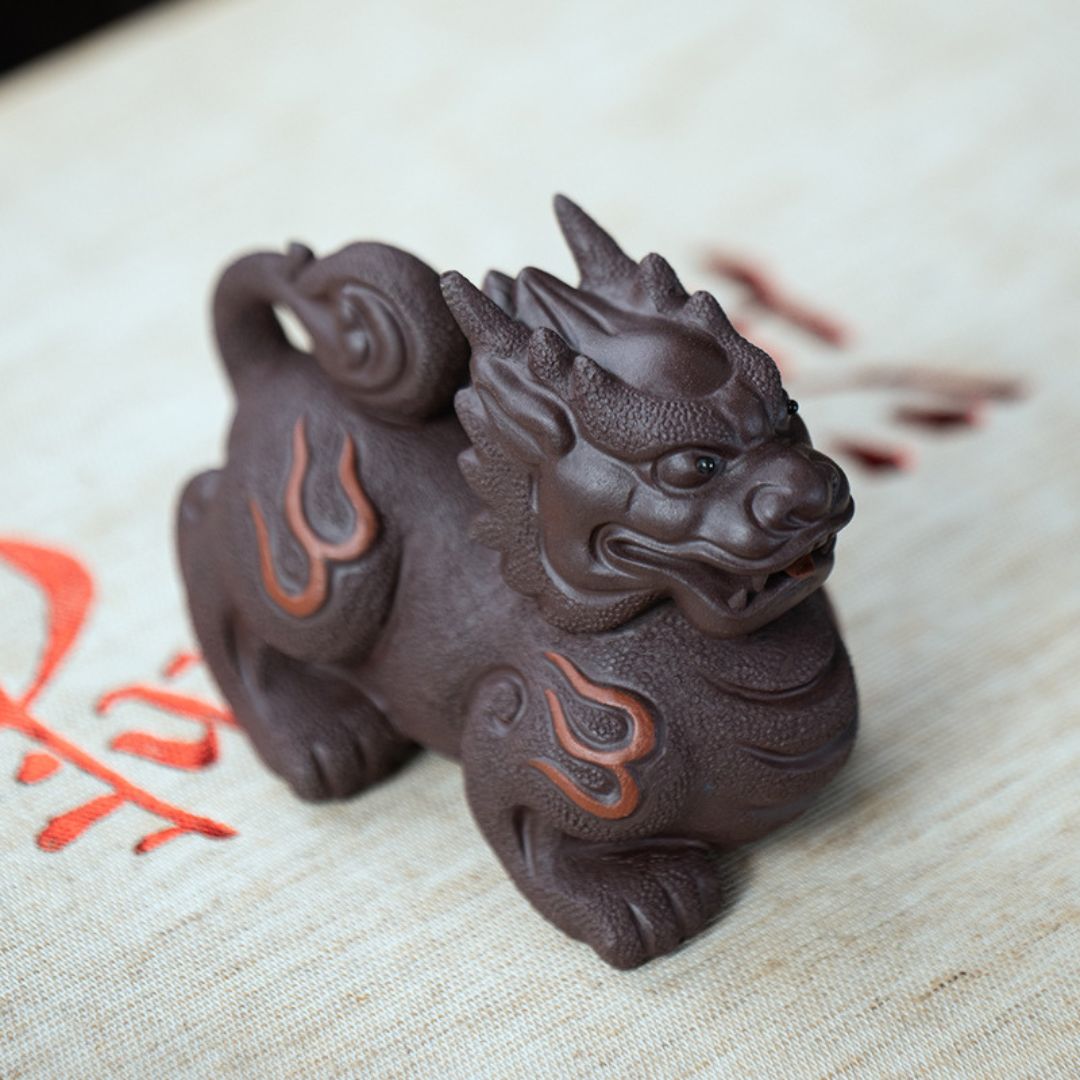
Pixiu interpreted as a contemporary clay tea pet. Photograph: China Tea Spirit.
Pixiu is often represented as a powerful hybrid beast, with a lion-like body and features such as wings, horns and a dragon-like face. Modern versions are especially associated with attracting and keeping wealth. The broader visual tradition also includes fierce protective creatures: the National Museum of Natural Science’s account of Bixie discusses related winged guardians and the overlapping names Bixie, Tianlu and Pixiu.
The familiar tale of a creature that consumes treasure but cannot let it out belongs to popular folklore. It should not be treated as a verified origin story for every ancient guardian figure. Nor can you reliably identify a Pixiu’s sex or historical name simply by counting its horns.
That protective character survives even when the animal becomes small and playful, as in a Zini Pixiu tea pet. For the fuller story, read What Is Pixiu?
Qilin: a visitor bringing good omens
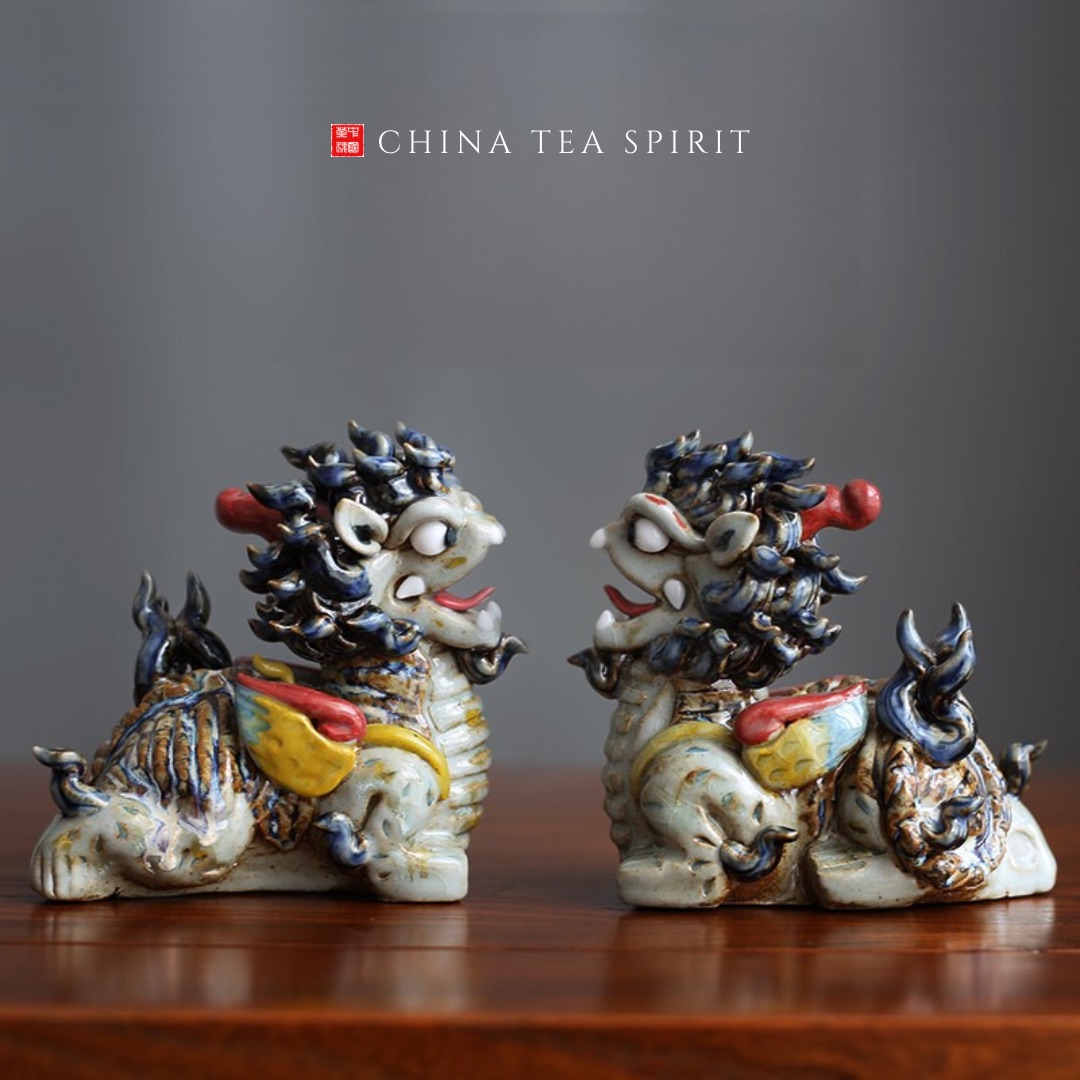
A sculptural Qilin from the China Tea Spirit collection.
Qilin is an auspicious creature associated with good omens and virtuous rule. The English nickname “Chinese unicorn” offers a starting point, but not a complete description. Some Qilin have one horn; others do not. Their appearance can combine deer-like bodies or hooves with scales, horns and a dragon-like head.
A nineteenth-century embroidered Qilin at The Met, for example, combines dragon, fantastical lion and deer features. That variety is part of the tradition, not evidence that one artist got the creature wrong.
Qilin also moves easily between sculpture and painting. A زخرفة «كيلين» خزفية and an underglaze-red Qilin tea tray use different forms to carry the same subject. Explore its changing appearance and the famous Ming-court giraffe story in What Is Qilin?
Suanni: the lion-like beast with a quieter character
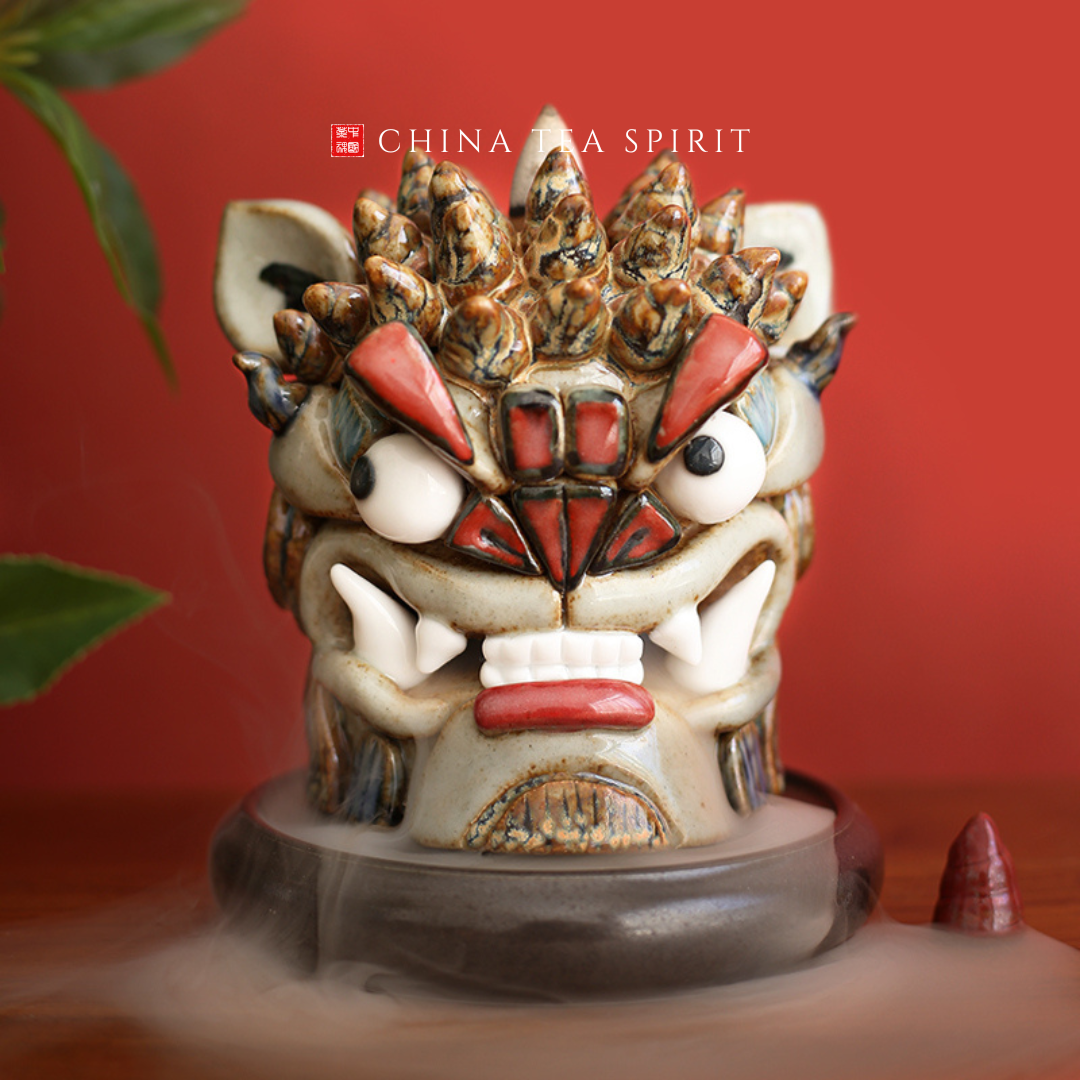
A contemporary Jingdezhen Suanni. Photograph: China Tea Spirit.
Suanni’s name has an older connection with lions and lion-like beasts. Later traditions place it among the Nine Sons of the Dragon, often as a seated figure associated with smoke. The Palace Museum’s introduction to the Nine Sons describes Suanni in smoky temple and incense-burner settings, while also noting that there are different versions of the family.
This makes the setting especially helpful. A lion-like creature on incense equipment may be drawing on Suanni imagery, but not every Chinese lion is automatically Suanni. Guardian lions at a gateway have their own related visual tradition.
Modern makers still explore the connection between creature and smoke in pieces such as these paired ceramic Suanni. The animal itself comes first in our longer introduction, What Is Suanni?
Dragon Turtle, Bixi and Baxia: strength beneath the stone
A stele-bearing Bixi in Wuhan, described as Ming-era by the photographer. Photo: فمنكوف / ويكيميديا كومنز, CC BY-SA 3.0. No crop or creative modification.
A Dragon Turtle combines a tortoise-like shell with a dragon-like head. Its small modern ornaments recall a much more monumental image: the powerful turtle-bodied creatures that support inscribed stone steles.
These bearers are commonly discussed under the names Bixi and Baxia, although historical lists and naming conventions differ. The Palace Museum’s account of Tailing calls the creatures supporting the tomb’s great memorial steles Bixi. Their physical task gives ideas of endurance and lasting memory a particularly convincing form.
A small Dragon Turtle tea pet is a contemporary interpretation, not a miniature object with one compulsory ancient identity. Read What Is a Dragon Turtle? for the distinctions between the names and the story behind the stone-bearing form.
Jin Chan: the three-legged Money Frog
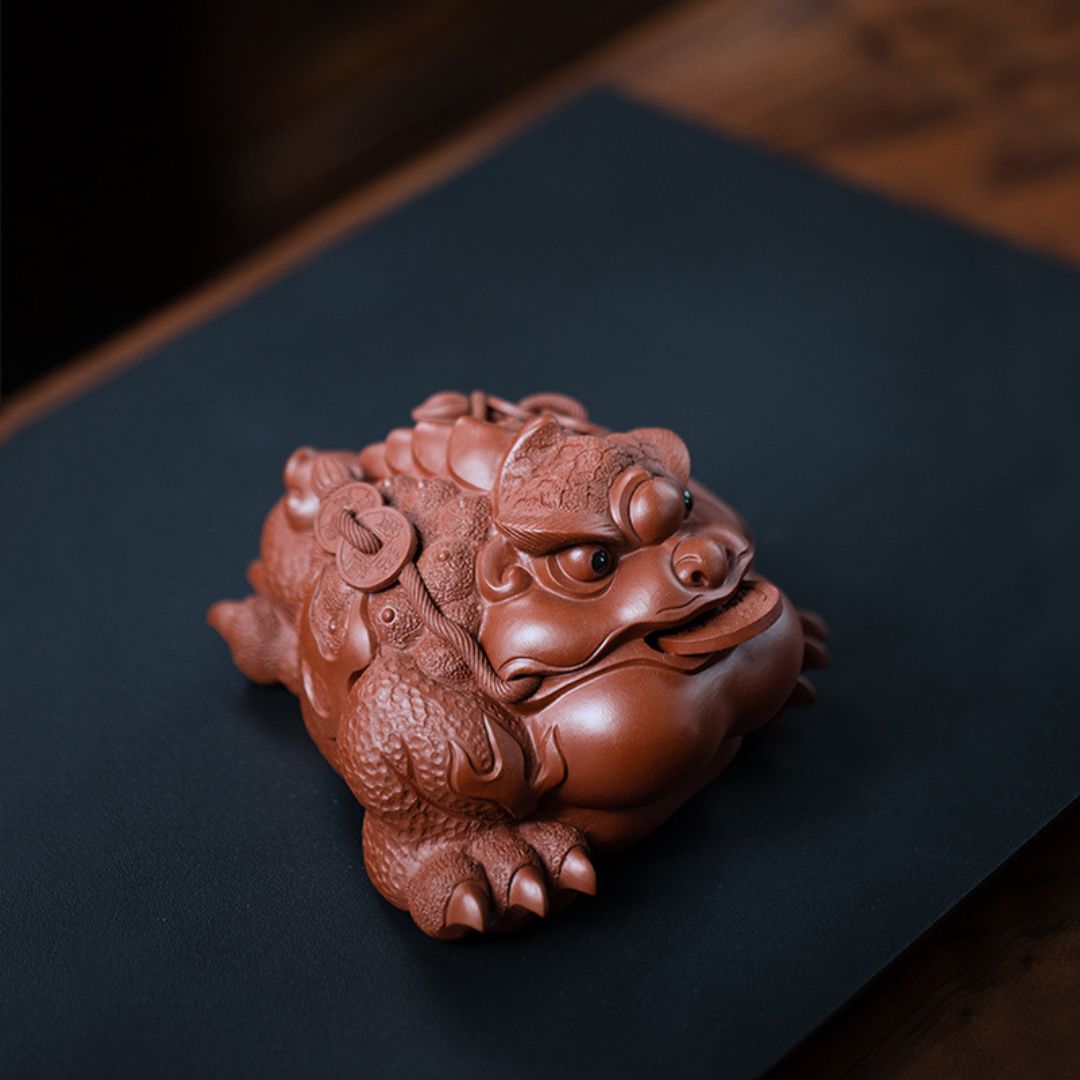
The three-legged Money Frog in a contemporary tea-pet form. Photograph: China Tea Spirit.
Jin Chan means Golden Toad. Money Frog and Money Toad are common English names for the familiar three-legged creature, often shown with coins. Its history extends beyond modern prosperity ornaments: toads appear in older lunar imagery, and the three-legged toad became associated with the Daoist figure Liu Hai.
In one legend recorded by The Met, Liu Hai retrieves his toad from a well using a line baited with coins. The combination helps make sense of the money imagery without inventing a single origin date for every Jin Chan figure.
The traditional symbolism leaves plenty of room for humor, as in the Nerdy Money Frog tea pet. An ordinary frog figurine, however, need not represent Jin Chan at all. Follow the lunar, Daoist and decorative strands in What Is Jin Chan?
Foo Dog and Fu Dog are English names for stylized Chinese lions, not a breed of dog. The familiar gateway pair is often distinguished by a ball beneath one lion’s paw and a cub beside the other. The Penn Museum identifies its female Qing lion by the cub at her feet.
Guardian lions and Suanni share lion-like features, but their names and stories are not interchangeable. A contemporary ceramic lion tea pet can interpret the tradition playfully without being a replica of a palace statue. Learn what to look for in What Are Foo Dogs?
A family resemblance is not the same identity
When you are trying to name a creature, look beyond the face. A shell, hooves, a coin, a stone tablet or the wider composition may be more helpful than one horn. Then consider how the artist or collection identifies the object. The same feature can appear in more than one tradition.
The meanings need context too. A creature can express a wish for prosperity or protection without promising an outcome. That distinction leaves more room to appreciate the carving, painting and personality of an individual piece.