Pausa en los envíos por las fiestas — se reanudarán el 8 de octubre. Celebra el Festival del Medio Otoño con un descuento de 10% utilizando el código ctsmooncake. DescartarIr al contenido
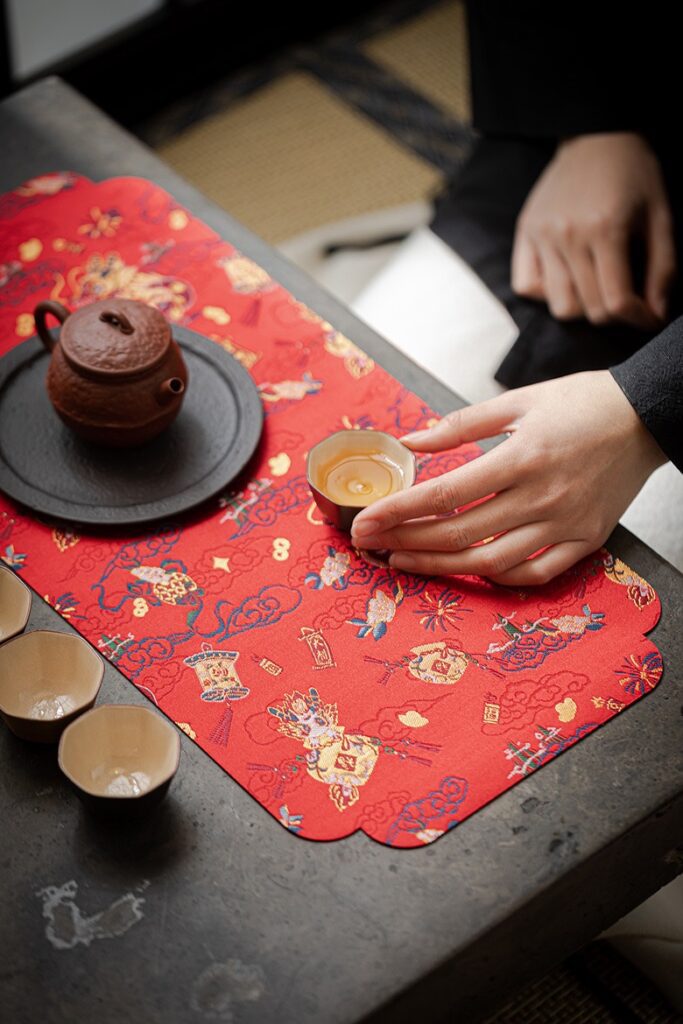
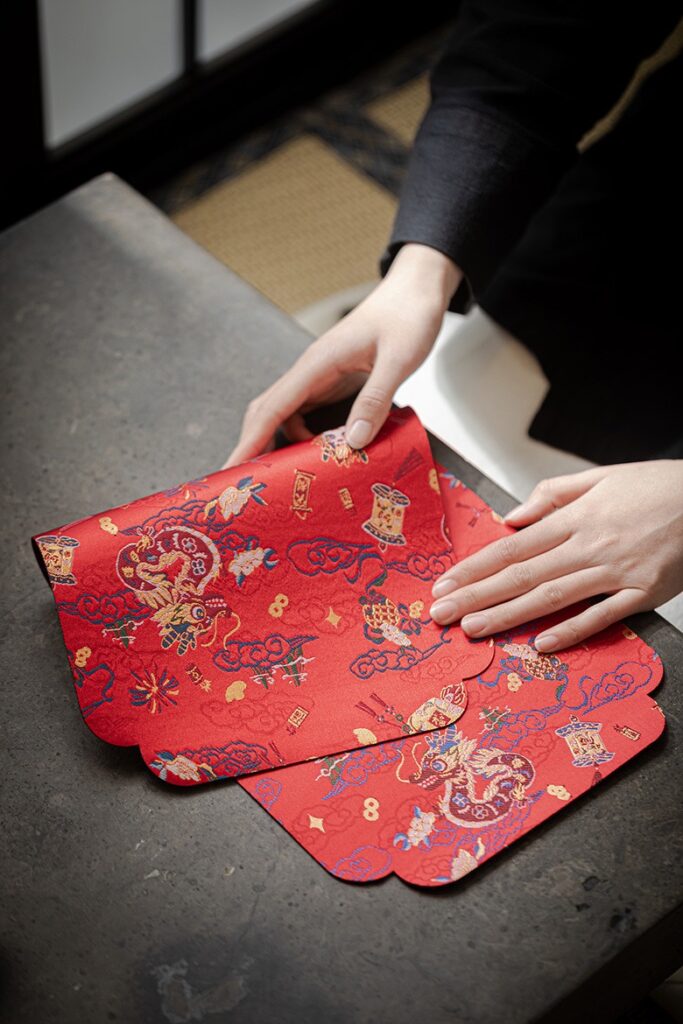
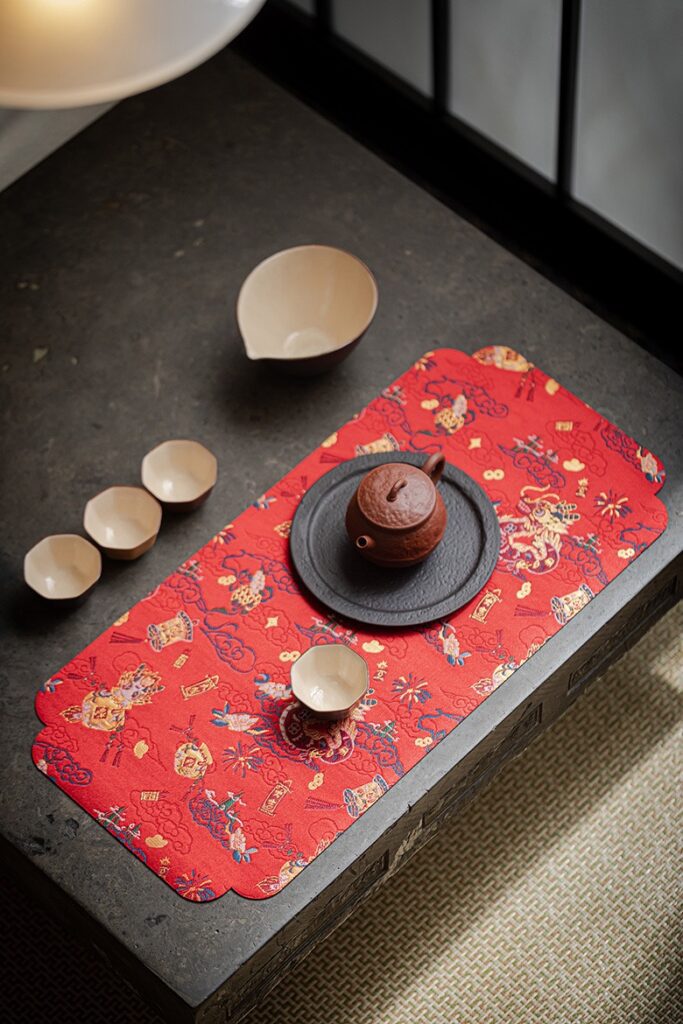
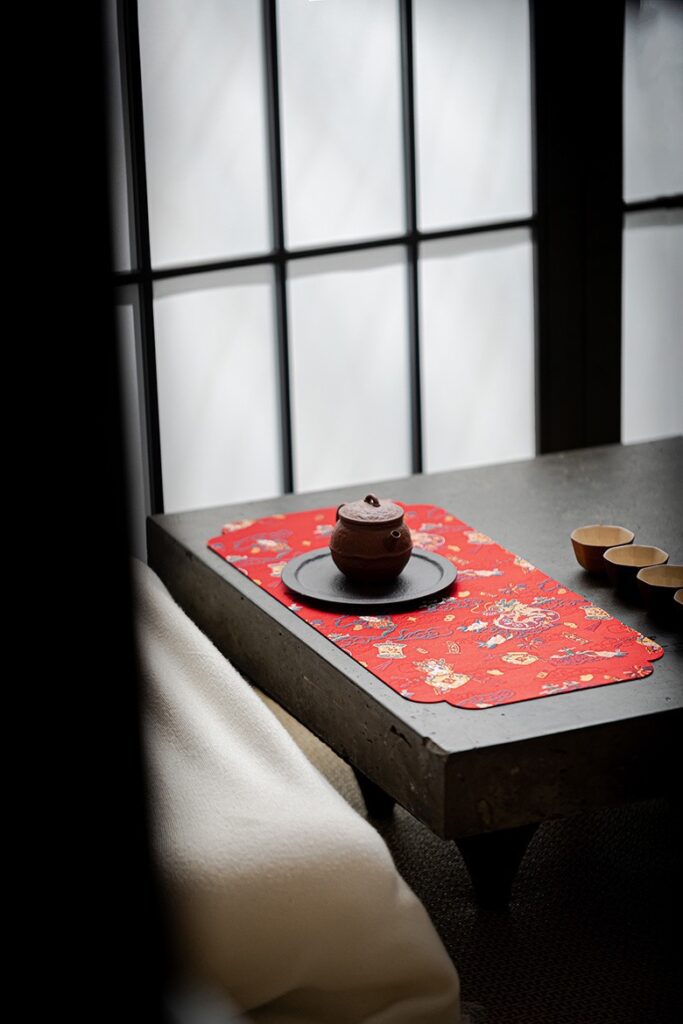
¡Hola, amantes del té! 🐉✨ Tenemos una noticia emocionante ahora que entramos en el Año del Dragón de 2024: con la compra de una tetera de Yixing, te regalamos un tapete para té exclusivo con el diseño del Año del Dragón para que tus rituales de té tengan un toque especial. Es nuestra forma de celebrarlo con vosotros, pero recordad: ¡es una oferta por tiempo limitado! No dejéis pasar la oportunidad de hacer que vuestras sesiones de té sean aún más especiales con este místico complemento. 🍵💫
¡Hola, amantes del té! Aunque muchos de vosotros nos conocéis como una empresa especializada en artículos de té chino de alta gama, también nos especializamos en tés de la región de Huang Shan. Huang Shan es la cuna de los tés chinos más famosos: el Huang Shan Mao Feng, el Keemun y el Tai Ping Hou Kui. Como nativos de este lugar impresionante, tenemos un profundo vínculo con la tierra y su rico patrimonio del té.
Somos conscientes de que encontrar el té perfecto puede ser toda una experiencia personal, y por eso te ofrecemos nuestro paquete de muestras. Te permite explorar la variedad de sabores de los tés de Huang Shan y descubrir aquel que más se adapte a tu paladar.
Todos los tés proceden directamente de los productores de té, lo que garantiza su calidad y su sabor auténtico.
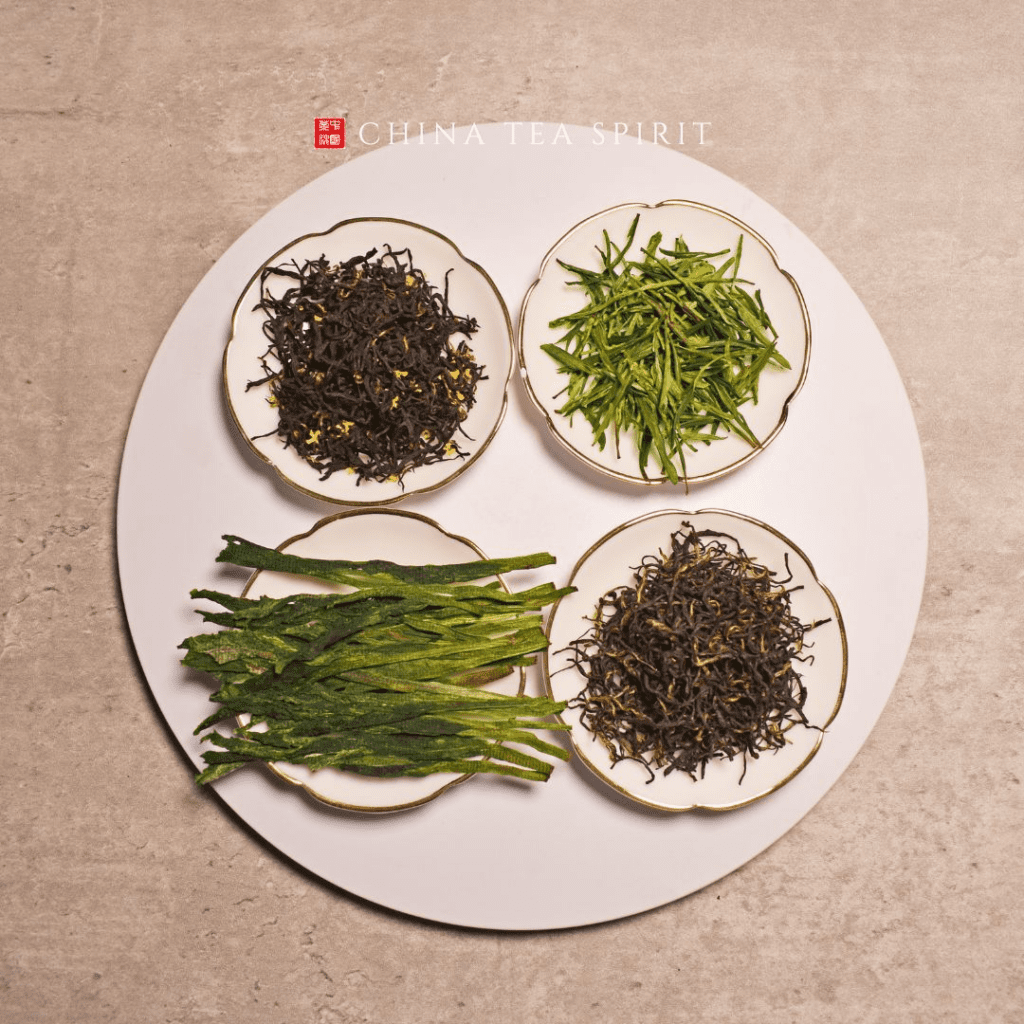
Paquete de muestras que incluye: Huang Shan Mao Feng – 10 g Tai Ping Hou Kui – 10 g Keemun Mao Feng – 10 g Osmanthus Keemun – 10 g
Estamos deseando conocer vuestras opiniones sobre nuestros tés. Acompañadnos en este viaje y dejad que seamos vuestra guía mientras exploráis el encantador mundo de los tés de Huang Shan.
Ten en cuenta que el té y los utensilios para el té se enviarán en paquetes separados, de acuerdo con los requisitos aduaneros. Normalmente, el té llegará un poco más tarde que los utensilios para el té.
Estimados clientes,
Si has tenido algún problema durante el proceso de pago, ponte en contacto con nosotros en [email protected]. Y te echaremos una mano.
A continuación, enumeramos los errores de pago más habituales y sus soluciones para tu información.
#1: China Tea Spirit no realiza envíos a esta ubicación. Por favor, utiliza otra dirección.
Se trata de un error conocido de PayPal. Se produce de forma aleatoria. Si has visto este mensaje de error, ponte en contacto con nosotros en [email protected]. Nos encargaremos de solucionarlo por ti.
In Chaozhou, a small teapot can be as much about welcoming someone as it is about making good tea.
In October 2026, more than 5,000 people took part in a Phoenix Dancong aroma-tasting activity during a cultural festival in Shenzhen.
They were invited to distinguish ten fragrance styles of the famous oolong tea from Chaozhou.
Some of those fragrances have wonderfully evocative names. Mi Lan Xiang, for instance, is often translated as Honey Orchid Aroma.
It was an opportunity to discover how much diversity could exist within one regional tea tradition.
But there is something interesting about turning gongfu tea into a tasting challenge.
For many people who grew up in Chaoshan, the region of eastern Guangdong that includes Chaozhou, gongfu tea wasn’t something they first encountered at a tea festival.
It was already part of ordinary life.
A small pot, a few cups, hot water, and somebody saying it was time for tea.
The distinction is worth exploring because gongfu tea is both a way of preparing tea and a social practice built around sharing it.
Learning the brewing technique is only part of understanding the tradition.
A tea table that belongs to everyday life
For someone discovering Chinese tea overseas, the first encounter with gongfu brewing often involves equipment.
Which gaiwan should you buy? How many grams of leaf should you use? How long should the first infusion last?
These are useful questions. Learning to handle a gaiwan or small teapot, control extraction, and appreciate the changing character of multiple infusions can be deeply rewarding.
But it’s easy to imagine gongfu tea as something that must be performed deliberately, with every movement carefully arranged.
In Chaoshan, the relationship with tea is often more relaxed than that image suggests.
Guangji Bridge in Chaozhou, Guangdong—the city at the center of this tea tradition. Photo: Akira CA, Wikimedia Commons, CC BY-SA 4.0. Unmodified.
Tea can appear during a conversation, while receiving visitors, or in the middle of an otherwise ordinary afternoon.
A shopkeeper doesn’t necessarily need a special occasion to make tea. Neither does a family welcoming someone into the house.
The vessels may be familiar rather than precious.
There might be a small Chaozhou clay teapot, several white porcelain cups and whatever equipment is convenient for heating water.
A Chaozhou-style red clay stove and kettle, an example of traditional water-heating equipment. Image: China Tea Spirit.
A modern electric kettle is just as capable of serving a daily tea-drinking habit as a traditional charcoal stove, even if the experience feels different.
What matters is that the tea is there, ready to be shared.
It’s a cultural setting in which preparing tea doesn’t always require announcing that a tea ceremony is about to begin.
The skill of paying attention to other people
Traditional Chaozhou gongfu tea involves considerable technical knowledge.
The person preparing the tea must judge the leaves, water, heat and brewing time.
With a small teapot and a relatively generous amount of leaf, a few seconds can make a noticeable difference to the infusion.
The pouring technique also matters.
Tea is traditionally distributed carefully between the cups, so each person receives a similar infusion rather than one cup being weak and another excessively strong.
Techniques sometimes described with memorable names, including Guan Gong Xun Cheng (关公巡城), reflect this attention to even pouring.
Yet there is another kind of skill at work.
The person serving tea is also paying attention to the people around the table.
Who has finished their cup? Who has just arrived? Is the conversation continuing, or is someone preparing to leave? Should another infusion be made?
These decisions aren’t easily captured in a brewing chart.
A technically perfect cup of tea can still be served rather awkwardly. And a simple cup offered with warmth can make someone feel immediately welcome.
That is part of the social intelligence of gongfu tea.
Gongfu tea preparation in a Shanghai teahouse in 2013—a reminder that the practice extends far beyond Chaozhou. Photo: PierreSelim, Wikimedia Commons, CC BY 3.0. Unmodified.
The traditional arrangement of three small cups has its own history and associations, which we’ve explored elsewhere.
But the significance of sharing tea goes beyond the number of cups on the table.
The arrangement creates an opportunity for people to sit together, exchange a few words and return for another infusion.
Why Phoenix Dancong belongs in this story
A local tea tradition doesn’t develop independently of the tea being grown around it.
In Chaozhou, Phoenix Dancong is especially important.
Produced in the Fenghuang mountain area, this oolong is celebrated for its remarkable range of aromatic characters.
Different cultivars, individual tea plants, growing conditions and processing techniques can produce teas with very different profiles.
Some are richly floral. Others suggest ripe fruit, honey, herbs or roasted notes.
Names such as Mi Lan Xiang help tea drinkers describe and distinguish these styles, although the names are not a guarantee that every example will taste identical.
Phoenix Dancong also rewards attention during brewing. A few short infusions can reveal changes in fragrance, body and aftertaste.
It is not difficult to see why small pots and cups, which allow tea drinkers to experience those changes repeatedly, remain closely associated with the region.
But the relationship works in both directions.
The local tea shapes the way people brew. And the habits of local tea drinkers influence what qualities producers and consumers learn to value.
Culture is not simply something attached to the tea after it has been made. It helps determine what people consider good tea in the first place.
When a tea tradition travels
Chaozhou’s tea culture has never remained entirely within the city.
Generations of migrants from the Chaoshan region have carried their customs to other parts of China and overseas, particularly Hong Kong and Southeast Asia.
Tea is one of the everyday practices that can travel with a community.
Chinese tea-drinking in Hong Kong, photographed by Lai Afong (19th century; reproduced in 1907). A historical illustration of shared tea, not a specifically Chaozhou scene. Wikimedia Commons, public domain.
Not every household will preserve the same equipment or follow the same brewing habits.
People adapt to different homes, different sources of water, different teas and different circumstances.
But the familiar act of making and sharing tea can remain meaningful.
It creates a connection between people who may live far from the place where those habits first developed.
And the custom can continue to evolve.
Someone who learns gongfu tea from a grandparent may later introduce it to friends from an entirely different cultural background.
Those friends might adopt the brewing method while using different vessels, different teas or a different style of hospitality.
A modern gongfu setup: a gaiwan, fairness pitcher and three tasting cups. Photo: Il lupa, Wikimedia Commons, CC BY-SA 4.0. Unmodified.
The resulting practice is not identical to its source. That doesn’t necessarily make it less meaningful.
It shows how a living tradition moves between people.
What happens when everyday culture becomes heritage?
That broader inscription recognizes not only the making of tea, but also the knowledge and customs surrounding its preparation, sharing and role in community life.
Official recognition can support preservation, teaching and public understanding.
And contemporary events such as Shenzhen’s 2026 cultural festival can introduce regional tea traditions to audiences who might never otherwise encounter them.
At that festival, ten intangible-cultural-heritage practitioners helped present gongfu tea, and hundreds of international visitors participated in Phoenix Dancong tasting activities.
There is genuine value in making such traditions accessible.
Still, presenting a cultural practice to visitors creates an interesting challenge.
A public demonstration needs structure. It may explain the proper sequence of movements, introduce traditional terminology, or teach participants how to identify fragrances.
An ordinary tea session does not always work that way.
At home, people may pause halfway through brewing to answer a question. Someone may leave the table and return. A familiar host may pour tea while continuing an entirely unrelated conversation.
Those small, unplanned moments are also part of the tradition. They are difficult to package into a formal lesson.
The challenge for cultural preservation is therefore not simply to reproduce the correct movements. It’s also to leave room for the living relationships that give those movements meaning.
More than a perfect infusion
There is enormous pleasure in learning to brew gongfu tea well.
Understanding your leaves, choosing the right vessel and improving your pouring technique can change the way you experience tea.
But the tradition offers something beyond technical mastery.
It suggests that a tea table can be a place where attention is shared.
Attention to the leaves and their changing flavor. Attention to the water and the heat. And attention to the people sitting nearby.
You don’t need to reproduce every detail of a traditional Chaozhou tea setting to appreciate that idea.
The next time you prepare tea for a friend, notice what happens after the first cup.
Perhaps the conversation lasts longer than expected. Perhaps you make one more infusion, and then another.
Perhaps the tea becomes something you enjoy together without needing to talk about it at all.
The pot may hold only a few mouthfuls. But there is room around it for much more.