Suspension des expéditions pendant les fêtes — reprise le 8 octobre. Fêtez la Fête de la mi-automne avec une réduction de 10% en utilisant le code ctsmooncake. IgnorerAller directement au contenu
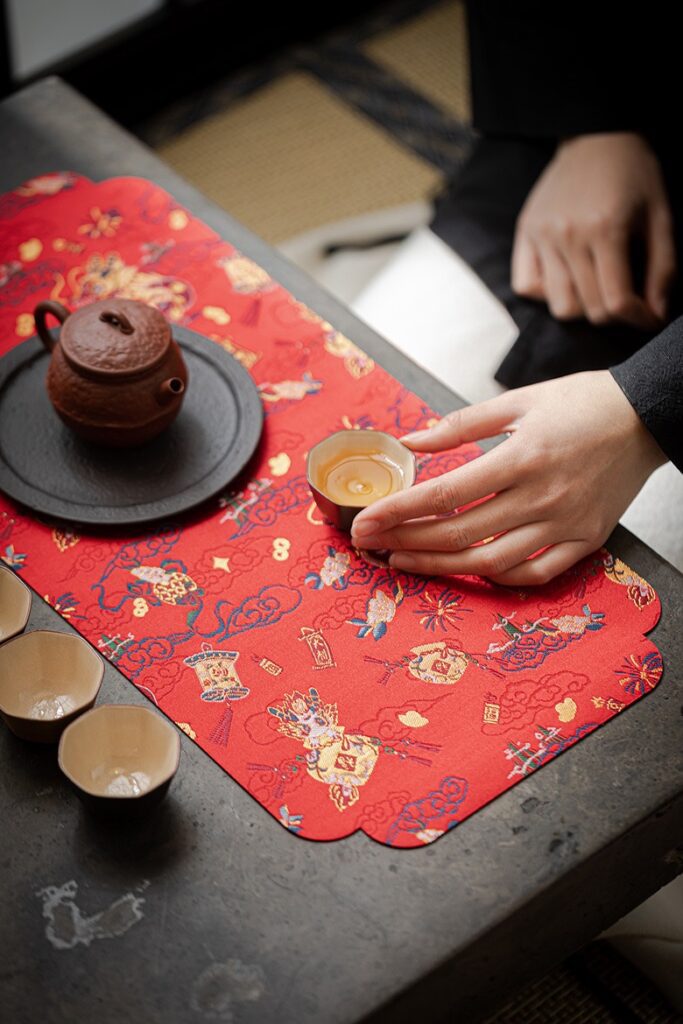
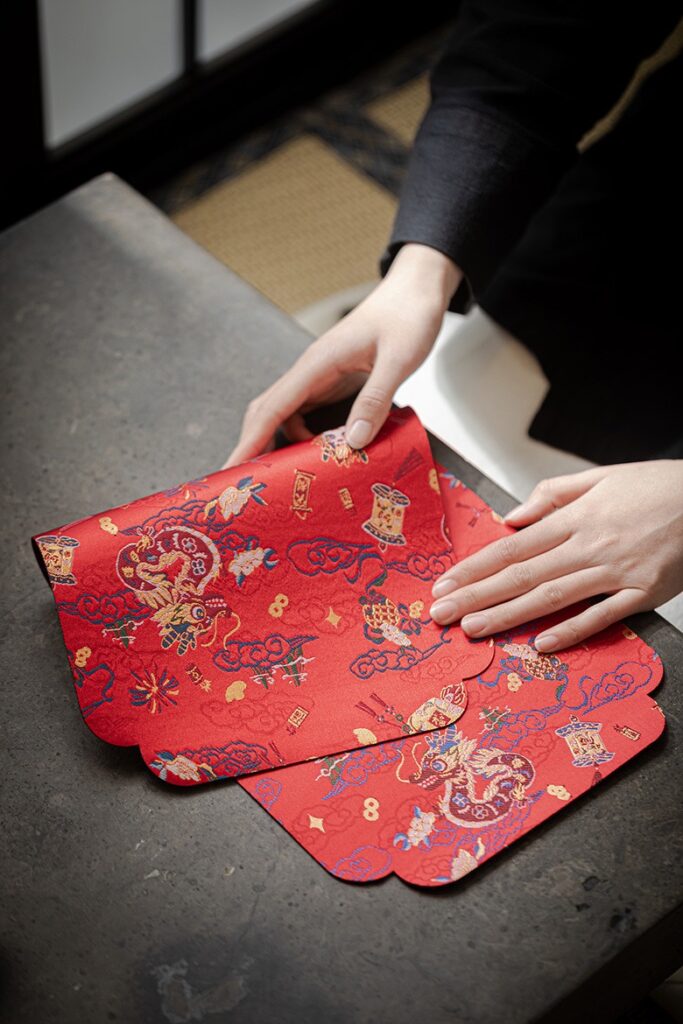
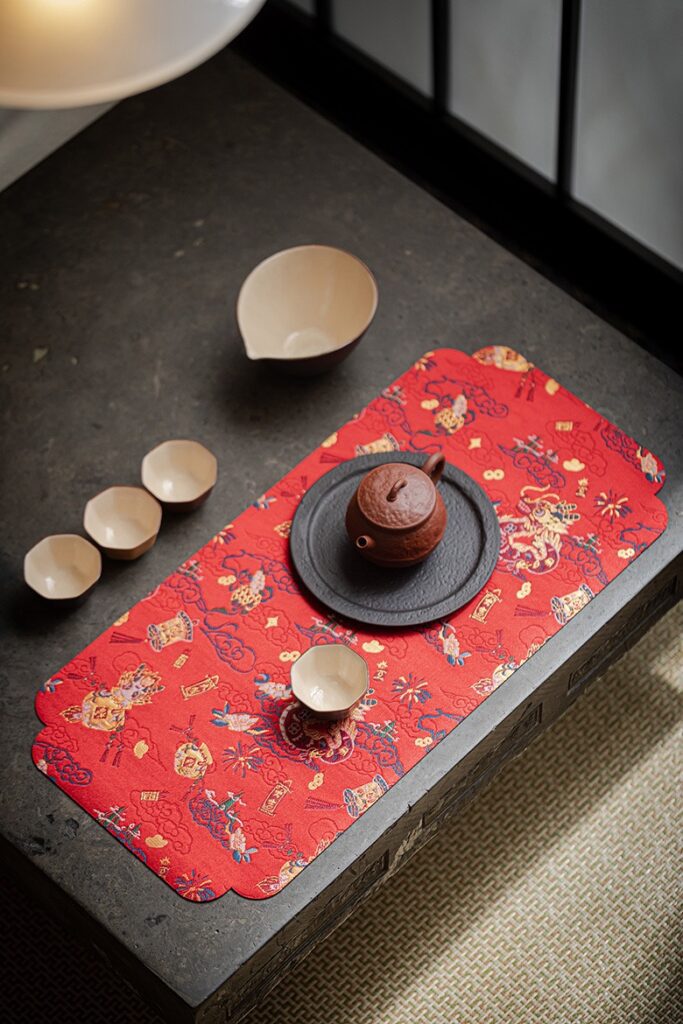
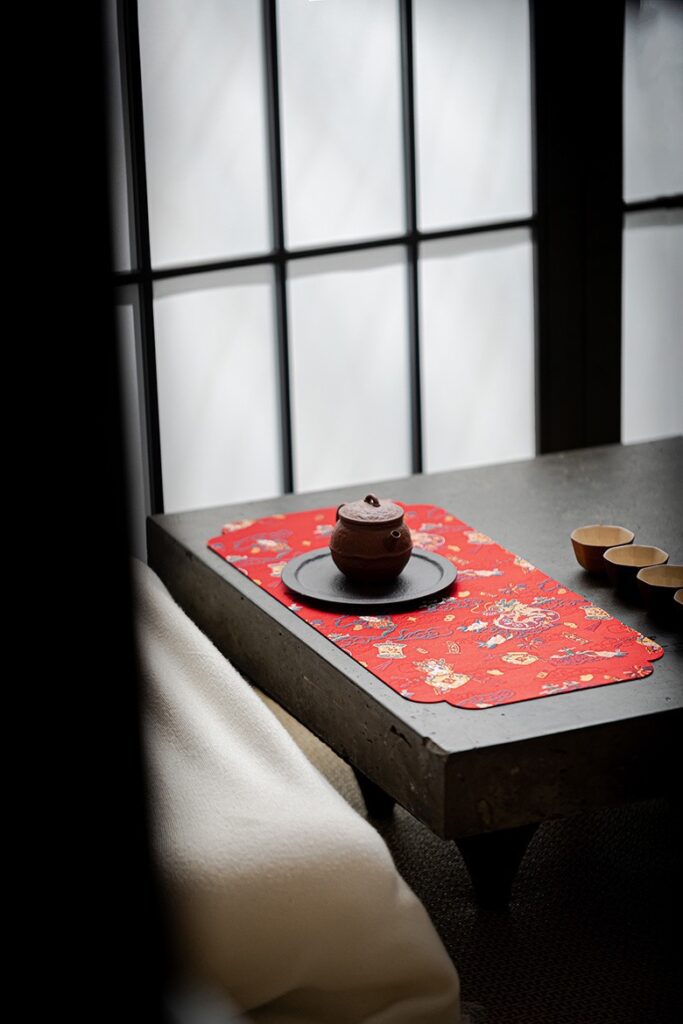
Bonjour à tous les amateurs de thé ! 🐉✨ Une nouvelle passionnante en ce début d’Année du Dragon 2024 : pour tout achat d’une théière Yixing, nous vous offrons un set de thé exclusif aux motifs de l’Année du Dragon, pour apporter une touche d’originalité à vos rituels du thé. C'est notre façon de célébrer cet événement avec vous, mais n'oubliez pas : cette offre est valable pour une durée limitée ! Ne manquez pas l'occasion de rendre vos moments de dégustation encore plus spéciaux grâce à cet accessoire mystique. 🍵💫
Bonjour à tous les amateurs de thé ! Si beaucoup d’entre vous nous connaissent comme une entreprise spécialisée dans les accessoires haut de gamme pour le thé chinois, nous sommes également spécialisés dans les thés de la région de Huang Shan. Huang Shan abrite les thés chinois les plus célèbres : le Huang Shan Mao Feng, le Keemun et le Tai Ping Hou Kui. Originaires de cet endroit à couper le souffle, nous entretenons un lien profond avec cette terre et son riche patrimoine du thé.
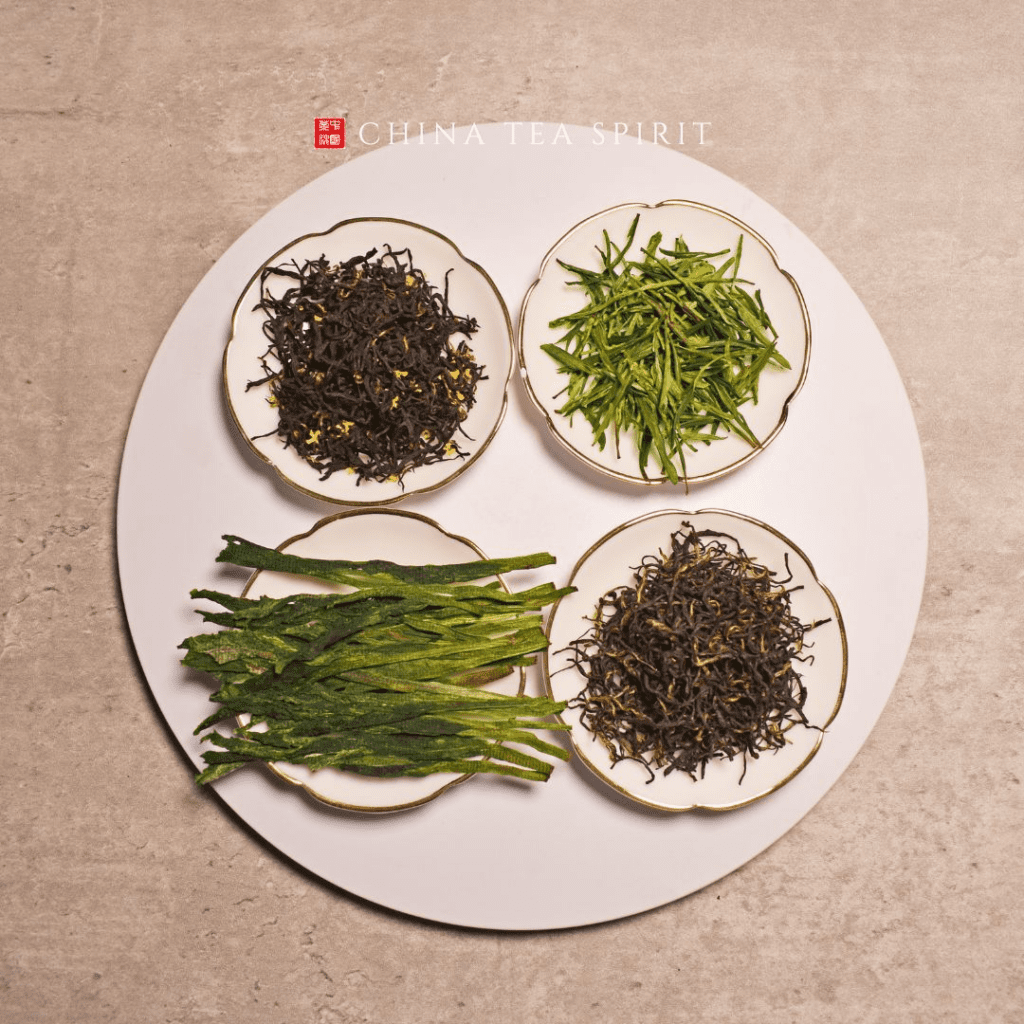
Nous savons que trouver le thé idéal peut être un parcours personnel, c'est pourquoi nous vous proposons notre coffret d'échantillons. Il vous permet d'explorer la diversité des saveurs des thés de Huang Shan et de découvrir celui qui séduira vos papilles.
Chacun de ces thés est acheté et produit directement auprès des producteurs de thé, ce qui garantit sa qualité et son goût authentique.
Coffret d'échantillons comprenant : Huang Shan Mao Feng – 10 g Tai Ping Hou Kui – 10 g Keemun Mao Feng – 10 g Osmanthus Keemun – 10 g
Nous avons hâte de connaître vos impressions sur nos thés. Rejoignez-nous dans cette aventure et laissez-nous vous guider à la découverte de l'univers enchanteur des thés de Huang Shan.
Veuillez noter que le thé et les accessoires de thé seront expédiés dans des colis séparés, conformément aux exigences douanières. En général, le thé arrive un peu plus tard que les accessoires de thé.
Chers clients,
Si vous avez rencontré des problèmes lors du paiement, veuillez nous contacter à l'adresse suivante : [email protected]. Et nous serons là pour vous aider.
Vous trouverez ci-dessous une liste des erreurs de paiement courantes et leurs solutions, à titre de référence.
#1 : China Tea Spirit ne livre pas à cette adresse. Veuillez indiquer une autre adresse.
Il s'agit d'un bug connu de PayPal. Il survient de manière aléatoire. Si vous avez reçu ce message d'erreur, veuillez nous contacter à l'adresse suivante : [email protected]. Nous allons régler cela pour vous.
Pourquoi le Taiping Houkui rivalise avec le Longjing au sommet de la hiérarchie des thés verts chinois
Dans l'univers des thés verts chinois, Longjing du lac de l'Ouest est apprécié pour sa “ couleur verte éclatante, sa forme élégante, son arôme intense et son goût moelleux ”.” Mais à ses côtés se dresse fièrement une autre légende —Taiping Houkui, réputé pour sa forme unique “ deux feuilles et un bourgeon ” et son style caractéristique “ charme du singe ” (猴韵 hóu yùn).
Comme le dit le vieil adage :
“ Une fois que l’on a vu le mont Huangshan, aucune autre montagne ne nous impressionne ; une fois que l’on a goûté le Taiping Houkui, aucun autre thé ne peut lui être comparé. ”
Même les experts chevronnés en thé en font l'éloge en le qualifiant de
“ Une seule tasse de Houkui surpasse le Longjing. ”
Reconnu comme le le fleuron des thés verts chinois et souvent choisi comme thé national offert en cadeau, Le parcours de Taiping Houkui, des jardins cachés dans les montagnes jusqu’aux grandes tables des banquets d’État, est tout simplement extraordinaire.
Quels secrets se cachent derrière sa réputation sans pareille ? Plongeons au cœur des montagnes brumeuses pour découvrir l'histoire légendaire de Taiping Houkui.
Un siècle de légende :
Du thé des montagnes sauvages au trésor national
Si l'on remonte à ses origines, Taiping Houkui a été officiellement créée en 1900 à la fin de la dynastie Qing. Son prédécesseur s'appelait Taiping Jiancha (Thé « Taiping Pointed »), cultivé pour la première fois en 1859 sur les rives de la rivière Machuan.
La légende raconte qu’à la fin de la dynastie Qing, des marchands avisés sélectionnaient avec soin les bourgeons les plus fins et les plus homogènes du Taiping Jiancha, puis les conditionnaient séparément pour les marchés haut de gamme de Nankin, où les amateurs de thé se les arrachaient à des prix élevés.
Parmi ces artisans du thé, on comptait Wang Kuicheng Originaire du village de Hougang, ce maître du thé était convaincu que le thé parfait ne résultait pas uniquement du tri des feuilles finies, mais qu’il commençait par relever le niveau d'excellence en matière de préparation des commandes.
Dans les plantations de thé d'altitude de Le pic du Phénix à Houkeng (à 750 mètres d'altitude), il a sélectionné avec soin des rameaux robustes et bien droits, comportant un bourgeon et deux feuilles, et a créé une nouvelle variété : de longues feuilles en forme d'orchidée, au parfum à la fois intense et délicat.
Comme ce nouveau thé provient de Village de Monkey Pit (Houkeng) dans Comté de Taiping (qui fait désormais partie du district de Huangshan), était considéré comme le thé de la meilleure qualité parmi tous les thés de Taiping, et a été mis au point par Wang Kuicheng (dont le prénom comporte le caractère “ Kui ”), il a donc été baptisé ainsi : Taiping Houkui.
En 1915, il a été expédié à l'étranger sur recommandation de commerçants locaux tels que Liu Jingzhi, à destination de la Exposition internationale Panama-Pacifique à San Francisco — et il a remporté le Médaille d'or, propulsant Houkui sous les feux de la rampe internationale.
Depuis lors, les distinctions n'ont cessé de s'enchaîner :
En 1999, sélectionné parmi Les dix thés les plus célèbres de Chine.
En 2003, a reçu Protection des indications géographiques par National Geographic.
En 2008, ses techniques de production ont été classées au titre de Patrimoine culturel immatériel national.
Et en 2022, aux côtés d’autres thés traditionnels chinois, il a été inscrit sur la liste de l’UNESCO Liste représentative du patrimoine culturel immatériel de l'humanité.
Au fil d'un siècle, des vallées montagneuses reculées aux scènes internationales, Le Taiping Houkui est à la hauteur de sa réputation : c'est le roi des thés. Son excellence ne tient pas seulement au savoir-faire artisanal : elle puise dans la les eaux et les brumes merveilleuses du mont Huangshan, des variétés de thé uniques et des générations de producteurs de thé passionnés.
Un chef-d'œuvre de la nature :
La « ceinture dorée » du 30e parallèle nord
Un excellent thé naît d'une terre d'exception.
Le cœur de la région couverte par le *Taiping Houkui* — des villages tels que Houkeng, Hougang et Yanjia—se trouve le long de de 30°0′ à 30°26′ de latitude nord, qui fait partie de ce qu’on appelle “ La ceinture d’or de la production de thé. ” Ici, la nature est d’une générosité sans pareille.
La région bénéficie d'un climat de mousson subtropicale:
Chaud et humide,
Avec des précipitations abondantes,
La douce lumière du soleil,
Des saisons bien marquées,
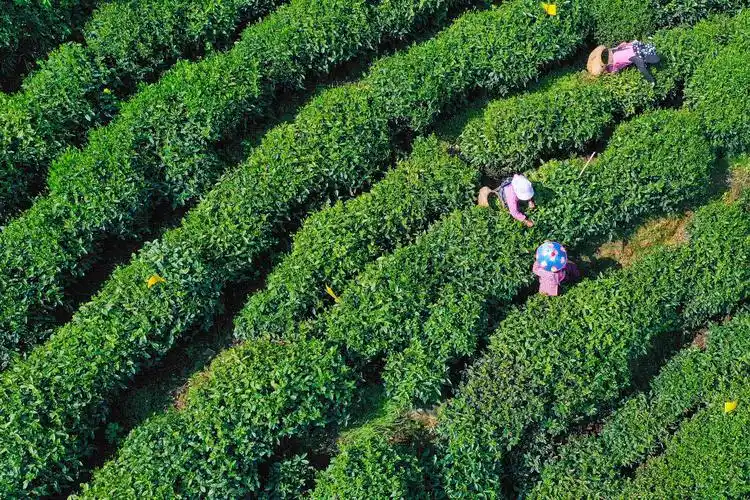
Et des nuages abondants et de la brume qui flottent toute l'année entre les plantations de thé perchées entre 300 et 700 mètres d'altitude.
Le sol, formé par Reliefs de type Danxia, est un mélange luxuriant de terre meuble sableuse noire et jaune — fertile, bien drainée, riche en matière organique et idéale pour les arbres à thé. Les sols sont légèrement acides (pH 5,5–6,5), ce qui favorise une croissance dynamique et délicate.
La qualité du Taiping Houkui tient également en grande partie à son essence unique : le Cultivar du groupe Shidacha, une variété de thé locale ancestrale.
Cet arbre à floraison tardive produit des feuilles larges et des bourgeons épais et robustes, idéal pour créer ces formes à la fois imposantes et délicates qui font la renommée de Houkui. La saison idéale pour la récolte ? De la période précédant la « Pluie des céréales » (Gu Yu) jusqu'au début de l'été (Li Xia).
Le processus de récolte suit une règle stricte dite des “ quatre sélections et huit rejets ” :
Choisir:
Haute montagne, pentes brumeuses,
Des buissons de thé Shidacha en pleine croissance,
Des pousses tendres, robustes et dressées,
Brins uniformes à un bourgeon et trois feuilles.
Ignorer:
Feuilles trop développées, sous-développées, fines, courbées, pâles, violettes, doubles ou endommagées par des ravageurs.
La récolte doit avoir lieu le les matins brumeux et ensoleillés, en veillant à ne sélectionner que les feuilles les plus fraîches, les plus charnues et les plus éclatantes. Ce n'est qu'avec un tel soin que l'on peut faire ressortir la véritable essence du Taiping Houkui dans chaque tasse.
Un savoir-faire d'exception : l'art qui se cache derrière un “ roi du thé ”
Bénéficiant d’un environnement préservé, enrichi par la variété locale Shidacha et façonné par des normes rigoureuses en matière de cueillette des feuilles, les fondements de la qualité exceptionnelle du Taiping Houkui sont tout simplement remarquables. Mais ce qui définit véritablement son statut de “ roi des thés verts ”, c’est le savoir-faire méticuleux transmis de génération en génération.
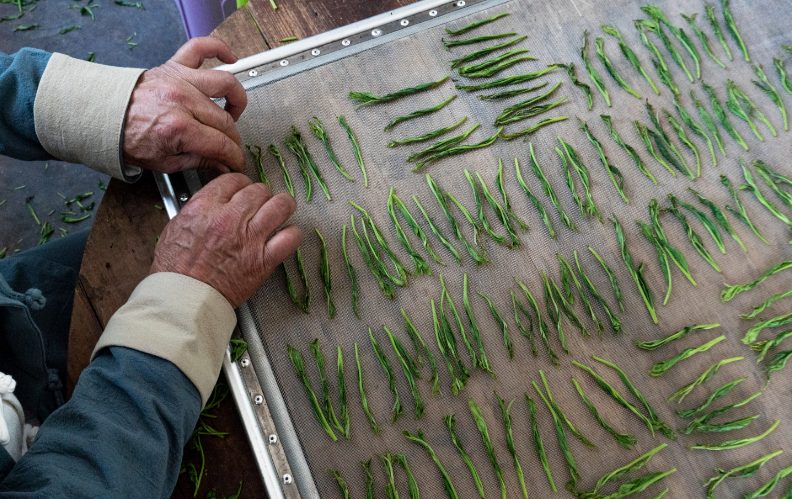
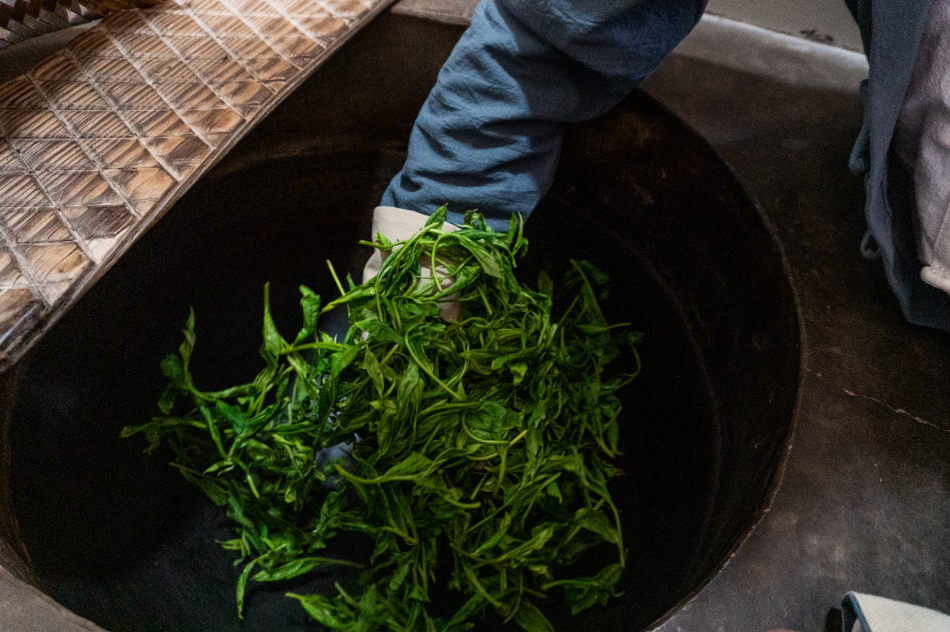
La fabrication du Taiping Houkui suit un processus précis : un flétrissage court (qui comprend l'étape de sélection des bourgeons), la torréfaction à la poêle, le façonnage à la main et un séchage minutieux. Lors de la torréfaction à la poêle, les artisans doivent respecter le principe “ manipulation délicate, brassage minutieux et étalement à l’air libre ” afin de garantir que les feuilles soient chauffées uniformément, sans s’enrouler ni s’agglomérer, préservant ainsi leur fraîcheur et leur parfum.
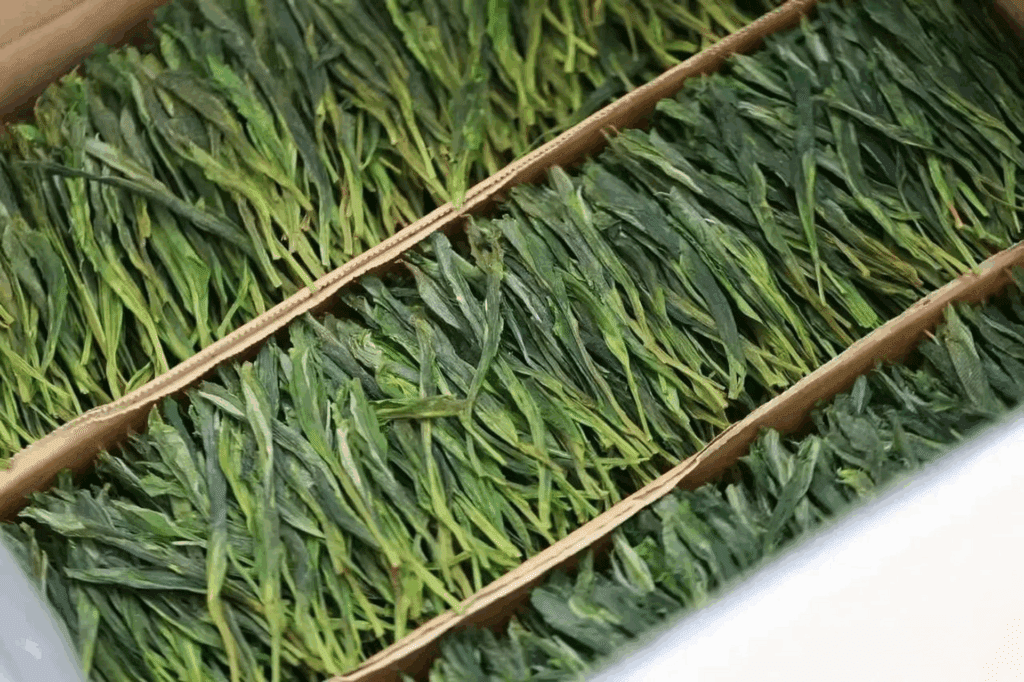
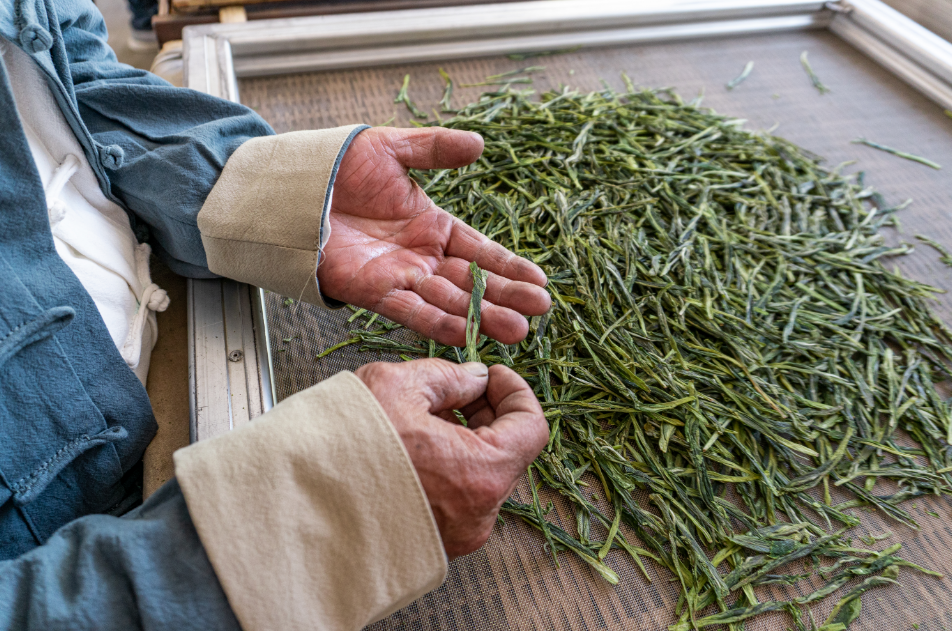
Le séchage est l'étape décisive au cours de laquelle la forme caractéristique du Taiping Houkui prend vie. Comme le montre le Le Classique du thé chinois (中国茶经), le thé est séché en trois étapes : zi hong (jeune feu), Lao Hong (ancien incendie), et da lao huo (finition au feu). Cette technique par couches permet d'obtenir la forme caractéristique décrite comme suit : “ pointue aux deux extrémités, plate et droite, ni recourbée ni lâche ”.”
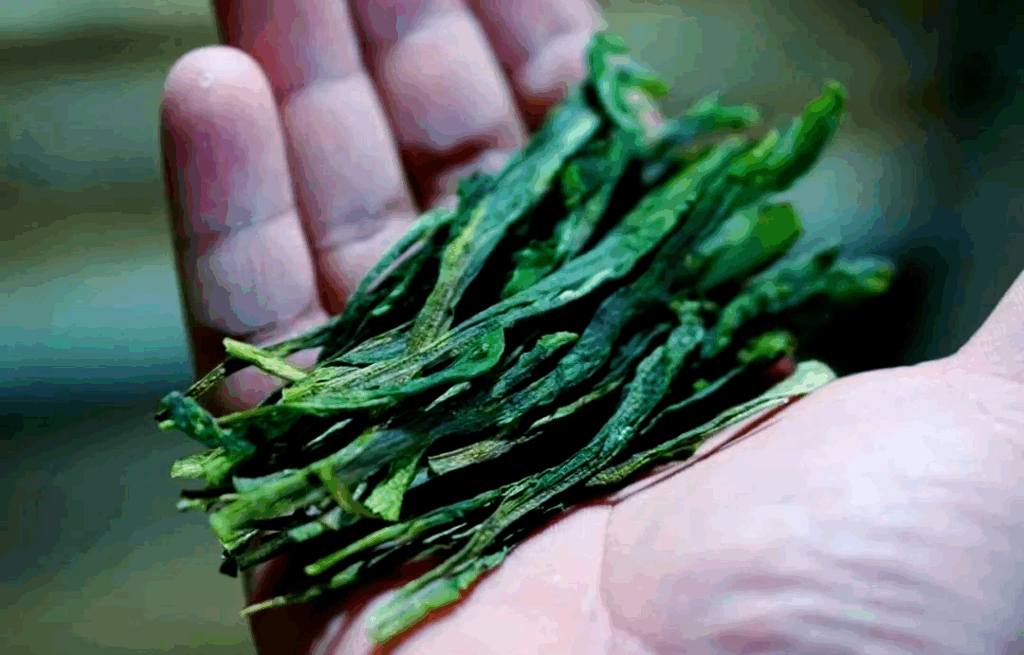
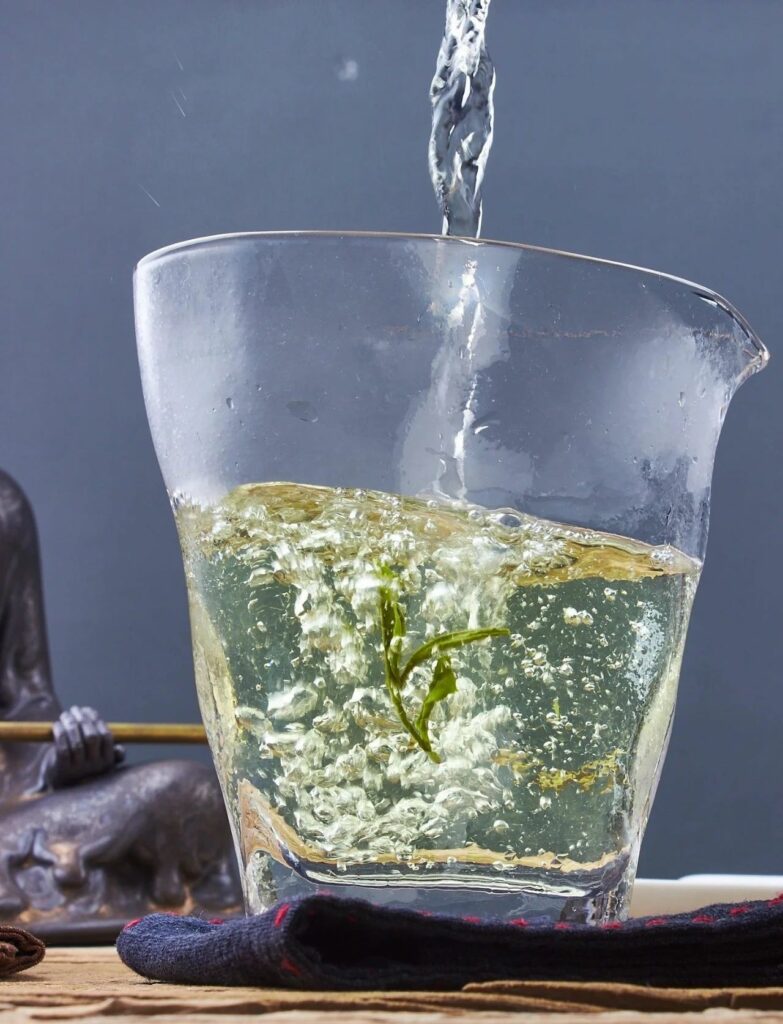
Visuellement, le thé fini présente la structure emblématique dite “ deux couteaux protégeant une lance ” — deux feuilles étroitement enroulées autour d’un bourgeon charnu —, se dressant fièrement et bien droite. Les feuilles sèches présentent un éclat vert foncé uniforme, et une fois infusé, le thé resplendit d’une teinte verte vive et limpide. Un arôme persistant d’orchidée s’élève de la tasse, et chaque gorgée offre un goût moelleux et corsé, avec ce “ charme du singe ” caractéristique qui persiste délicieusement en bouche.
Fabriqué à partir de feuilles de printemps robustes de la variété Shidacha, récoltées vers Saison des pluies (谷雨), le Taiping Houkui est également réputé pour son impressionnante résistance à l'infusion. Même après plusieurs infusions, les feuilles restent entières, tendres et éclatantes, avec un “ fil rouge ” unique le long de leurs nervures — un signe classique d'un savoir-faire de grande qualité.
Si le Longjing du Lac de l’Ouest est l’érudit raffiné du Jiangnan — réputé pour son arôme délicat et sa douceur rappelant la fleur de haricot —, alors le Taiping Houkui est l’ermite des montagnes, incarnant la force et le mystère du majestueux Huangshan. Les nuages et la brume lui confèrent un parfum serein d’orchidée, et ses feuilles à bourgeonnement tardif, riches en nutriments, lui donnent un caractère plus riche et plus profond que celui du Longjing.
Un excellent Taiping Houkui offre une expérience aux multiples facettes : la première infusion est aromatique, la deuxième riche en saveurs, et dès la troisième et la quatrième, le parfum persistant continue de danser dans la tasse. Il incarne véritablement la beauté de l’adage “ récolte tardive, récompense plus grande ”.”