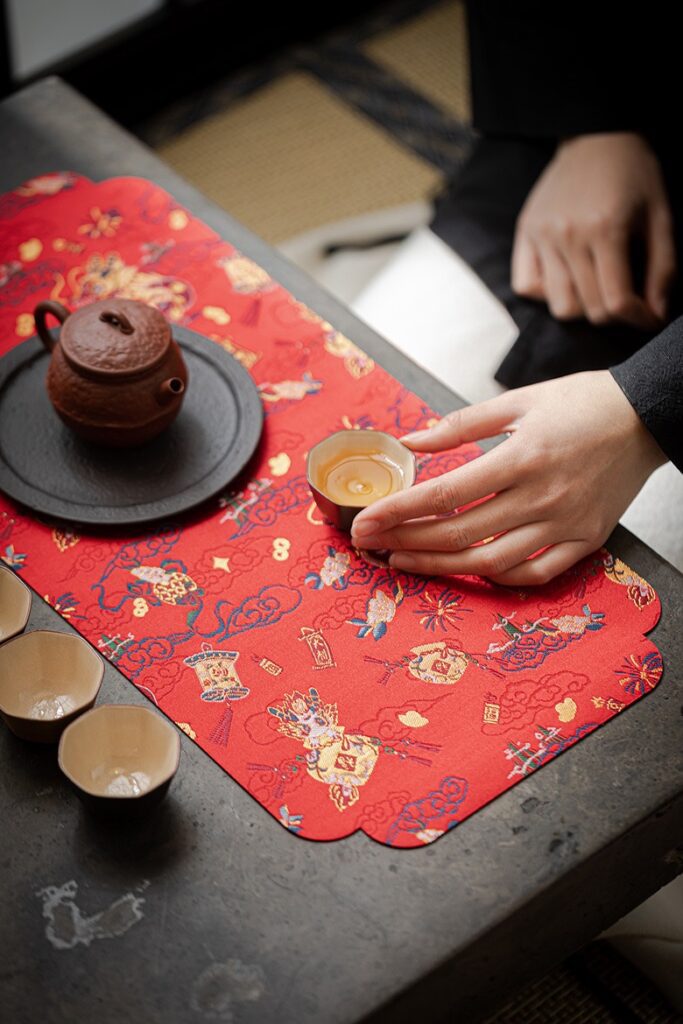
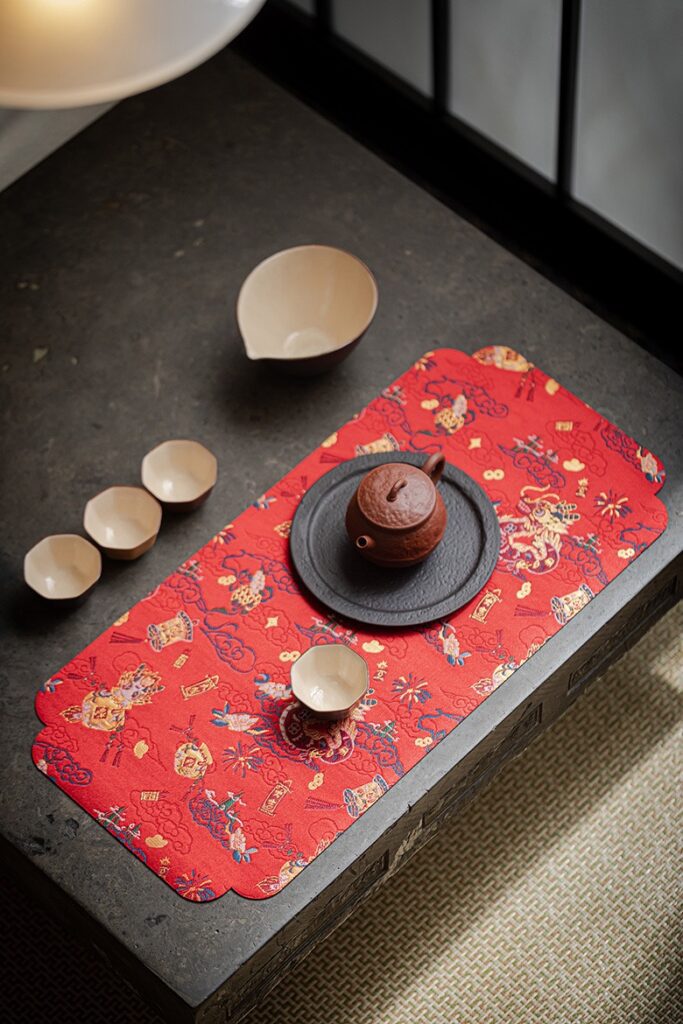
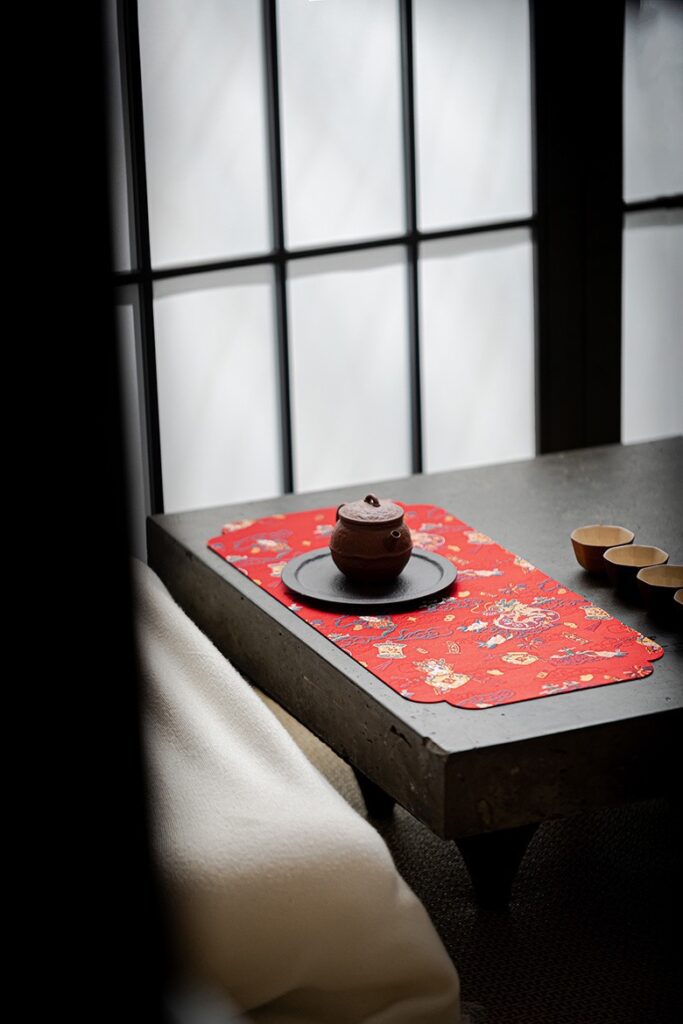
A complete gongfu tea set can look wonderfully convincing.
There is the gaiwan, fairness pitcher, tiny cups, tea tray, strainer, tongs, scoop, tea needle, lid rest, tea basin, kettle and, somewhere among all of that, usually a tea pet looking very comfortable with the situation.
If you are new to Chinese tea, it is easy to assume all of this comes before the tea.
It doesn’t.
You can have a perfectly good gongfu session with a gaiwan, a cup and hot water. Everything else earns its place later.
Start with the thing that actually brews the tea
For most beginners, a porcelain gaiwan is still the easiest place to start.
Porcelain is neutral, so you can move freely between oolong, pu’er, black tea, white tea and other Chinese teas without worrying too much about how the vessel itself will affect the flavor.
Around 90–120ml is a useful size for drinking alone.
That may sound small if you are used to a large mug, but gongfu brewing works through repeated short infusions. A 100ml gaiwan used eight times is already producing quite a lot of tea.
This is also why I wouldn’t rush into buying a Yixing teapot as the first vessel.
A Yixing pot becomes more interesting once you know what you keep brewing.
Maybe six months from now you discover that almost every evening ends with Wuyi rock tea. Or perhaps you become obsessed with ripe pu’er. At that point, choosing a clay, shape and capacity for a particular kind of tea starts to make much more sense.
Before that, a simple gaiwan lets you explore without committing.
One cup really can be enough
There is something slightly funny about buying a six-cup gongfu set when you drink tea alone 95% of the time.
You only need somewhere for the tea to go.
If your cup comfortably holds one infusion from the gaiwan, you can pour straight into it.
That is the entire system.
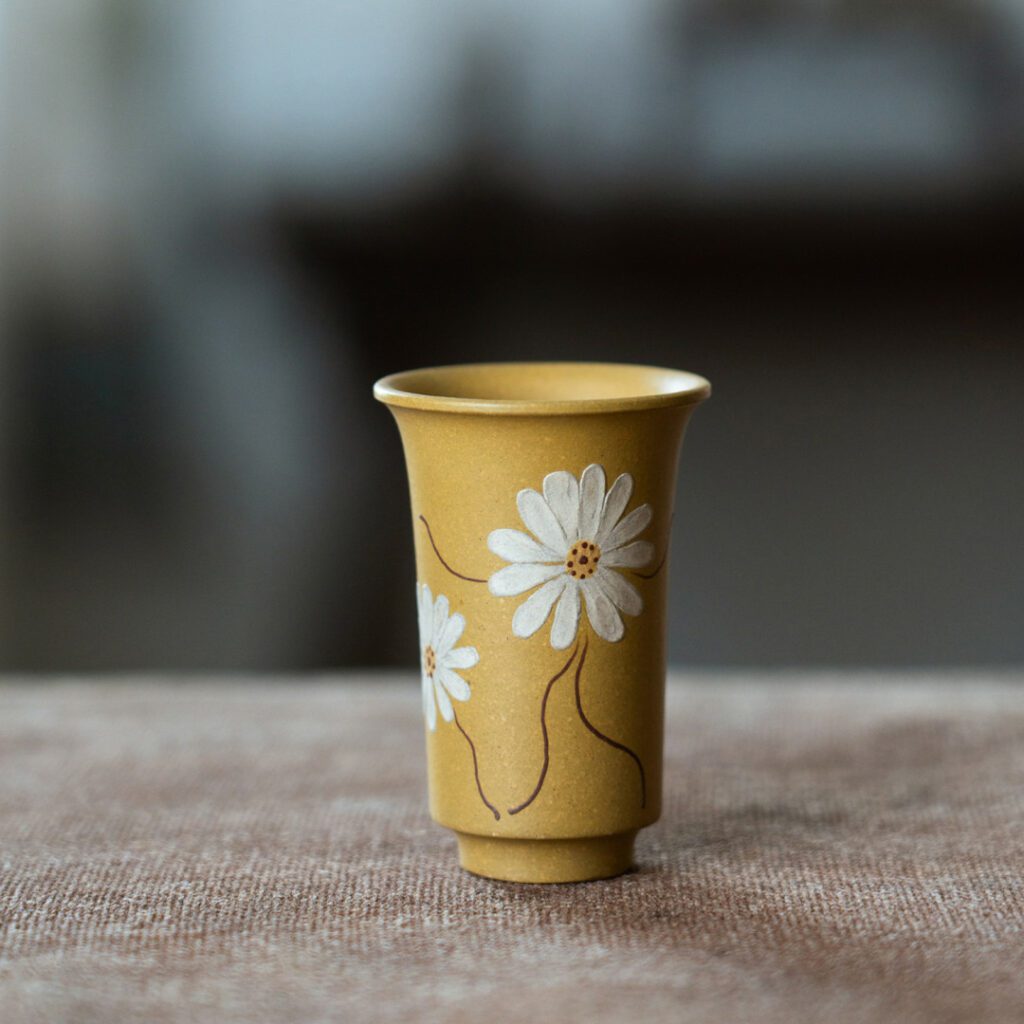
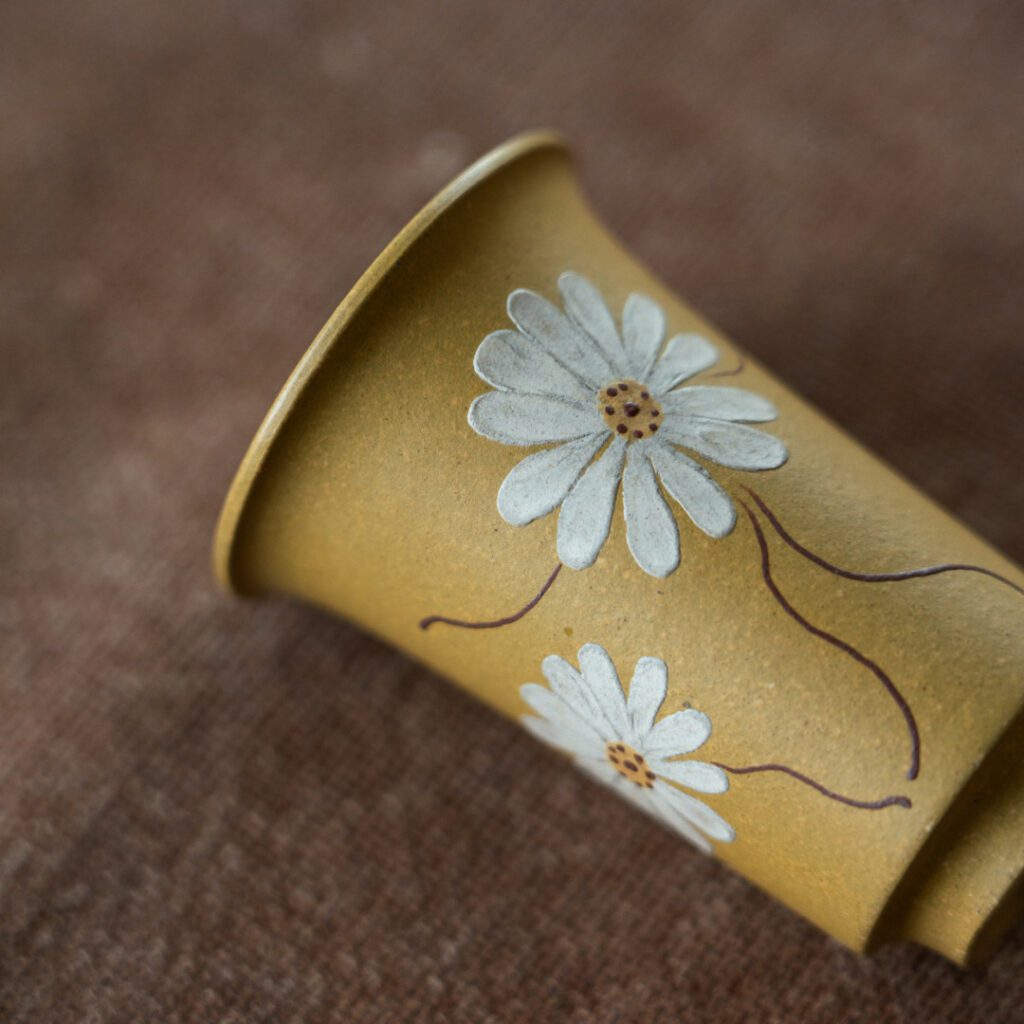
A small handmade cup is lovely if you enjoy the object itself, but it is not a prerequisite for drinking tea properly. The small cup already in your cupboard works too.
Once you start serving other people, the setup changes naturally.
This is where a Gong Dao Bei 公道杯, or fairness pitcher, becomes genuinely useful.
Instead of pouring part of the infusion into one cup and then the rest into another, you empty the whole gaiwan into the pitcher first. The tea stops extracting at the same moment, and then you divide it between the cups.
For two or three people, I almost always prefer having one.
For one person, it depends.
If you like using a very small tasting cup, the pitcher helps. If your cup already holds the whole infusion, it may spend most of its life looking decorative.
That is probably the easiest way to decide whether you need most gongfu accessories:
What problem is this object solving for me?
If you can’t answer that yet, you can probably wait.
The tea tray is where setups suddenly become serious
A proper tea tray makes everything look like a tea ceremony.
It is also basically a very elegant way to deal with spilled water.
Traditional gongfu brewing can be wet. You warm vessels, rinse things, discard water and occasionally pour somewhere you did not intend to pour.
A tray is extremely convenient if that is how you like to brew.
But it isn’t necessary.
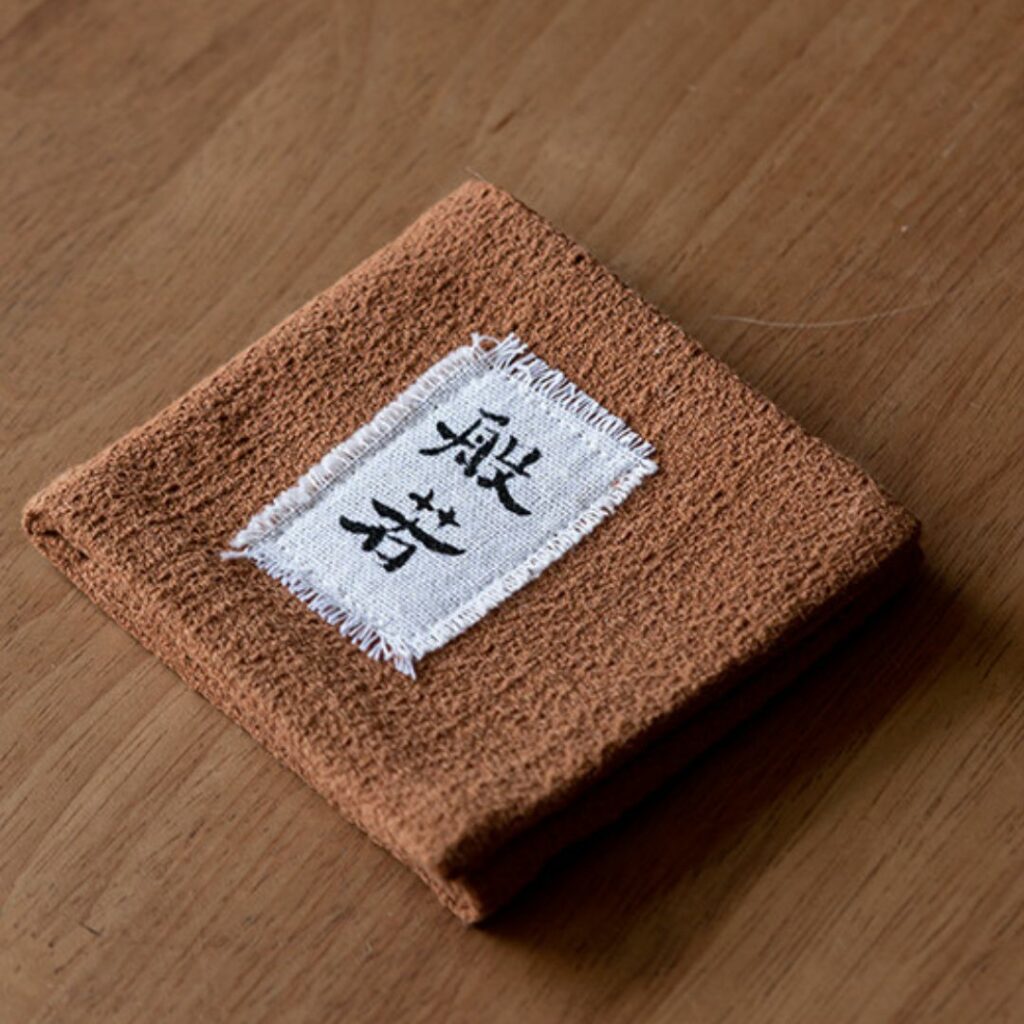
A small plate under the gaiwan, a tea towel and a bowl for discarded water can work perfectly well.
In fact, once people have been brewing for a while, some of them move in the opposite direction. The elaborate tea table gets smaller. They keep the pieces they actually use and quietly remove the rest.
That makes sense.
A tea setup should make you want to make tea more often, not make you think about how much cleaning you will need to do afterwards.
Spend more attention on the tea than the equipment
One beginner recently mentioned spending roughly $100 getting started with gongfu tea. The interesting part was that the gaiwan set itself cost less than $20. Most of the money went into the tea.
That is probably the healthier ratio.
A modest gaiwan with several interesting teas will teach you much more than an expensive set with only one tea sitting beside it.
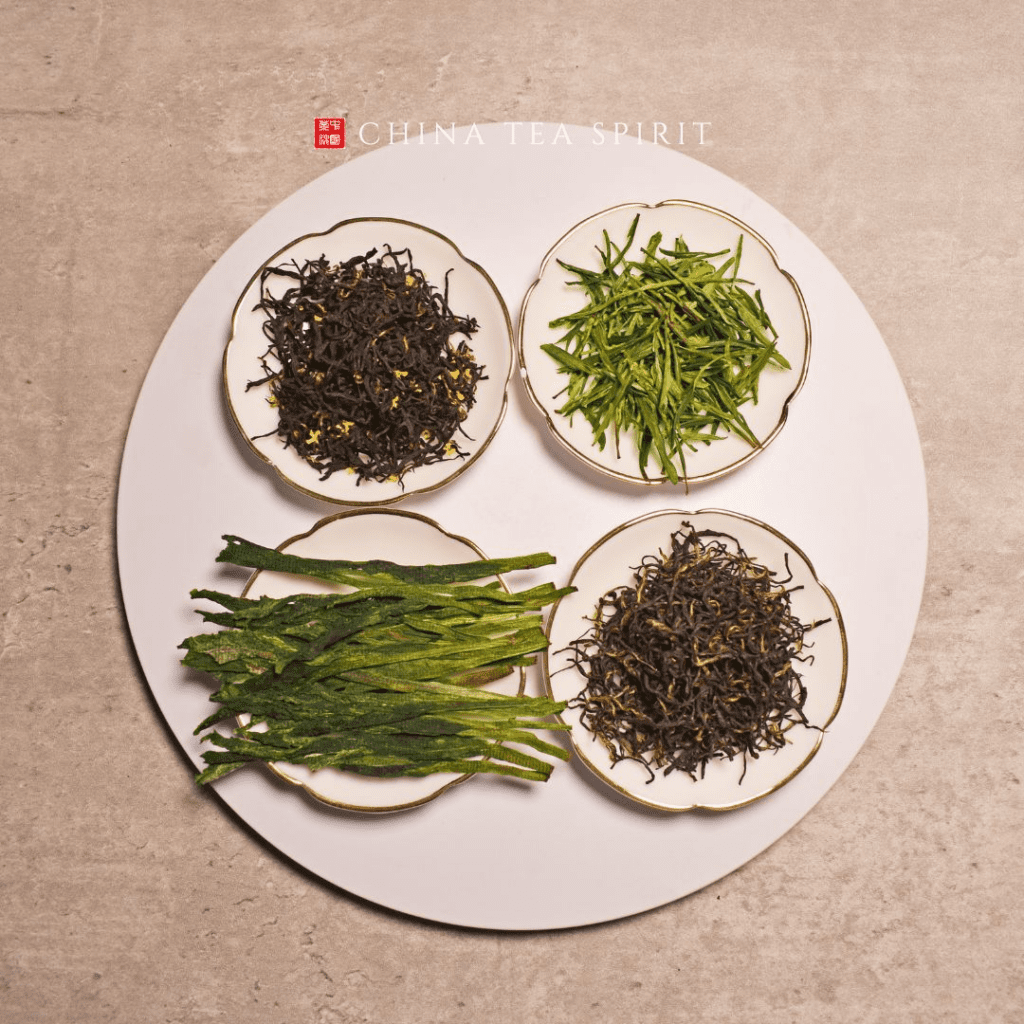
Try a roasted oolong next to a lighter one.
Try a young raw pu’er and then something aged.
Try the same tea with different amounts of leaf.
This is where you start understanding what all the equipment is actually for.
A scale is surprisingly useful here.
Five grams of rolled Tieguanyin can look tiny. Five grams of large white tea leaves can look enormous. Once you have weighed a few different teas, you get much better at judging them by eye.
We recently wrote about how much tea to put in a gaiwan, and this is one of those situations where a cheap digital scale can teach you more than another piece of decorative teaware.
You may eventually stop using it.
That is fine too.
Things I would happily leave for later
A tea strainer is useful when small leaf fragments bother you.
Tea tongs are useful when you are serving guests and don’t want to handle cups directly.
A tea needle is useful once compressed cakes start appearing regularly in your cupboard.
A variable-temperature kettle is convenient once you find yourself changing temperatures deliberately between teas.
A tea tray becomes worthwhile when the towel is no longer coping.
And a tea pet becomes necessary at exactly the moment you decide that particular little clay animal belongs on your desk.
There doesn’t need to be a more sophisticated reason.
The problem is not owning these things. The problem is thinking you need to own them before you can begin.
You don’t.
If someone asked me to build the smallest sensible gongfu setup, I would put a 100ml porcelain gaiwan, one cup, a kettle and a small towel on the table.
Then I would spend the remaining money on tea.
A few months later, that table would probably look different.
And that is exactly how it should happen.