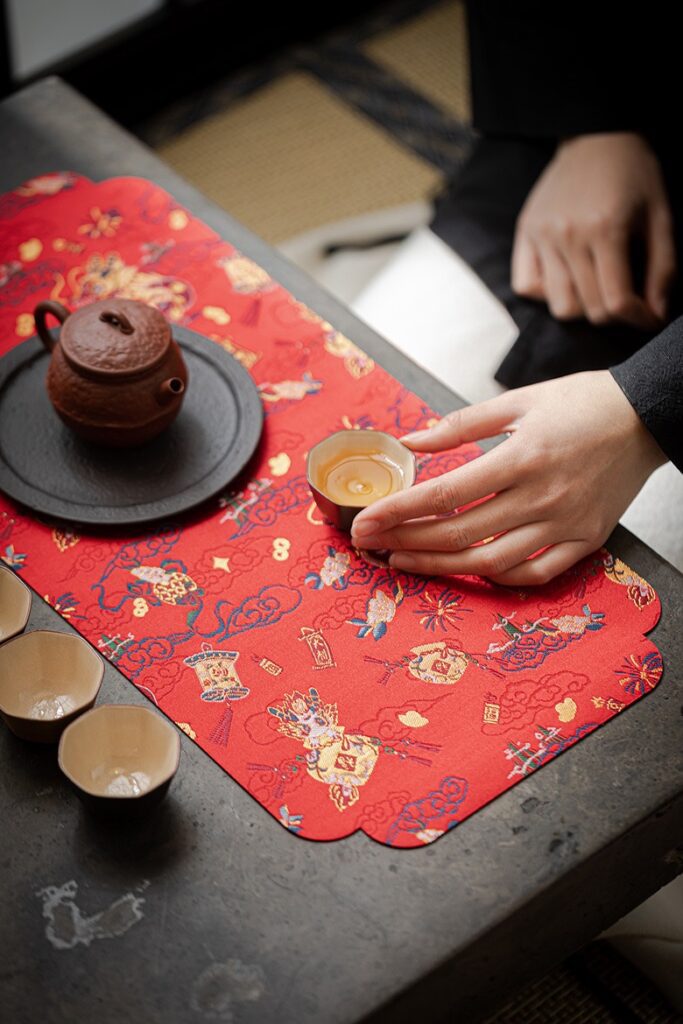
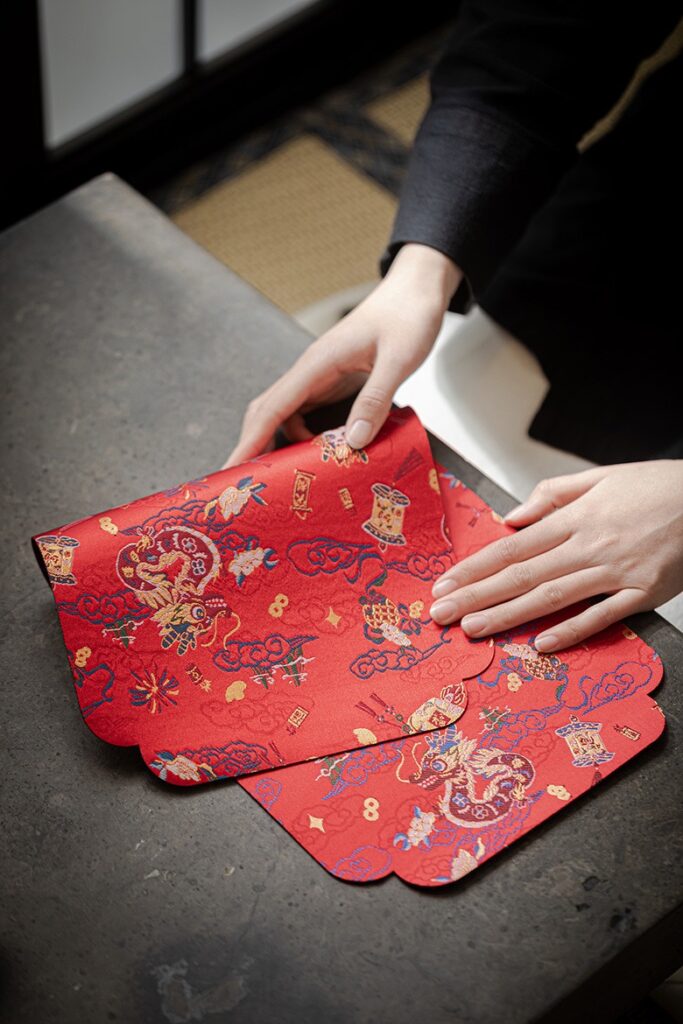
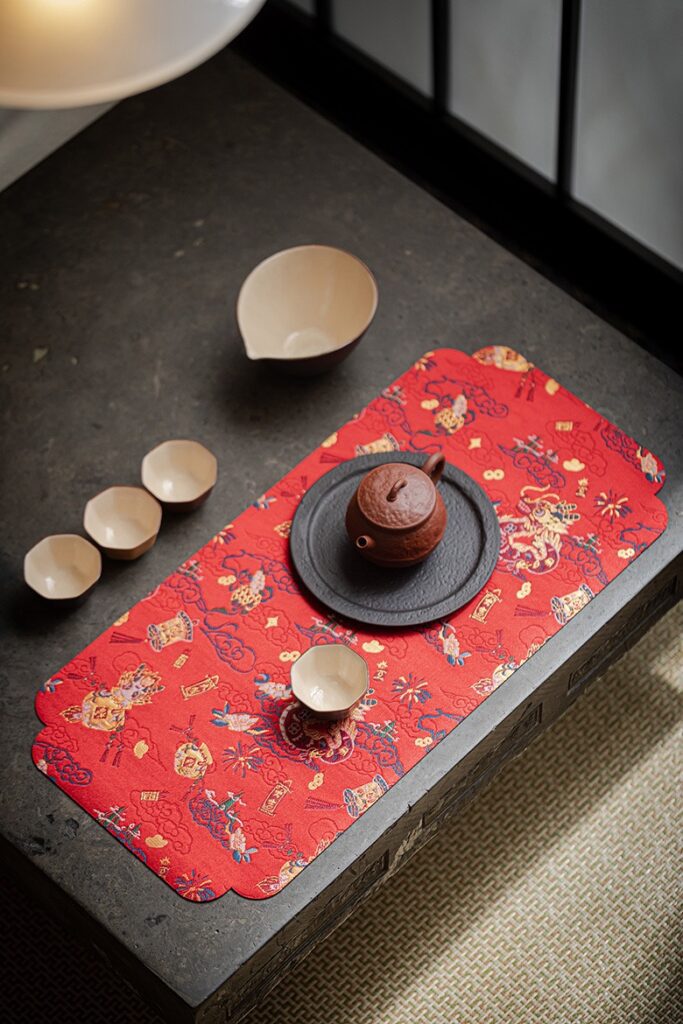
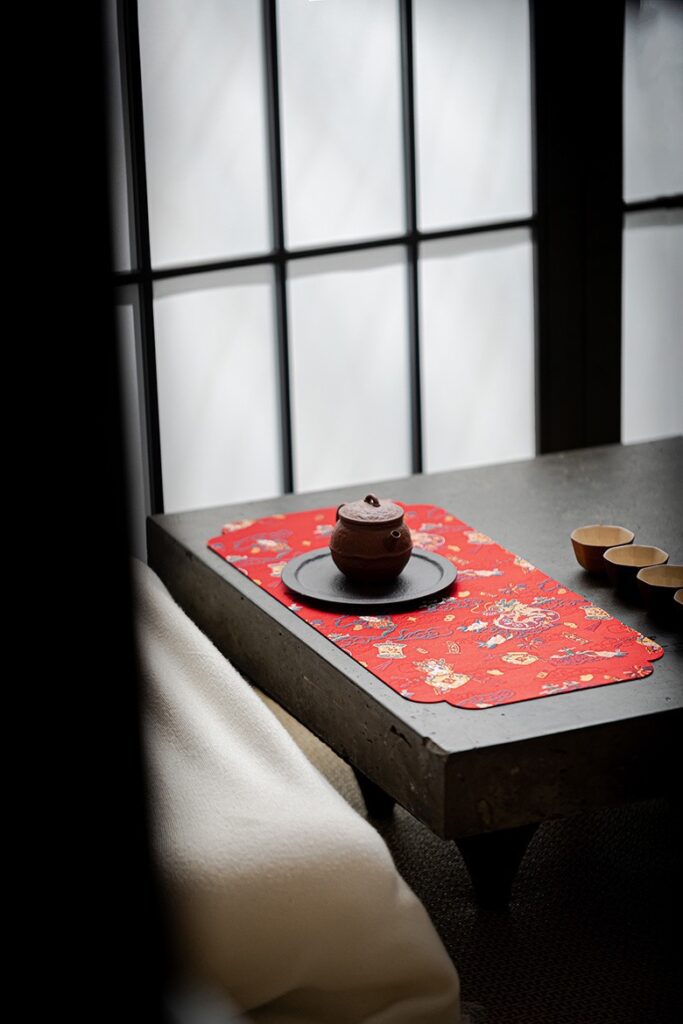
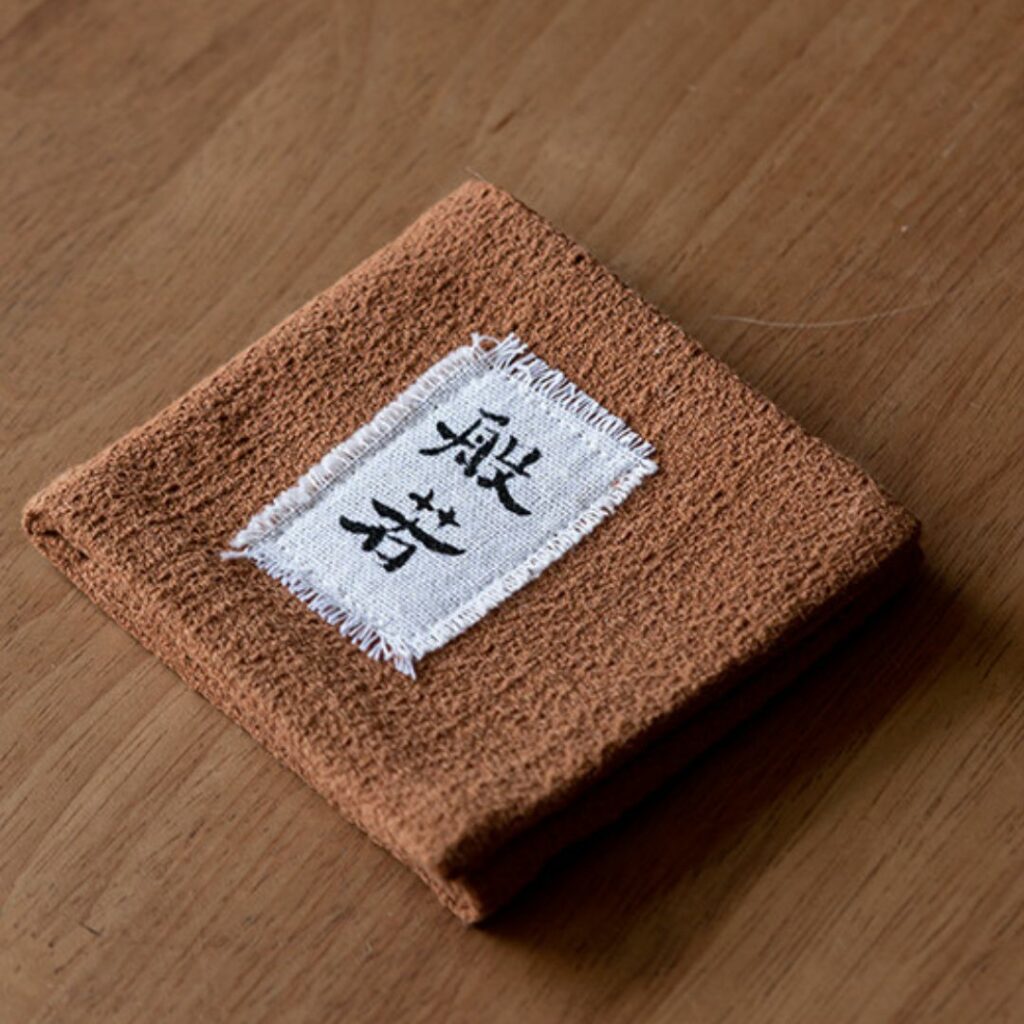
Hey tea lovers! 🐉✨ Exciting news as we step into the Dragon Year of 2024 - with Yixing teapot purchase, we're gifting you an exclusive Dragon Year style tea mat to add that extra flair to your tea rituals. It's our way of celebrating with you, but remember, it's a limited-time offer! Don't miss out on making your tea sessions even more special with this mystical addition. 🍵💫
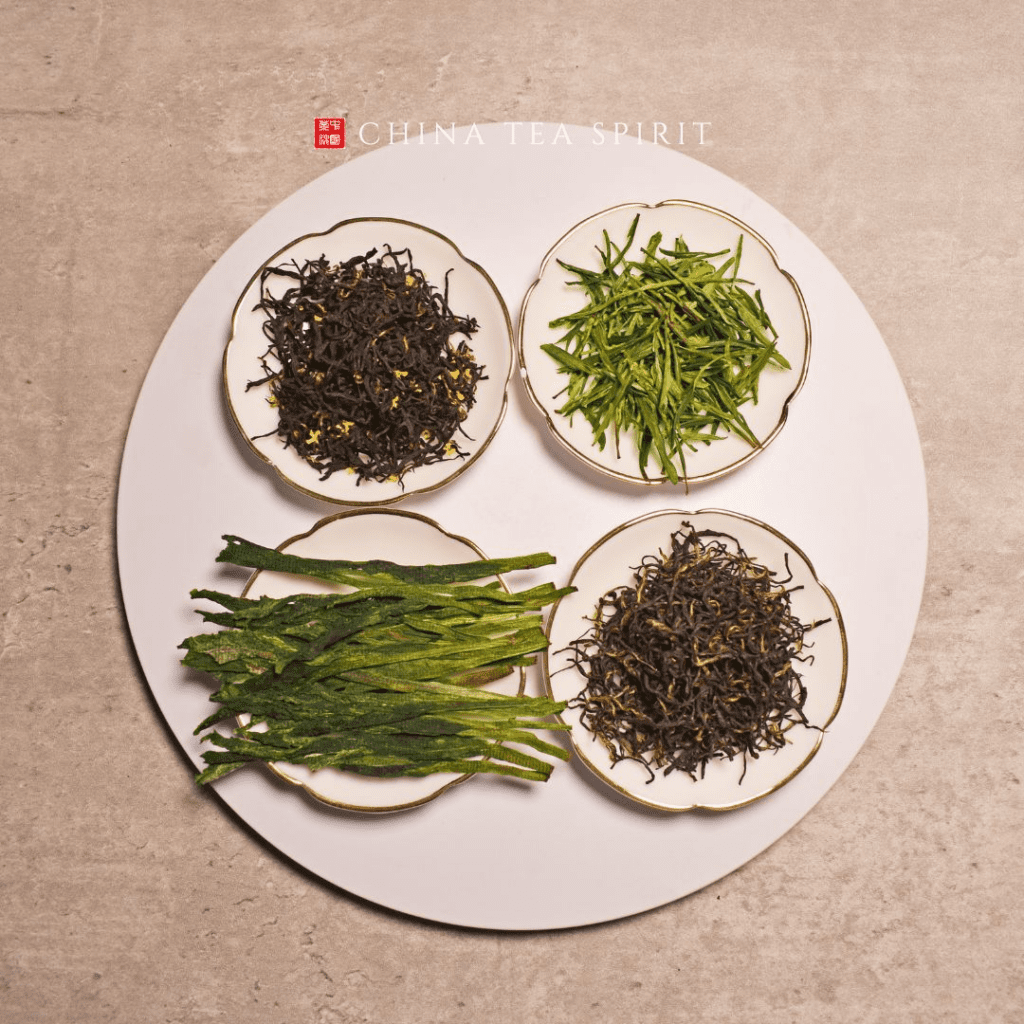
Hey tea lovers! While many of you know us as a premium Chinese tea wares company. We also specialized in teas in Huang Shan region. Huang Shan is home to the most famous Chinese teas – Huang Shan Mao Feng, Keemun and Tai Ping Hou Kui. As natives of this breathtaking place, we have a deep connection to the land and its rich tea heritage.
We understand that finding the perfect tea can be a personal journey, which is why we offer our sample pack. It allows you to explore the diverse flavors of Huang Shan teas and discover the one that resonates with your taste buds.
Each of the teas are sourced and produced directly from the tea farmers, ensuring the quality and the authentic taste.
Sample pack including: Huang Shan Mao Feng – 10g Tai Ping Hou Kui – 10g Keemun Mao Feng – 10g Osmanthus Keemun – 10g
We can’t wait to hear from your feedbacks on our teas. Join us on this journey and let us be your guide as you explore the enchanting world of Huang Shan teas.
Please note that the tea and tea wares will be shipped in seperate packages according to customs requirement. Usually tea will come slightly later than the tea wares.
Dear customers,
If you experienced any issues during checkout, please contact us at [email protected]. And we will help you out.
Below we listed common payment errors and their solutions for your reference.
#1: China Tea Spirit does not ship to this location. Please use a different address.
This is a known bug from PayPal. It occurs randomly. If you have seen this error message, please contact us at [email protected]. We will work this out for you.
Light the incense, and smoke begins to curl from its open mouth.
At first glance, it looks like a clever piece of ceramic design.
But the creature has a name: Suanni.
And its connection with incense is older—and slightly more complicated—than the familiar story about the Nine Sons of the Dragon suggests.
Suanni did not begin as a dragon son
Search for Suanni today and you will often get a very tidy answer: it is one of the Nine Sons of the Dragon, it looks like a lion, it likes sitting quietly and it is associated with smoke and incense.
That is a later and very influential layer of the story. It is not the beginning.
Older Chinese descriptions treat Suanni as a powerful lion-like beast. The National Museum of China, for example, notes both the older tradition of Suanni as an auspicious mythical beast and the later tradition that places it among the Dragon’s nine sons. The museum also points out that historical lists of the nine sons are not completely consistent.
That helps explain something important: Suanni does not look lion-like simply because later storytellers decided a dragon needed a lion-shaped child.
The lion connection is much older.
Why lions became powerful symbols in Chinese art
Lions are not native to China. Knowledge of them arrived through contact with Central and Western Asia, and lion imagery later became deeply embedded in Chinese Buddhist and decorative art.
That gave the lion an unusual position in Chinese visual culture: it was a real animal, but distant and exotic enough to accumulate symbolic meaning.
Strength, dignity, guardianship and Buddhist protection all became associated with lion imagery over time.
Suanni developed inside that visual world. This is one reason old representations do not always match a modern, fixed “character design.” Different periods and makers could emphasize the lion, the mythical beast or the dragon-family connection differently.
The Nine Sons story came later
By the Ming and Qing periods, a popular decorative tradition described the Dragon as having nine sons, each with a different temperament and a different place in material culture.
One was associated with music. Another with carrying heavy stone monuments. Another with rooftops or water.
Suanni became the lion-like son associated with stillness, smoke and incense burners.
The story is memorable because it explains ornament through personality. But it is useful to keep the chronology in mind: the lion-like Suanni is older than the neat Nine Sons framework, and different historical sources give different versions of that family.
Why Suanni appears on incense burners
Whatever came first—the lion-shaped burner or the smoke-loving legend—the connection between lion-like creatures and incense became very real in Chinese art.
Early 14th-century Jingdezhen Qingbai lion-shaped incense burner, The Metropolitan Museum of Art. Public Domain.
The Metropolitan Museum of Art preserves an early-14th-century Jingdezhen Qingbai porcelain incense burner in the shape of a lion. Its open mouth and sculptural body show how naturally the animal form could become part of the burner itself rather than merely decoration added to the outside.
The Horniman Museum holds another Chinese incense burner explicitly catalogued as Suanni. Its hollow body has openings at the belly and mouth so smoke can pass through the creature.
That detail explains why the design has lasted so well.
The creature is not simply sitting beside the incense.
It becomes part of the path the smoke takes.
The smoke coming from the mouth is both practical and symbolic
A hollow animal-shaped incense burner needs a vent.
An open mouth is a natural solution.
Once the animal is understood as Suanni—a lion-like creature later associated with smoke—the practical vent becomes part of the story. The beast appears to breathe.
That is one of the most satisfying things about this form of Chinese craft: decoration and function reinforce each other.
The smoke completes the image.
Is Suanni the same as a Chinese guardian lion?
Not exactly, although the visual traditions overlap.
Chinese guardian lions developed their own architectural role, especially as paired protectors placed at temples, palaces, gates and important buildings.
Suanni is more closely tied to the world of mythical beasts and later to decorative contexts such as incense burners, Buddhist seats and ornamental objects.
But there is no reliable modern checklist saying that every Suanni must have one exact mane, horn, tail or paw position.
Chinese mythical creatures changed with period, region, material and artist. A Jingdezhen ceramic Suanni does not need to look exactly like an old bronze example to belong to the same tradition.
What does Suanni symbolize?
The most defensible historical associations come from the lion-like creature itself: strength, dignity, auspiciousness and guardianship.
The later incense tradition adds another character: stillness, smoke and contemplation.
The Prince Kung’s Palace Museum describes Suanni as a fierce lion-like beast in older texts and also records the later tradition linking it with the Nine Sons of the Dragon, fire, incense burners and protective symbolism.
Modern Feng Shui writing often goes further and gives very specific promises about luck, wealth or placement. Those are better understood as later interpretations rather than universal historical rules.
You do not need to believe that a ceramic creature will change your fortune to appreciate why the image has survived for centuries.
Why Suanni feels natural beside tea
Tea and incense have often shared spaces without being the same practice.
Both reward attention. Both transform after heat is introduced. Both create atmosphere partly through aroma.
That makes an incense burner visually at home on a tea table or in a nearby tea space.
There is also a practical reason not to overdo it.
If you are tasting a fragrant Dancong, fresh green tea or lightly oxidized oolong, strong incense can easily overwhelm the aroma you are trying to notice.
Sometimes the better sequence is to burn incense before the tea session, let the room settle, and then brew.
Suanni does not need to be smoking every minute in order to belong there.
Jingdezhen is still making the idea
What makes the Suanni form especially interesting is that it has not become only a museum object.
The same relationship between creature, ceramic and smoke is still being interpreted by makers today.
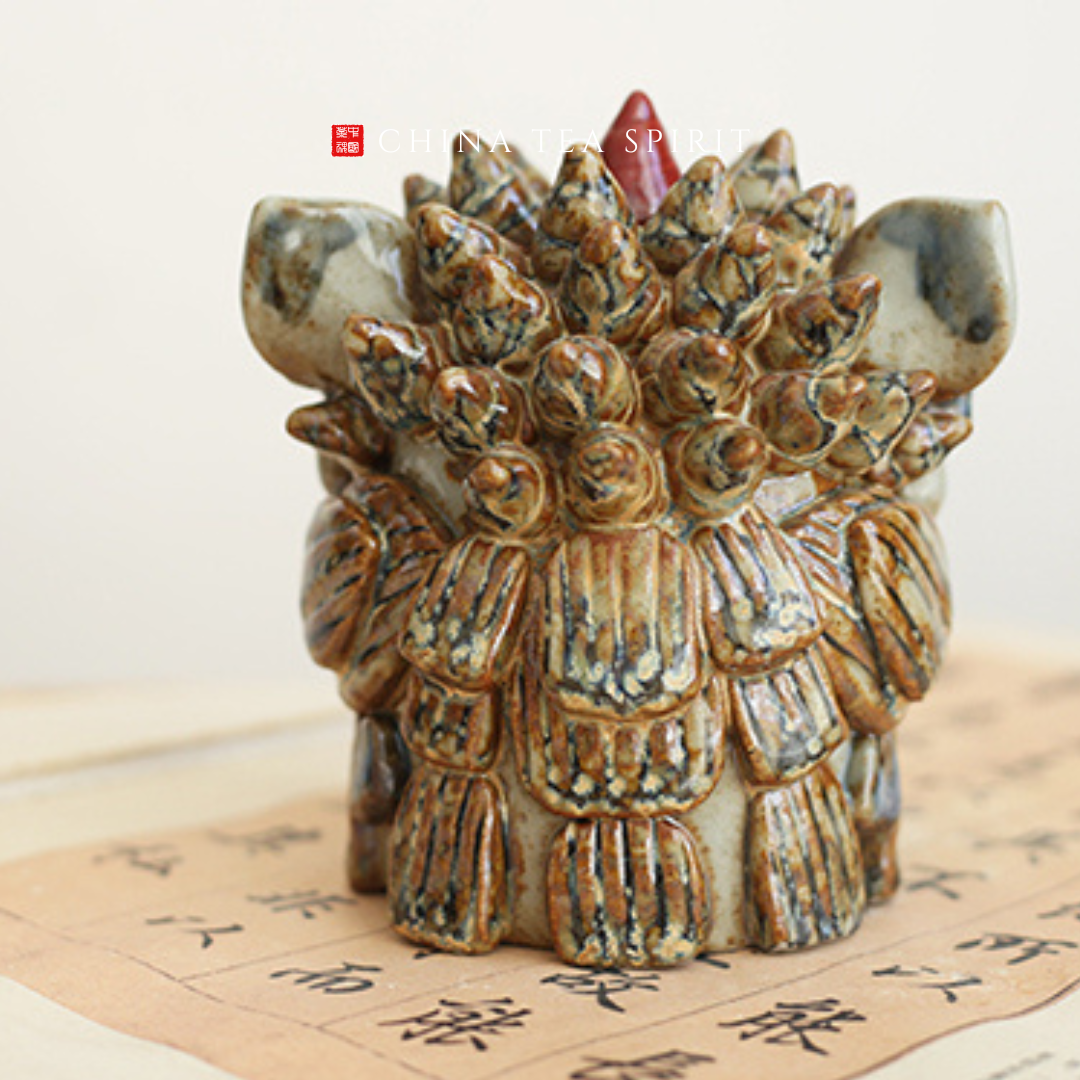
China Tea Spirit currently has two Suanni incense-burner designs handmade in Jingdezhen by ceramic artist Xie Chenglong.
The single Suanni cone incense burner uses the creature itself as the smoke outlet: once cone incense is lit, smoke emerges through the mouth.
They are contemporary pieces, not reproductions of one particular historical censer.
But the reason the design works is centuries old.
A lion-like creature.
A hollow ceramic body.
Fragrant smoke.
And suddenly the mythology is no longer something written in a book. It is happening on the table in front of you.
The story is better when it is a little less tidy
It would be easy to explain Suanni in one sentence:
One of the Dragon’s nine sons loves smoke, so it appears on incense burners.
It is a memorable story.
It is just not the whole story.
Suanni first belonged to an older Chinese understanding of the lion-like beast. Lion imagery became woven into Buddhist and decorative art. Lion-shaped incense burners developed into an established object form. Later mythology gave Suanni a dragon family and a personality that perfectly suited the smoke already surrounding it.
All of those layers now live inside the same image.
That is what makes Suanni more interesting than a generic lucky ornament.
The smoke is not just an effect. It is the final part of the story.
To meet the other creatures that appear across Chinese tea pets, ceramics and decorative objects, see our guide to Chinese mythical beasts.