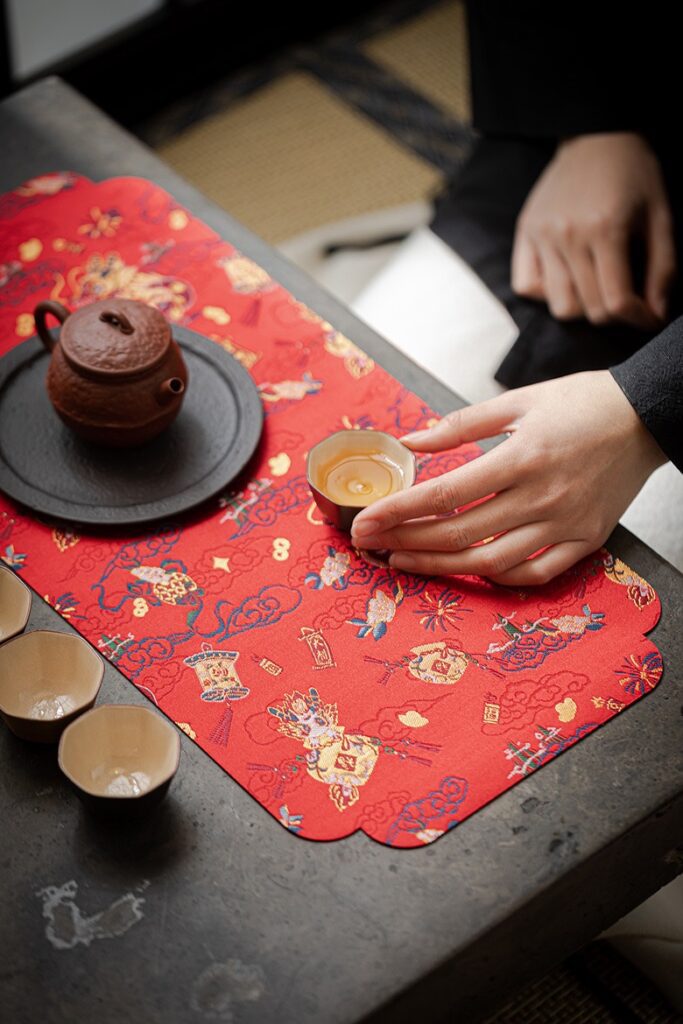
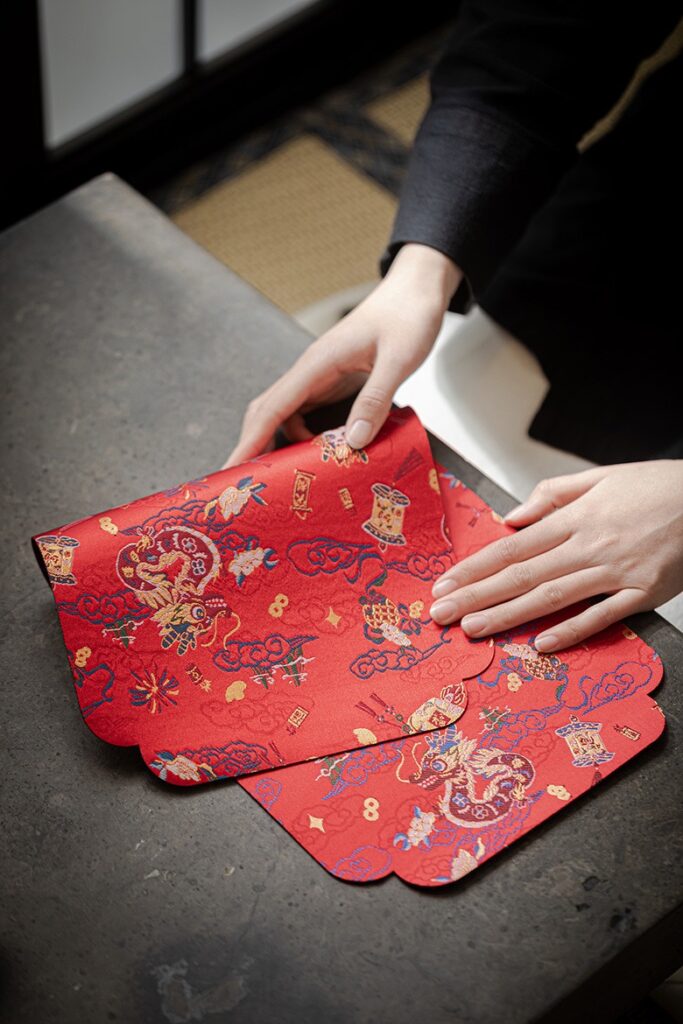
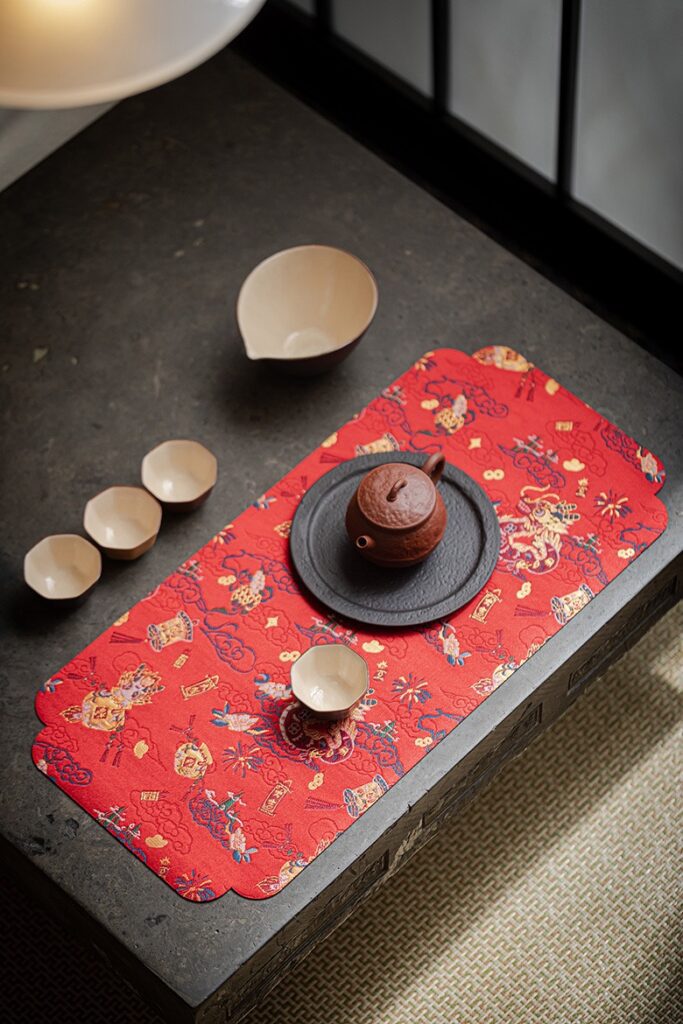
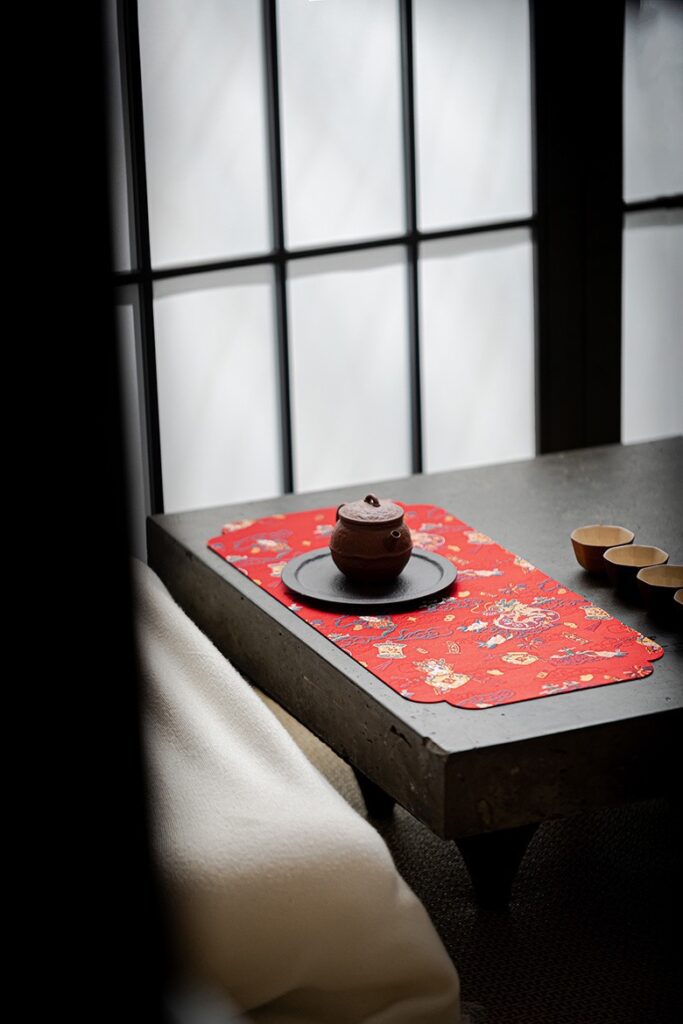
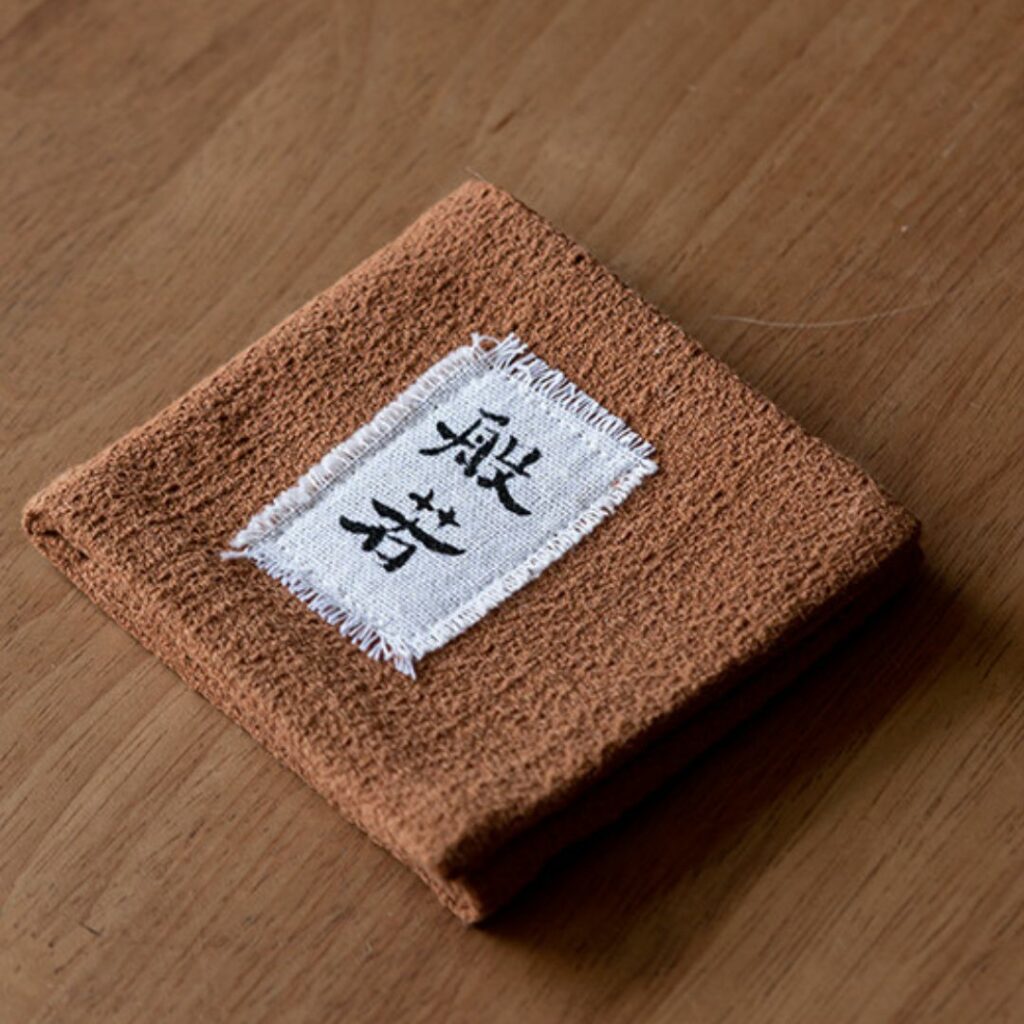
Hey tea lovers! 🐉✨ Exciting news as we step into the Dragon Year of 2024 - with Yixing teapot purchase, we're gifting you an exclusive Dragon Year style tea mat to add that extra flair to your tea rituals. It's our way of celebrating with you, but remember, it's a limited-time offer! Don't miss out on making your tea sessions even more special with this mystical addition. 🍵💫
Hey tea lovers! While many of you know us as a premium Chinese tea wares company. We also specialized in teas in Huang Shan region. Huang Shan is home to the most famous Chinese teas – Huang Shan Mao Feng, Keemun and Tai Ping Hou Kui. As natives of this breathtaking place, we have a deep connection to the land and its rich tea heritage.
We understand that finding the perfect tea can be a personal journey, which is why we offer our sample pack. It allows you to explore the diverse flavors of Huang Shan teas and discover the one that resonates with your taste buds.
Each of the teas are sourced and produced directly from the tea farmers, ensuring the quality and the authentic taste.
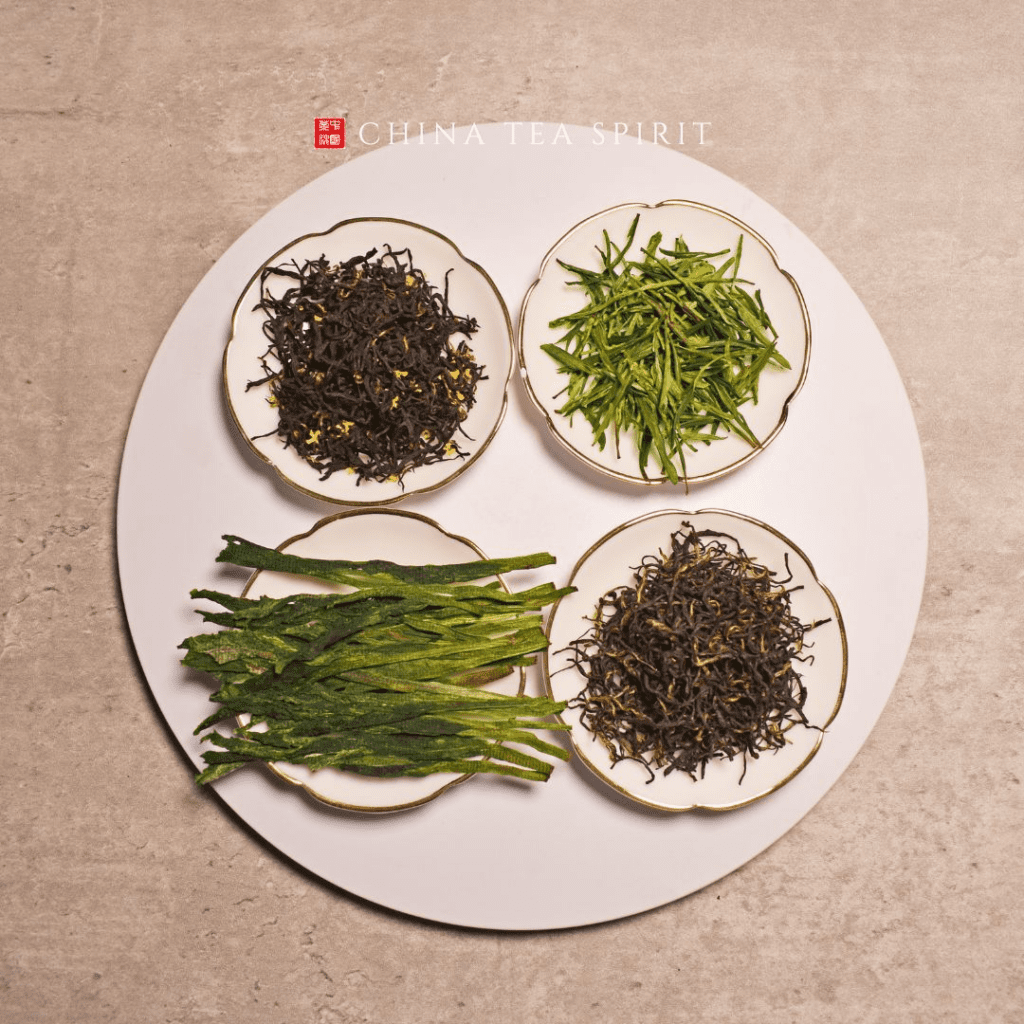
Sample pack including: Huang Shan Mao Feng – 10g Tai Ping Hou Kui – 10g Keemun Mao Feng – 10g Osmanthus Keemun – 10g
We can’t wait to hear from your feedbacks on our teas. Join us on this journey and let us be your guide as you explore the enchanting world of Huang Shan teas.
Please note that the tea and tea wares will be shipped in seperate packages according to customs requirement. Usually tea will come slightly later than the tea wares.
Dear customers,
If you experienced any issues during checkout, please contact us at cary.wang@cnteaspirit.com. And we will help you out.
Below we listed common payment errors and their solutions for your reference.
#1: China Tea Spirit does not ship to this location. Please use a different address.
This is a known bug from PayPal. It occurs randomly. If you have seen this error message, please contact us at cary.wang@cnteaspirit.com. We will work this out for you.
This is one of our series posts on Shapes of the Yixing Teapot. If you are interested in more of them, please refer to this post for more on Yixing Teapot Shapes.
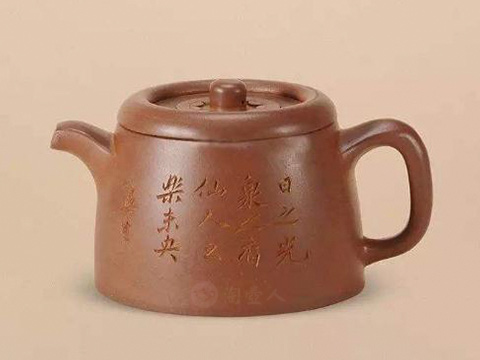
Among all Yixing teapots, few carry such poetic symbolism as the Jing Wa 镜瓦壶, or Mirror and Tile teapot. Created during the Qing dynasty by Chen Mansheng (陈鸿寿) and master potter Yang Pengnian (杨彭年), it’s one of the legendary “Eighteen Mansheng Styles.”
The Inspiration: Mirrors and Roof Tiles
The name Jing Wa comes from two ancient materials — the bronze mirror (镜) and the clay roof tile (瓦). Long before bronze mirrors existed, people in ancient China used bowls or jars of still water — or even glazed clay — to see their reflection. When bronze mirrors appeared during the Warring States period, “mirror” (鉴) became more than an object — it became a metaphor for self-reflection, clarity, and moral insight.
So when Mansheng designed this teapot, he fused both ideas:
“Take water from the mirror, and grace from the tile. The spring flows endlessly, nourishing without end.”
That inscription — “鉴取水,瓦承泽,泉源源,润无极” — still appears on original pieces. It speaks of harmony between reflection and nourishment, knowledge and kindness — and how creativity, like a spring, should never run dry.
Design and Form
The Jing Wa teapot embodies that philosophy in clay:
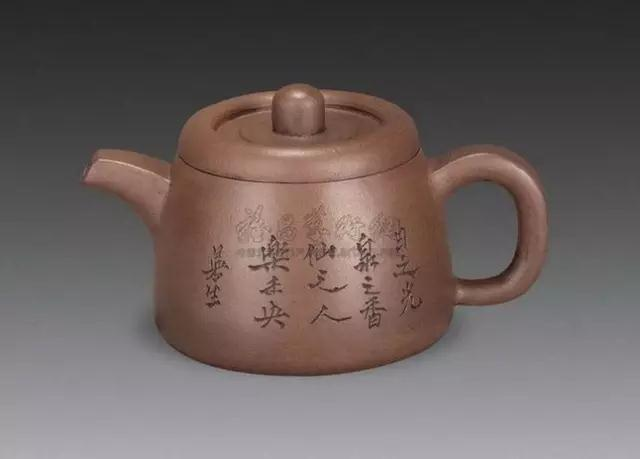
Body: cylindrical like an ancient roof tile, steady and humble.
Lid: flat and wide like a mirror, sometimes engraved with radiating lines that echo sunlight.
Spout and handle: balanced and fluid, uniting function with elegance.
Knob: a miniature echo of the body itself, creating visual harmony.
Its overall aesthetic feels simple yet complete — a conversation between geometry and grace. The base seal often reads “A Man Tuo Shi 阿曼陀室”, while the inscription along the body carries Mansheng’s poem:
“The light of the sun, the fragrance of the spring, the person of immortality, joy unending.”
Each word feels like a reflection — part poetry, part philosophy.
From Tradition to Modern Craft
According to the Gazetteer of Yixing County (光绪《宜兴县志》), Chen Mansheng was serving as magistrate in Liyang when his friendship with Yang Pengnian produced this iconic line of teapots. It was the perfect meeting of literati thought and artisan mastery — a union that shaped what we now call the “Mansheng style.”
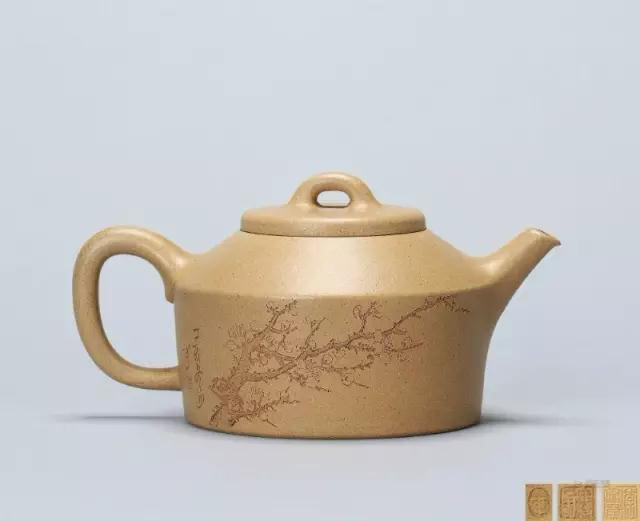
Today, master potter Li Hanyong (李寒勇) continues that lineage. His Jing Wa reinterpretations preserve the quiet dignity of the old form while refining the lines and proportions for modern aesthetics. He softens the geometry, lightens the visual weight, and brings a fresh balance between history and modern sensibility.
The Spirit of Jing Wa
To hold a Jing Wa 壶 is to hold a piece of philosophy:
The mirror reminds us to look inward.
The tile connects us to the earth beneath our feet. Together they form a vessel — not just for tea, but for mindfulness.
It’s a pot that embodies the Mansheng ideal: beauty with meaning, simplicity with soul.