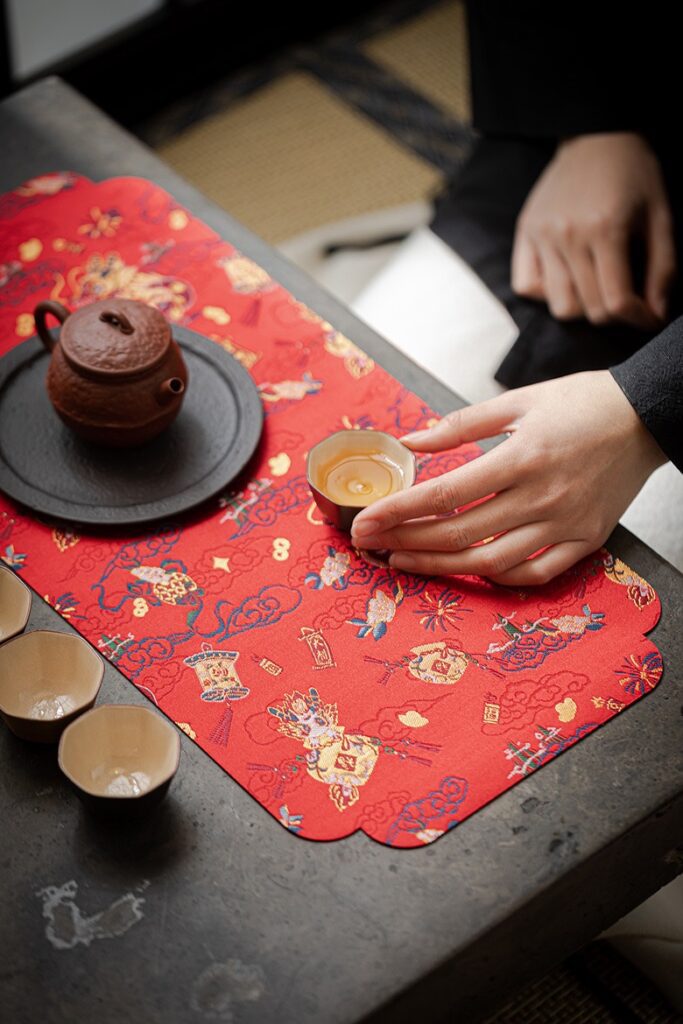
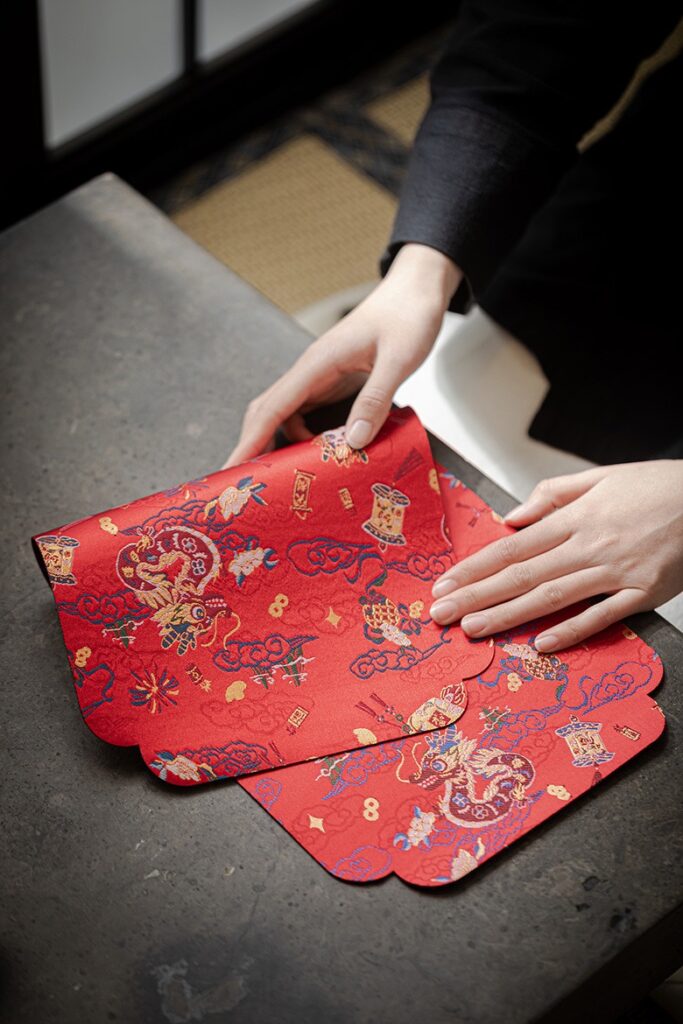
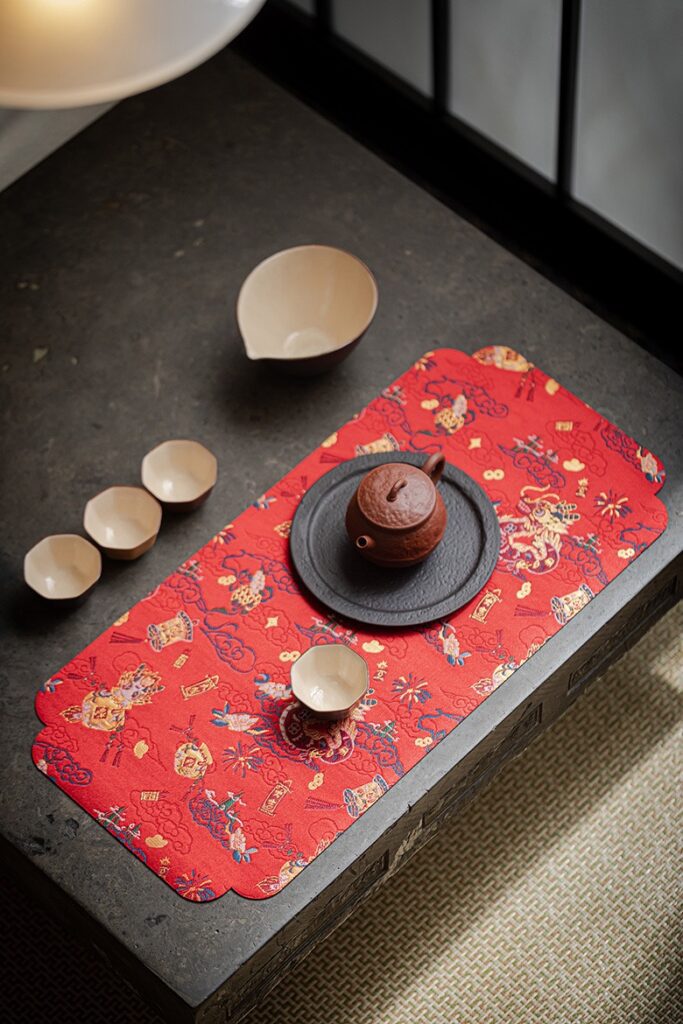
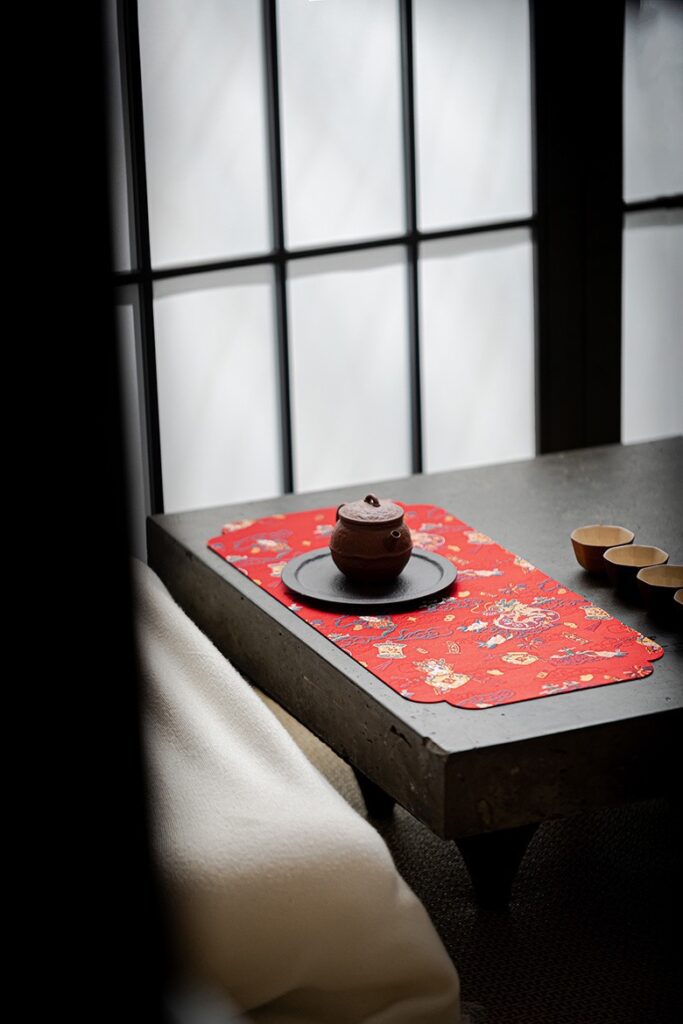
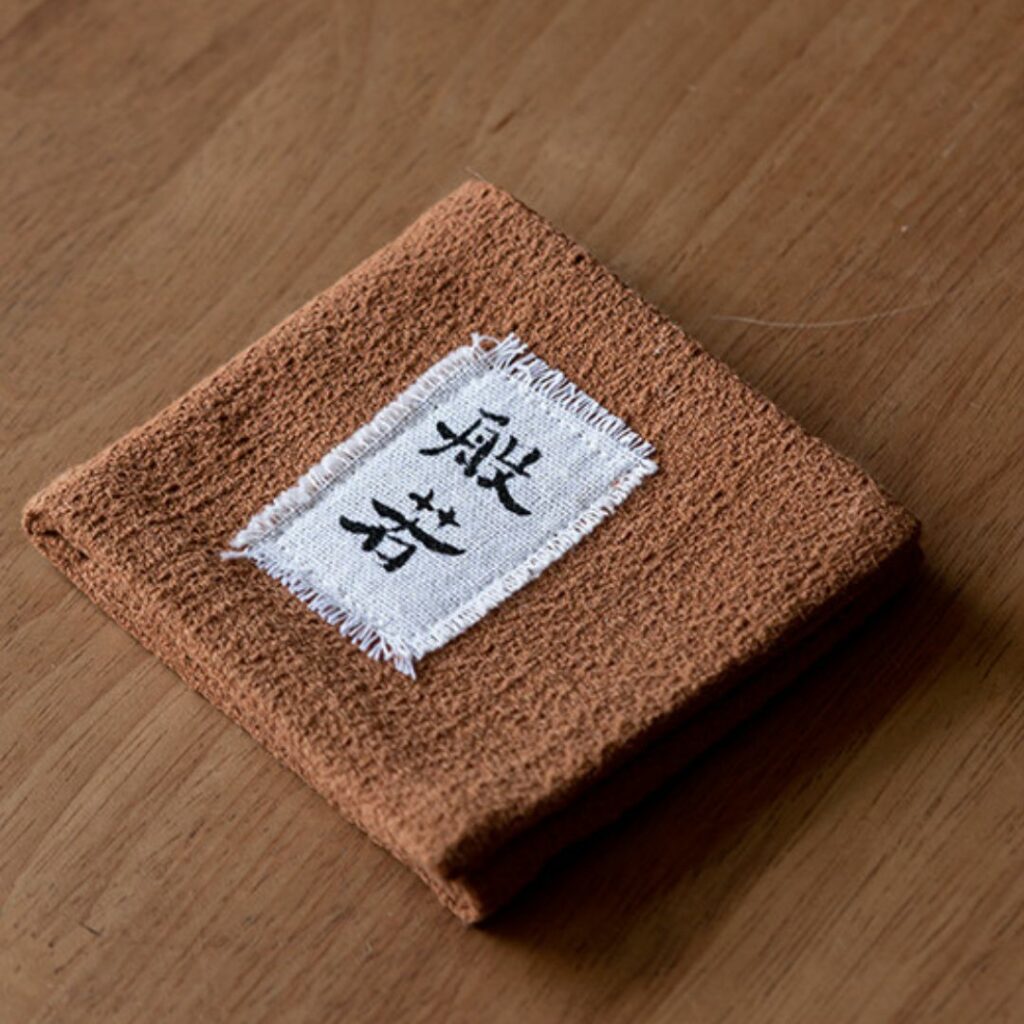
Hey tea lovers! 🐉✨ Exciting news as we step into the Dragon Year of 2024 - with Yixing teapot purchase, we're gifting you an exclusive Dragon Year style tea mat to add that extra flair to your tea rituals. It's our way of celebrating with you, but remember, it's a limited-time offer! Don't miss out on making your tea sessions even more special with this mystical addition. 🍵💫
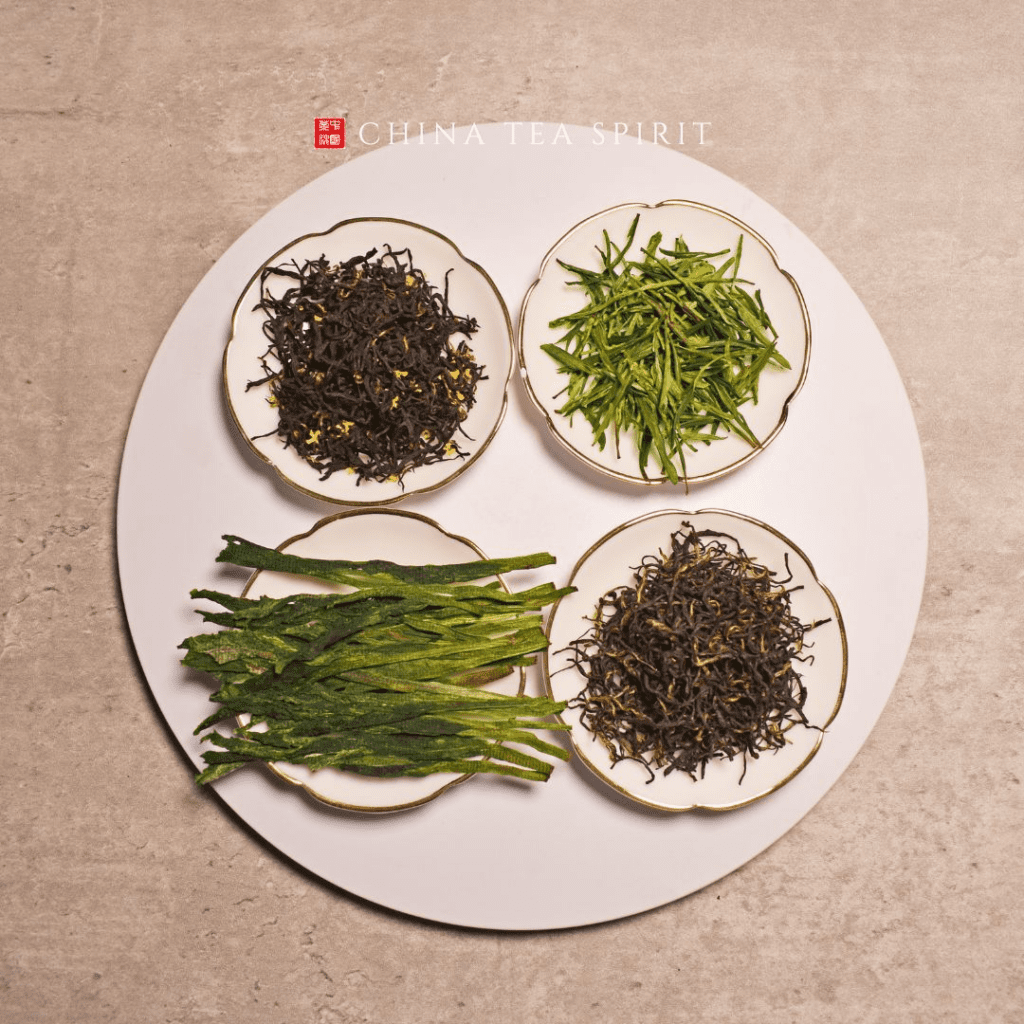
Hey tea lovers! While many of you know us as a premium Chinese tea wares company. We also specialized in teas in Huang Shan region. Huang Shan is home to the most famous Chinese teas – Huang Shan Mao Feng, Keemun and Tai Ping Hou Kui. As natives of this breathtaking place, we have a deep connection to the land and its rich tea heritage.
We understand that finding the perfect tea can be a personal journey, which is why we offer our sample pack. It allows you to explore the diverse flavors of Huang Shan teas and discover the one that resonates with your taste buds.
Each of the teas are sourced and produced directly from the tea farmers, ensuring the quality and the authentic taste.
Sample pack including: Huang Shan Mao Feng – 10g Tai Ping Hou Kui – 10g Keemun Mao Feng – 10g Osmanthus Keemun – 10g
We can’t wait to hear from your feedbacks on our teas. Join us on this journey and let us be your guide as you explore the enchanting world of Huang Shan teas.
Please note that the tea and tea wares will be shipped in seperate packages according to customs requirement. Usually tea will come slightly later than the tea wares.
Dear customers,
If you experienced any issues during checkout, please contact us at [email protected]. And we will help you out.
Below we listed common payment errors and their solutions for your reference.
#1: China Tea Spirit does not ship to this location. Please use a different address.
This is a known bug from PayPal. It occurs randomly. If you have seen this error message, please contact us at [email protected]. We will work this out for you.
Your new gaiwan doesn’t require a new tea collection.
If the only loose-leaf tea in your cupboard is Earl Grey, brew the Earl Grey. English Breakfast? That works too. The lid isn’t going to refuse a Darjeeling just because it didn’t come from China.
This sounds obvious, but when people first discover gongfu tea, it’s easy to associate the equipment so closely with traditional Chinese teas that everything else suddenly feels inappropriate.
There are all these beautiful videos of oolong, pu-erh and aged white tea being brewed in little porcelain bowls. Meanwhile, your own tea shelf might contain Assam, Earl Grey, a few flavored black teas and something called Paris.
Can you put those in a gaiwan? Absolutely.
Will they all brew beautifully with the same techniques used for Chinese oolong? Not necessarily. And that’s where things become interesting.
At its simplest, a gaiwan is a lidded brewing bowl. Tea leaves go inside, hot water goes in, and the lid helps control the pour while holding back the leaves.
There’s nothing about that design that restricts it to tea grown in China.
In fact, the distinction between “Western tea” and “Chinese tea” can be misleading.
Darjeeling and Assam are grown in India, but they come from the same tea plant species used to produce many Chinese teas. Some are processed into beautiful whole leaves. Others are deliberately broken or made into fine granules.
A full-leaf Darjeeling can behave much more like a Chinese black tea in a gaiwan than a finely broken English Breakfast blend does.
The important distinction isn’t really geography. It’s the condition of the leaves and the kind of brewing experience you want.
Look at the leaves before you choose the brewing method
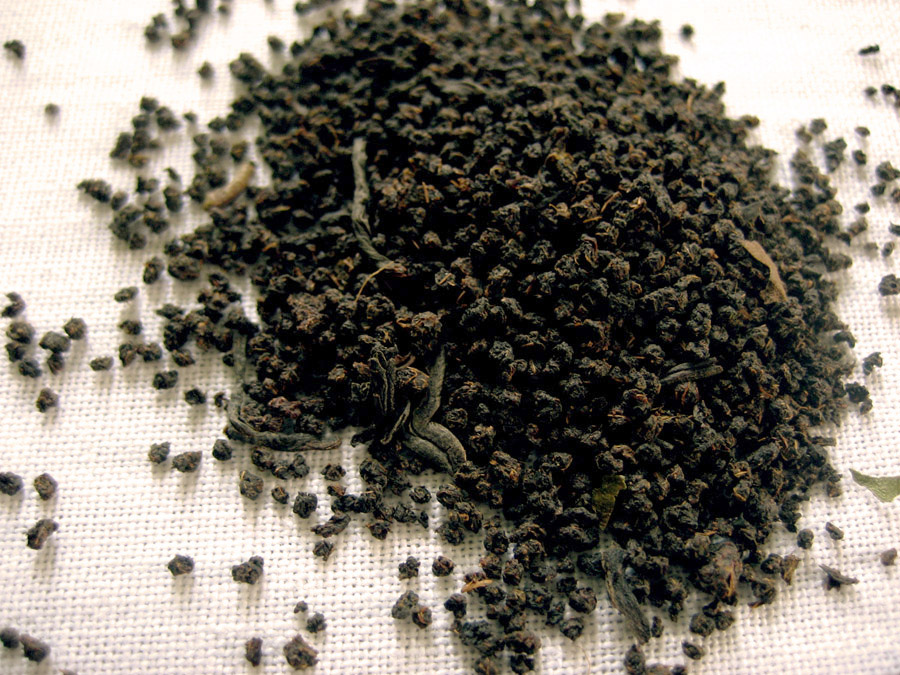
Take two black teas from your cupboard. One contains long, twisted leaves. The other looks almost like coarse coffee grounds.
Both may be sold as loose-leaf tea. But they won’t behave the same way in a gaiwan.
Whole leaves generally expose their flavor more gradually. As they hydrate and unfurl, the relationship between leaf, water and time changes across successive infusions.
Smaller, broken leaves expose more surface area immediately. They can release color and flavor much faster.
This is particularly noticeable with CTC tea, a method commonly used for strong breakfast blends. CTC stands for crush, tear and curl, producing small granular pieces that brew quickly and are often intended to make a robust cup, sometimes with milk.
Put a generous quantity of CTC Assam into a 100ml gaiwan and brew it like a rolled oolong, and the result may be intensely strong before you’ve even figured out where to put the lid.
The problem isn’t that the tea is unsuitable for Chinese teaware. You’ve simply used a brewing approach designed for a different type of leaf.
And there’s another practical issue: a gaiwan lid can hold back large leaves quite effectively, but tiny broken fragments are much more likely to slip through the gap and end up in your cup.
Suppose you have a 100ml porcelain gaiwan and a tin of ordinary loose-leaf English Breakfast.
You don’t need to begin with the heavy leaf quantity used for some gongfu oolongs.
Try around 2 grams of tea for 100ml of water, as a flexible starting point rather than a rule.
Use water at a temperature suitable for the blend, often around 90–95°C for black tea.
If the leaves are quite broken, begin with a relatively short infusion—perhaps 15–30 seconds—and decant promptly. Taste it.
Too strong? Use less leaf or pour sooner next time. Too weak? Let the next infusion run a little longer.
You might find that the first two infusions are enjoyable and the third has very little left to offer. That’s perfectly normal.
Many breakfast blends are designed to give you a good, strong extraction rather than a long sequence of gradually evolving infusions. There’s no reason to force one into eight rounds simply because you happen to be holding a gaiwan.
You could also use a lower leaf quantity and steep for a few minutes, much as you would in a teapot. Using a gaiwan doesn’t obligate you to brew gongfu style. The brewing vessel and the brewing method are two separate choices.
Earl Grey in a gaiwan is an interesting little experiment
Earl Grey brings another variable into the picture: bergamot.
A classic Earl Grey is black tea flavored with the distinctive citrus aroma of bergamot. Depending on the blend, that flavor may come from bergamot oil, another flavoring preparation or a combination of ingredients.
When you brew Earl Grey in a small gaiwan, you may notice that its familiar aroma behaves differently from the way it does in a mug.
The first infusion can be wonderfully fragrant—sometimes almost too fragrant. Then the aroma may fade more quickly than the underlying black tea flavor. With another Earl Grey, the proportions may feel more balanced across several pours.
This is partly because flavored tea isn’t necessarily designed so every component develops at the same rate. The tea leaves extract in one way; the added aroma behaves differently.
A few seconds of hot water may release a striking scent, but that doesn’t mean the second and third infusions will repeat the same experience.
It’s worth trying. Just don’t expect the flavor to evolve like a carefully made Phoenix Dancong or Wuyi rock tea.
And I wouldn’t automatically rinse a flavored tea before drinking it. You may discard some of the aroma you bought it for in the first place.
If you have some good whole-leaf Darjeeling, this is where the gaiwan becomes particularly enjoyable.
A first-flush Darjeeling can be bright, floral, delicate and sometimes quite brisk. Later flushes may be fuller, fruitier or more rounded.
Brewing a whole-leaf example in a gaiwan allows you to explore those characteristics through several smaller infusions rather than one larger extraction.
You might start with around 3–4 grams in a 100ml gaiwan, adjust the water temperature according to the tea, and begin with a short steep.
For a delicate first flush, slightly cooler water may help preserve the qualities you enjoy. For a fuller black tea, hotter water may work better. There isn’t one rule for every Darjeeling.
That’s rather the point. A gaiwan allows you to taste the tea, adjust, and try again.
If you’ve only ever brewed Darjeeling in a large teapot, the experience can be surprisingly different. Not automatically better—just different enough to be worth exploring.
Assam is not always the tea you think it is
Assam deserves a little more attention because the word describes a region, not one uniform leaf style.
A strong CTC Assam made for breakfast tea can behave very differently from a carefully processed whole-leaf Assam.
The former may extract quickly, become intensely malty and astringent, and work beautifully with milk.
The latter may be much more interesting across several short infusions, with malt, dried fruit, sweetness and texture becoming noticeable at different points.
So saying “Assam doesn’t work in a gaiwan” is too broad.
A better question is: What kind of Assam do you have?
Look at the leaves. Look at the processing. Then decide whether the tea might be enjoyable brewed repeatedly, or whether one generous mug would make more sense.
Fruit blends and herbal teas are a different story
Now imagine a tea blend containing black tea, dried apple, orange peel, rose petals and pieces of cinnamon.
A typical flavored tea blend may contain several ingredients that extract at different rates.
The tea leaves can release color and astringency quickly. A large piece of dried apple may need longer. Cinnamon and other botanicals may behave differently again.
So a series of ten-second infusions could produce a slightly strange experience: plenty of tea flavor at the beginning, but some of the ingredients intended to create the blend’s character haven’t had enough time to contribute much.
That’s why certain flavored teas make more sense brewed Western style.
The same applies to many herbal infusions. Chamomile, rooibos and fruit-based tisanes can technically be brewed in a gaiwan, though they’re not all made from the tea plant.
But if a blend is designed for a five-minute infusion, a small lidded bowl doesn’t necessarily make that process more convenient. Sometimes a mug with a basket infuser really is the better tool.
You don’t need to make every tea into a gongfu session.
What if the tea leaves keep falling into the cup?
This is the practical problem that can make a beginner think they’re doing something wrong.
You tilt the lid. You pour. And suddenly your fairness pitcher contains a surprising amount of English Breakfast.
With larger leaves, adjusting the lid opening usually gives you enough control to keep most of the tea inside.
With finely broken tea, the pieces may simply be smaller than the opening. You can try pouring more carefully, but there are limits to what the gaiwan lid can filter.
A small strainer placed over the fairness pitcher solves the problem. Or just use another fine-mesh filter you already own.
If tiny leaf fragments don’t bother you, you can also allow them to settle and pour gently. There’s no special rule requiring perfectly clear tea liquor.
And there’s certainly no need to become frustrated because a tool designed around larger leaves is struggling with finely broken ones.
This is one place where the choice of material deserves attention.
A glazed porcelain gaiwan is extremely versatile. You can brew Earl Grey in the morning, rinse it thoroughly, and make a delicate white tea later.
The glazed surface is easy to clean and doesn’t have the same open, unglazed character as traditional Zisha clay.
An unglazed Yixing teapot is a different situation. If you regularly brew strongly flavored teas in one, the added aromatic ingredients may linger and influence future sessions.
That doesn’t mean you can never put Earl Grey in an unglazed pot. It means you should understand why people often reserve their unglazed teapots for particular types of tea.
If you’re experimenting with everything in your cupboard, a glazed gaiwan is a much simpler place to begin.
And after a flavored tea session, wash the vessel thoroughly with a suitable mild detergent if needed, then rinse well.
There’s no reason to let bergamot oil or sweet fruit-blend residue build up just because you’re using Chinese teaware.
A little experiment worth trying
If you want to discover what your new gaiwan can actually do, take a tea you already know well.
Make it the way you normally do—perhaps two or three grams in a mug, steeped for several minutes. Drink it.
Then make a smaller serving of the same tea in your gaiwan, using more leaf relative to the water and shorter infusions.
Keep the water temperature reasonably consistent so you’re mainly exploring the effect of brewing style.
Pay attention to the differences.
Does the gaiwan bring out more aroma? Does bitterness appear sooner? Does the second infusion reveal something that wasn’t obvious in the first? Or does the familiar mug version simply taste better?
Any of those outcomes is useful. You’re learning how your tea behaves, not trying to prove that one brewing tradition is superior to another.
And don’t be surprised if different teas give completely different answers. A whole-leaf Darjeeling might become more interesting in the gaiwan. A finely broken breakfast blend might become more troublesome. An Earl Grey might offer one spectacularly fragrant infusion, then fade.
One of the best things about a gaiwan is how little it asks of you.
You don’t need a large collection. You don’t need a particular tea from a famous mountain. You don’t need to know the difference between Zini and Duanni, or understand the history of every Chinese tea-producing region before you begin.
You need tea, water, and a willingness to experiment.
If you already have Earl Grey, start there. If you have some whole-leaf Darjeeling, try that next. If your favorite tea turns out to taste better in a mug, keep using the mug.
Eventually, curiosity may lead you toward Chinese oolongs, white teas, pu-erh or something you’ve never tasted before. And when it does, your gaiwan will be ready.
But it doesn’t have to wait for them.
The tea you already own is a perfectly good place to start.